Category Archives: Places

Botanischer Garten, Berlin

Bot1

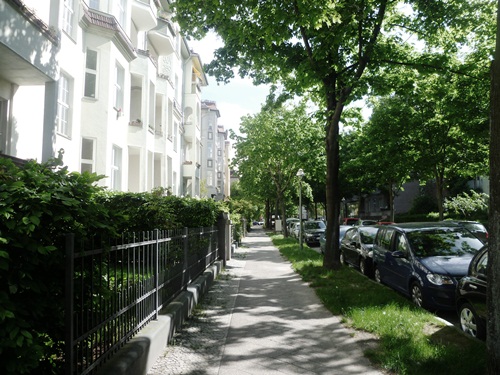
No, this post is not about the Botanic Gardens of Berlin, so wonderfully captured recently on the überlin blog. The reason for this post is somewhat more personal, as I caught the S-Bahn this morning from Bornholmer Straße south to Steglitz and the Botanischer Garten stop. This was my first neighbourhood in Berlin, back in the winter of 2001/2. Having moved to the city without a place to stay, one of my colleagues who was also studying at the Free University offered me a room in his apartment. The flat was on the ground floor, which made it a little dark – and happily cool when it came to the summer – but this was made up for by the fact that we had an overgrown garden out the back door that only Thomas and I had access to.

Altogether I lived down by Botanischer Garten for about nine months, before Thomas returned to Australia and I moved north, to Prenzlauer Berg, Mitte and, eventually, where we are now in Wedding. But I have very strong memories of that time, perhaps because it was my first months in the city. We would travel into the city on the S-Bahn, although if we were caught in town after the last train we would catch a night bus that took us on moonlight ride through deserted streets for over an hour, from Hackerscher Markt through Checkpoint Charlie to Kreuzberg and Schöneberg, before finally stopping in the shadow of the Rathaus tower in Steglitz. Sometimes, when Thomas had worked late and I was on an early shift, we would meet on the platform of the Botanischer Garten station, both of us bleary-eyed at opposite ends of our respective days.
Continue reading

Through the streets of Dresden, Germany

Dresden4

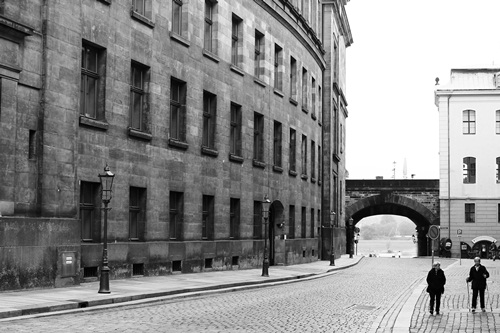
Since I moved to Germany I have made a handful of trips south to Dresden, that grand old city on the Elbe with its beautiful Altstadt and bustling and buzzing Neustadt on opposite banks of the river. The first time we went there we caught the train sometime in January, walking through the snow past some suitably eastern bloc socialist modernist architecture before we reached those buildings that made the city famous and that can, with a squint and a bit of imagination, return us to the city as painted by Bellotto during the 18th Century, a period when Dresden was renowned for its art and architecture, and which inspired Schiller to write his Ode to Joy, his poem celebrating brotherhood and unity of all mankind.

The wide sweep of the river separates the old and the new towns – and the flood meadows that seem to stretch almost as wide as the Elbe itself highlight the sense of distance between either side. On another visit I came south with a friend to play Petanque, tossing those boules along pathways in the manicured gardens of the Japanese Palace on the northern bank, our view back across to the old town distracting in its beauty. It was around about then that they finished the reconstruction of the Frauenkirche, and it is at this point we come to the unavoidable fact about Dresden and one which cannot help but shape your view of the city however many times you visit.

Continue reading

A place you can’t find – the Book Mill in Montague, MA

Bookmill1

A few miles north of Amherst we found Montague, driving slowly through the sleepy town to try and find the Book Mill, a bookshop that we had heard about that claimed to offer the winning combination of “books you don’t need, in a place you can’t find.” In the end it was not too difficult, as we followed the map until we reached the point where it crossed the Sawmill River and there it was, painted red and clinging to the embankment above the rapids that rushed beneath the road.

Stepping inside we found a treasure trove of used books, in a number of different rooms that all seemed to be on different levels, with low ceilings and reading corners tucked away on window ledges or under the eaves. There were tables, where people spread out their papers and got on with some work surrounded by millions and millions of words, and when they were stuck, or in need of sustenance, they headed down to the pub on the downstairs level, for a sandwich and a beer and  a view over the river. The selection is large and varied, and it would take days to really work your way through the shelves. It is hard to imagine a more perfect bookshop.

Continue reading

From Hermsdorf to Rosenthal – a walk across the top of Berlin

Hermsdorf1

The first section of our walk took us along the busy road from Waidmannslust S-Bahn station and into Hermsdorf, past garden centres and discounter supermarkets, a couple of rough and ready corner pubs and an organic grocers, before we ducked through the railings where the Tegeler Fließ passes beneath the main road and within a handful of footsteps we had left the traffic behind and were left only with the sound of birds singing in the trees. We had been here before, a few months ago in fact, when it looked as if spring was upon us as we explored the old village of Hermsdorf before picking up the trail down by the river, but this time we really had moved beyond winter, and our walk would take us further as well.

We made our way alongside the Hermsdorfer See before the path became a wooden walkway along the bottom of pleasant gardens, raised on stilts above the soggy bog of the wetlands that spread out from the river bank in either direction. Here the Tegeler Fließ is two things… it is incredibly bendy, twisting this way and that, and it also happens to be the border between Berlin and Brandenburg. From the division of Germany after the Second World War until the events of 1989 and the reunification of 1990 this was an international border, although the planners building the Berlin Wall obviously did not fancy doing battle with the swamp and so set their fortifications further to the north, which left one bank of the river and its wetlands technically part of the German Democratic Republic, but sitting on the West Berlin side of the concrete and barbed wire barrier.

Continue reading

Remembering the Annie Maguire, at Cape Elizabeth, Maine

Annie1

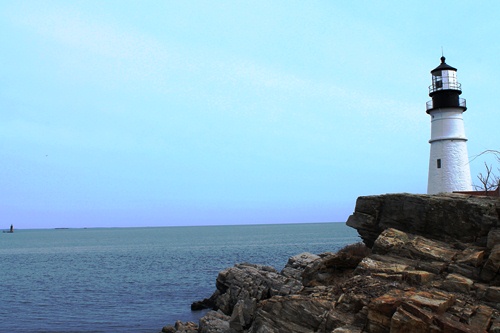
In December 1886 Captain Daniel O’Neil climbed aboard his ship, the “Annie Maguire” for a voyage north from Buenos Aires to Quebec. With him for the voyage were thirteen crew, two mates, his wife and his twelve year old son. Caught in bad weather just off the coast of Maine on Christmas Eve, O’Neil was aiming for Portland Harbour in order to take shelter and ride out the storm. On land, in the Portland Head Lighthouse atop the rocky cliffs of Cape Elizabeth, lighthouse keeper Joshua Strout was keeping watch as the clock approached midnight. It may have been Christmas Eve, but it would not be a quiet shift.

Continue reading

Racing across the water in Grünau, Berlin

???????????????????????????????

We took the S-Bahn south to the edge of the city, not far from Schönefeld and the mythological new airport that we hope our grandchildren will have the pleasure to use. We did not really know what to expect… the last time any of us had been to Grünau, this green and leafy corner of what was once East Berlin was almost twenty years ago and it was hard to imagine the changes that must have taken place since then. From the station we followed a path through the trees in the direction of the water, until we reached a small park with a jetty, and some friendly chaps enjoying the sunshine with a scowl as their fishing rods rested on the rusty railings.

At the end of the crumbling pier it felt as if we were on top of the water, and could see down the Langer See to where a large scoreboard flickered in the shadows of a grandstand. On the water itself we could see the first rowers of the day warming up for the regatta, that was about to take place. As we walked down the street towards the grandstand it suddenly began to get very busy. Broad-shouldered men and women jogged up and down, the name of their rowing clubs stitched into the back of their tracksuit tops – Tegel, Wannsee, Königs Wusterhausen, Pirna…

Continue reading

A walk through Springfield, MA

Springfield

The interstate runs right through the heart of the city, dividing the high, gleaming towers of the downtown with the wide, sedate Connecticut River. We wait for our junction and then roll off, the ramp taking us down and into the concrete canyons of the city centre. Not that Springfield is a large place – 150,000 people live within the city limits, just over a half a million in the metropolitan area – but it is the only true city that we will spend any time in, and the contrast with the university towns, sleepy seaside resorts, and hillside villages that make up most of our two week trip to the United States is quite marked.

The creators of The Simpsons, when deciding on a name for the town where Homer, Marge and the rest of the gang would live, chose “Springfield” as Anytown, USA – and indeed it is the fourth most popular place name in the nation – but Springfield, Massachusetts can lay claim to being one of the oldest, founded as it was in 1636. The history of the city has been one dominated by manufacturing, from the first American musket factory, the discovery of vulcanized rubber, and the Indian motorcycle company. Other claims to fame are as the birthplace of the first American-English dictionary (Merriam Webster), the sport of basketball – created in the local YMCA – and the children’s writer and illustrator Theodor Seuss Geisel, better known as Dr Seuss.

Continue reading

Off season in Ogunquit, Maine

Ogun1

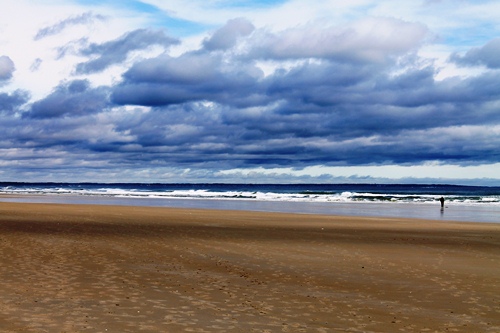
It is the Easter weekend and we have headed for the coast. Despite the fact that lawn signs advertise Egg Drops and oversized bunnies are posing for photographs in shopping malls, the seaside resort of Ogunquit, just north of the New Hampshire border, has a decidedly off-season feel to it. Many of the motels, inns and hotels are not yet open for the season, and the little trolley bus that travels around the town and its neighbouring resorts will not emerge from the garage for another month or so. Still, as we follow the Marginal Way trail along the coast from Ogunquit village to the boutiques, lobster shacks and clapboard houses of the scruffily-posh Perkin’s Cove, there are a good number of people on the trail, enjoying the first real warming sun of the year. Enough, in fact, to image what kind of a traffic jam must occur on these low cliffs during the high season.

Continue reading

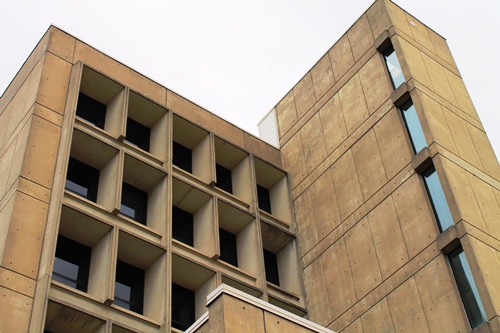
The Wedding Crematorium, Berlin

Crem1

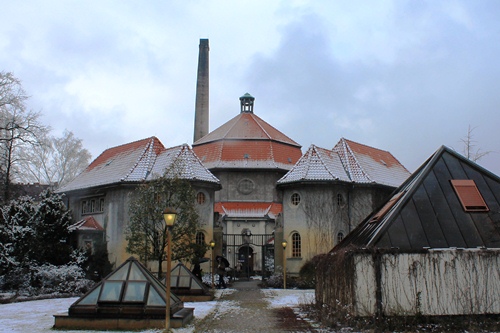
On three occasions in the past month, leading a tour around my home neighbourhood of Wedding, we came across the gates of the old Crematorium in the heart of what was once the loud and dangerous industrial heart of northern Berlin and found them locked. Each time it was a disappointment, because a few months ago during the Berlinale International Film Festival we stumbled across this space for the first time, it was open, and we were able to have a little explore behind the high walls and the iron gates.

Continue reading

The College and the University, Amherst

Amherst

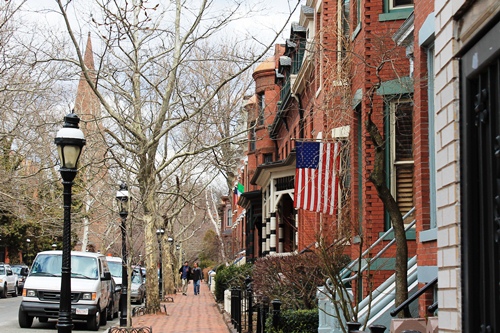
At the Black Sheep café in Amherst a group of three students work at their laptops at three different tables until the number of people searching for a place to sit becomes too large to ignore and they gather their things to sit together in the table by the window. The act of togetherness does not appear to aid their work ethic as they spend the next twenty minutes discussing whether or not it is too cold to go outside for a cigarette, and the relative merits of different graduate schools in California. On the strength of the first glance, most of our fellow customers appear to be either students or have some connection to one of the educational institutions of the town, and the noticeboard by the toilets is filled with posters and notes relating to political, social and cultural activities both on and off campus.

Amherst can be found on the Pioneer Valley in eastern Massachusetts, a couple of hours drive from Boston, and along with its neighbouring towns the business in these parts is education. The centre of Amherst – a collection of red-brick and wooden buildings scattered around a sloping lawn – is dominated by the campus of Amherst College, a private liberal arts institution that dates back to 1812 and offers undergraduate classes to just over a thousand students. Down the hill, towards the farmland that lies on either side of the Connecticut River, is the University of Massachusetts Amherst (UMass), the flagship campus of the University of Massachusetts state system and the largest public university in New England, with 27,000 students and more faculty members than the College has students.

Continue reading