Ghosts from my bookshelves: Exploring Paris

“Probably there is no real Paris, except if you have always lived there. For those of us who arrive only to go away, the place teems with ghosts.” – Clive James, A Postcard from Paris, 1980.

This trip to Paris was the first time I visited the French capital. It seems amazing that it took so long to get there. After all, it was always the cheapest flight from England, or a simple train ride from Berlin. We passed through it on our way to Versailles on a French exchange trip but I remember only the traffic beneath my window, the rain on the streets, and the fact that we were not allowed out of the bus. So that doesn’t count.

I always thought that I did not make it to Paris because it was so close. It wasn’t going anywhere and it was always going to be easy to get to so why not try something else? But now I think there was something else at work, namely those ghosts that Clive James was talking about in his article written over thirty years ago, who lived in the pages of some of my favourite books and that had painted a picture of the city that I was convinced the real thing could never live up to. Of the places represented on my bookshelves only New York can probably compete with Paris, and I have never made it there either, and it was this realisation that has made me sure that it was the fear of disillusionment and disappointment that kept me away from these cities for such a long time. Continue reading
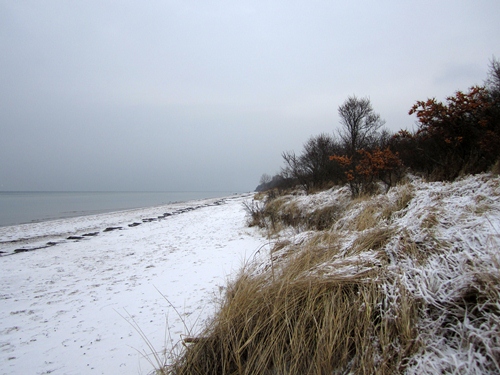
Snow on the sands, Poel Island

A photo diary, by Julia Stone:

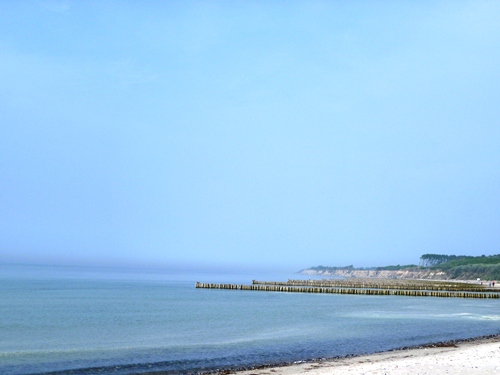
It was a spontaneous decision to head north from Berlin to the Baltic coast. We were aiming for the island of Poel, close to the town of Wismar and linked by causeway road to the mainland. It was the day of the first snows of the year, the wind threatening to freeze my nose off, but the beauty of seeing snow on the sands made it all worthwhile. I love Poel because of the landscape, its old brick church, the bird reserve and some wonderful beaches, the most hidden of which remain deserted even in summer when the rest of the Baltic coast is teeming with tourists. On a winter’s day, it felt like we had the whole island to ourselves: Continue reading

After the work is done – the Völklinger Hütte ironworks

At its peak the Völklinger Hütte ironworks employed 17,000 workers, mostly men, who rotated through three shifts a day to keep the plant operating around the clock. It is said that when the works closed in 1986 after over a century of operation the people of Völklingen found it difficult to sleep, so unused were they to the silence. In 1994 UNESCO placed the ironworks on their list as a World Heritage Site, the first such structure from the heyday of the industrial revolution to be granted this status. Now there are exhibition halls and over six kilometres of walkways made safe and signposted for visitors. There is a café and a “paradise garden”, where plants and wildlife make a new home in this most industrial of settings. But the Völklinger Hütte is simply too large to be completely sanitised as a pure museum-piece.  Continue reading

St. Jude’s Fabric and Prints

(above: Doveflight by Mark Hearld, with permission from St. Jude’s)

I discovered St. Jude’s through their lovely blog All Things Considered, and was immediately struck by the designs that come from a wide range of artists and are available as fabrics or as prints. Many of the designs and prints take inspiration from landscape and the natural world, and there is something about them that gives me a feeling of certain places I have known. Maybe it is just the style of some of the artists, and I cannot put my finger on it, but this feeling is certainly there and I have to admit that just flicking through the website left me a little homesick. Continue reading

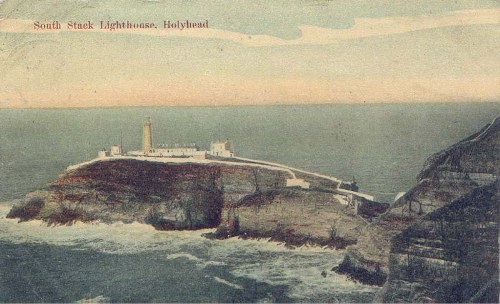
Above the white horses, South Stack

(South Stack Lighthouse in the 1910s, reproduced with permission from www.oldukphotos.com)

There are countless special places along the coastline of Wales, let alone the British Isles, but the cliffs around South Stack seem to stir the imagination of a great number of people. Bird-lovers head for nearby Ellins Tower and the RSPB centre, and the chance to aim their binoculars and telescopes at the guillemots, razorbills and puffins, not to mention seeking out the incredibly rare choughs, of which the nine pairs on the reserve make up 2% of the entire UK population. Continue reading

January in Finland

By Annika Ruohonen:

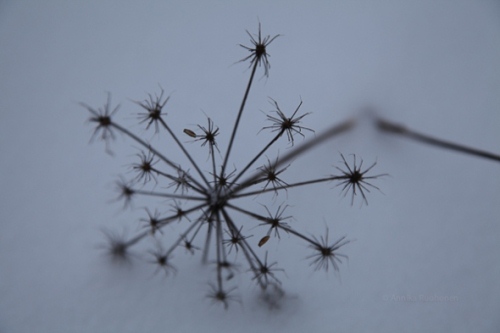
It has been snowing since Wednesday. After a dark December we can now enjoy snowy January. I have been roaming the  coastline, but since there hasn’t been any direct sunlight, the photos remain quite dark even when shooting during daylight hours.

There is a deer feeder in the forest where I’ve been often lately and today I happened to see three deer running on a slope with snowy trees. It was such a delightful view. I hope to catch some photos of those three some time later. The forest is full of deer marks and it is so enjoyable to follow them. You can see how they’ve been running around enjoying the snow. The snow is about knee-deep at the moment, so with good gear walking in it is not a problem at all. I didn’t bring my snowshoes today but I still managed to walk in places where there weren’t any snowmobile tracks. It is a good work-out though, not to mention the snow-clearing job that was waiting for me in my home yard. Continue reading

Close to the border, the Franco-German Garden

Saarbrücken straddles the river Saar up against the German-French border, and this part of the world has been much disputed by those two great European powers as the Saarland passed back and forth depending on the movements of history. After the Second World War there was much discussion about what to do with this little wedge of territory, and it was only at the end of the 1950s that a decision was finally made and Saarland became the 10th state of the Federal Republic of Germany.

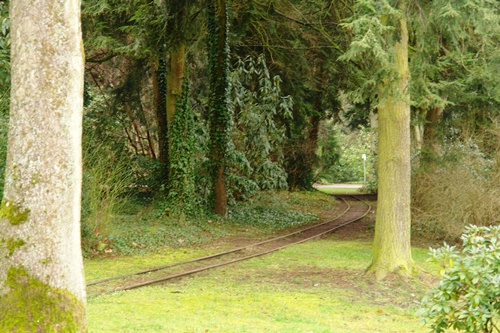
To mark the occasion, and in the spirit of friendship between the two nations, the Franco-German garden was built, a stone’s throw from the border. The park occupies two valleys; one named in memory of the victims of the infamous Battle of the Spichern Heights in Franco-Prussian war of 1870, and the other for the mill built by Teutonic knights in the Middle Ages. Continue reading

Between the Baltic and the Bodden

The walk took us along a narrow, sandy path that followed the top of the dyke. It was not so high, perhaps half a metre above the road and the gates to the cottages on one side, and the field of reeds that stretched out into the Bodden – the inland sea – to the other. Somewhere, beyond the cottages and the fields and dunes was the Baltic Sea, but we were taking the long way around.

The peninsula, curving around like a crooked arm to create the Bodden, goes by the trip-off-the-tongue name of “Fischland-Darß-Zingst”. Each of the three territories along the peninsula’s length are tiny, but they each are marked at different points along the road and at one point there was even an international border between two of them, back when the German lands were a patchwork of kingdoms, principalities and duchies, and the Swedes came across the sea to claim some portion of this flat and melancholic landscape all for themselves. Continue reading

A song for the road

.

This morning I am taking a train to the Saarland, that little corner of Germany tucked in between France and Luxembourg. After that we move on to Paris for a few days and, who knows, we might pass the route I took on a rickety old bus during sixth form college between Leyland and Florence. That was a long journey, sitting two rows from the back and drinking vodka mixed with warm, flat orangeade with the cool kids from foundation art… Some of us studying History had somehow tagged a ride on this little tour to Tuscany, and whilst the Art students spent their days wandering from one gallery to the next, the rest of us were pretty much free to explore the streets of Florence and see what kind of mischief we could get up to.

We were pretty well behaved. This song was part of my soundtrack of that coach journey, and I can distinctly remember sitting on the bus at the Swiss border as rain hammered against the window listening to Glory Box, knowing that we were about to travel through some of the most spectacular scenery in Europe and that we would see absolutely none of it because it was the middle of the night. This is a theme of my travels, as I also managed to take a night bus from Dubrovnik to Trieste along the legendary Jadranska Magistrala – the Dalmatian coastal road – a journey that I now know to be one of the truly great road trips anywhere in the world. I have travelled it since, but the first time I did it I was sitting bolt upright in an uncomfortable seat, only darkness beyond the window, watching Rocky I, II, III and IV dubbed into Croatian as the night passed agonisingly slowly.

New posts might be a bit sporadic whilst I am away, but I will see what I can do – Paul.

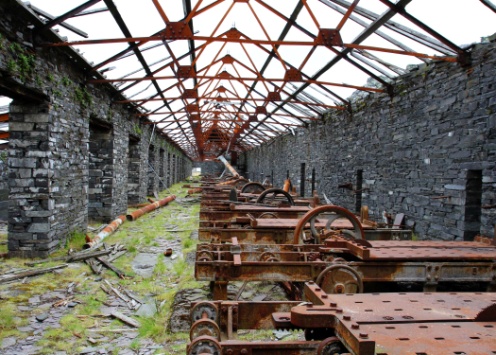
Llanberis slate quarries – A photographic essay

Chris Hughes has often passed by the Dinorwig quarries across the lake from Llanberis and has photographed them from afar. For this photographic essay he got inside, to reflect on the miners, the climbers and the wildlife that have staked a claim to this corner of North Wales:

In the late 1960s we visited the slate quarries of Tilberthwaite in the Lake District, usually on wet days when we had been rained off climbing on the ‘better’ crags. Later we set up long abseils in the Cathedral quarry to impress the PE students we took there as part of their outdoor activities course. But it wasn’t the activity that was remembered, it was the incredible grandeur of the rock architecture, the wonderful effects of light and shade created within these deep pits and the quiet and stillness where once there had been the noise, constant movement, and the general mayhem of the hard and dangerous job of quarrying slate.

Driving through Llanberis you could not fail to notice the monstrous heaps of slate waste and vast rock faces of the Dinorwig quarries across the lake. The whole side of the mountain, and a good part of the inside, had been chopped, sliced, split and generally smashed into pieces. Much of it was thrown away, creating the huge heaps and screes of spoil, whilst the good bits were carted off for roofs, walls and garden rockeries, until it all came to a grinding halt as the price of slate made it all financially unviable. Continue reading