Alpacas be praised, Saltaire

Saltaire1

The sound of an alpaca’s hooves on tarmac, a muted cricket appeal and a group warming up on a band stand set against a backdrop of giant Victorian industrial architecture. By Tom Salmon:

A walk around Roberts Park in Saltaire, a world heritage site near Bradford in the north of England, earlier this year gave us an opportunity to reflect on the impact that the industrial revolution still has on the way that we organise our lives. It’s August, the Sunday after the bank holiday – a Victorian invention created in 1871 – and families are walking around the park enjoying weekend time together – the weekend-off-work concept started for most people in the 1890s.

Continue reading

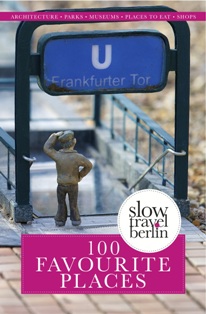
Slow Travel Berlin’s 100 Favourite Places

Cover_Front_Hi-ResAs regular readers of Under a Grey Sky will know, I am closely involved with the Slow Travel Berlin project. What began as a website that “encourages us to slacken our pace, re-consider our motivations and embrace a “less is more” instead of a “fast is better” ethos,” has developed to become not only one of the best English-language resources about the city for travellers and Berliners alike, but also offers a wide selection of tours and workshops to help people engage directly with the city. I have been running a number of different tours for Slow Travel Berlin over the past year, including a neighbourhood stroll through my home kiez of Wedding and some walks along the Berlin Wall Trail, which also tie into my new project at Traces of a Border.

Whilst we were developing the tours, creating a weekly what’s on guide to the city, and the team of over twenty writers and photographers were keeping the website full of fascinating articles about the city, Paul, Marian, and Giulia were working with a good number of contributors to put together Slow Travel Berlin’s first book100 Favourite Places – which is available in print and e-versions and will be launched with a party in the city next week. From the outside looking in I have watched the three editors and the team work incredibly hard to pull the book together, and from the sample pages (follow the book link above) it is obvious that this is not only “not your normal guidebook” but something that should be on the shelves of anyone with an interest in the city, whether they live here or not!

The Slow Travel Berlin project is a wonderful thing. Not only is it a great resource, but it is a great community, from designers to illustrators, writers to photographers, and of course the readers and those who join us on the tours. There are so many website and projects that are based in Berlin, and in particular in English, that do not truly engage with the city, or if they do only within a very small, expat-dominated bubble, and I think it is to Paul and the rest of the team’s credit that Slow Travel Berlin covers such a wide variety of topics about life in the city and has, when you look at all the facebook fans and other commentators, a large amount of local readers, whether German or otherwise.

I will leave you with the encouragement to buy the book – especially if you are in or coming to Berlin – and that you should be safe in the knowledge that it is not only a beautifully designed object, well-researched, written and edited, but that you will be also supporting a truly marvellous project. And here are some of my favourite recent articles from the website including, if you will forgive me, one of my own…

A Short History of Turkish Berlin
Witnessing the Battle of Berlin
Tracing the Invisible Wall
Shakespeare and Sons Bookshop
Berlin’s Best Ice Cream

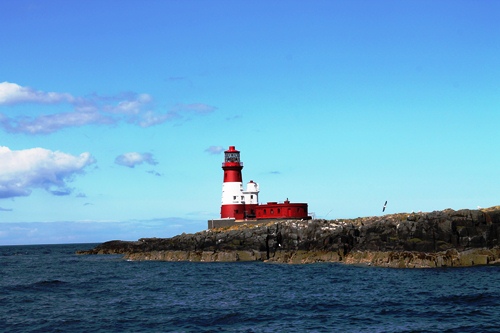
Across the water to the Farne Islands

Farne1

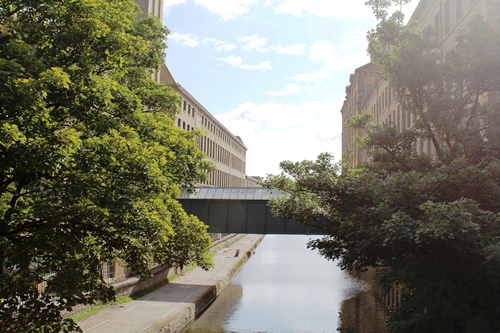
At Seahouses we found a pay and display parking space amongst the bucket-and-spade shops and award winning fish and chip restaurants, and made our way through the ice cream slurping crowds towards the collection of ticket shacks down by the harbour. We wanted to go to the Farne Islands – that scattered collection a couple of miles off the Northumberland coast – but other than that we had no preference for which of the companies competing for our custom would take us across the water, so we picked based on size of queue and the picture of the boat on the side of the ticket shack.

Continue reading

Walking the old customs wall, Berlin

Wall1

The idea for the walk came from Patrick, who had sent me a copy of his map. It showed the route of the old customs wall of Berlin, a fifteen kilometre circle that until 1861 was the limit of the city. There is nearly nothing remaining of the old wall today – just a set of foundations not far from Anhalter Bahnhof and – of course – the Brandenburg Gate, but it lives on in other ways. The route of the U-Bahn line through Kreuzberg for instance and the stations along the way; Kottbusser Tor, Hallesches Tor, Schlesisches Tor… the gates are no more but they live on in these names.

Patrick had walked the route of the old customs wall before and invited me to join him as he did it again. Along the way we would see, as our footsteps followed the path of the invisible wall, how it shaped the development of the city and how you can still see its influence more than 150 years after the city broke through its limitations to become the Weltstadt of the early twentieth century, its population swelling to a number that the old wall could never have contained.

Continue reading

Hey ho, let’s go

Tom1

By Tom Salmon:

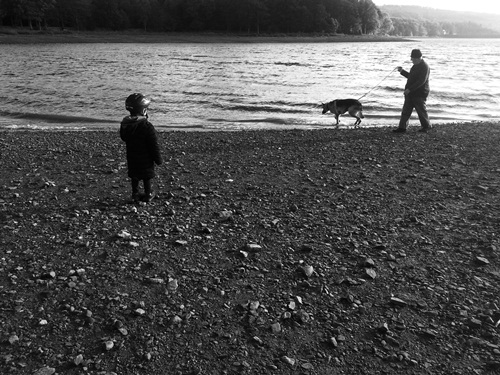
I don’t know when or why the opening lines of the punk classic Blitzkrieg Bop became the rallying cry for a day out with the kids. But the Ramones’ most famous lines are now a part of a soundtrack of the weekend for our three under-fives. ‘Hey ho, let’s go’ they chant as we put our boots on.

We leave home with the kids packed up with their bikes and wrapped up for the chill in the autumnal Yorkshire air. As they clamber over each other’s car seats into the back of the car they play to another Blitzkrieg Bop lyric, “They’re forming in straight line, they’re going through a tight one, the kids are losing their minds, Blitzkrieg Bop”.

Continue reading

Three hours drive and only six miles from home

Treptow1

We were supposed to go to the Saxon Switzerland, that dramatic landscape alongside the Elbe between Dresden and the Czech border. The visit had been a long time planned, because we had last visited in autumn 2004 – a Lotte-lifetime and then some – and we wanted to experience again the great colour-change of the leaves on the trees, the mist on the river, and the spectacular rock formations that make this place one of Germany’s natural wonders. And we would get some excellent photographs for Under a Grey Sky whilst we climbed a low mountain at the edge of the National Park. That was the plan.

Continue reading

In the Tiergarten, Berlin

Tier1

On my first ever day in Berlin, roughly twelve years ago in October 2001, I walked across the Tiergarten. It wasn’t planned. I had started my day at Alexanderplatz before walking down Unter den Linden with the idea of seeing the Brandenburg Gate. I was almost through it, with the buses and cars, when I realised that it was completely covered in scaffolding. I remember thinking that it was a shame that I would not see it on my visit to Berlin, for who knew when I would return.

Continue reading

Sand, Starlings and The Small Heart of Things

OLYMPUS DIGITAL CAMERA

Julian Hoffman writes the wonderful blog Notes from Near and Far, and last week he celebrated the publication of his book, The Small Heart of Things:

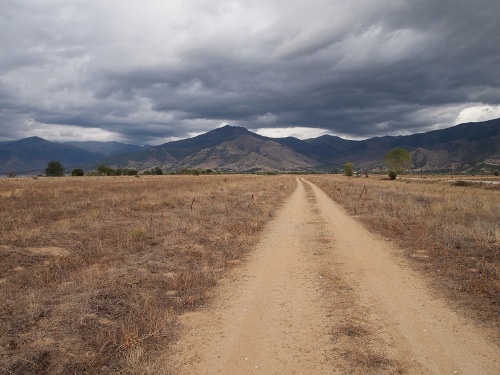
The two Prespa Lakes are split by a flat isthmus, a spur of sand which pelicans glide across in summer as they swap one body of water for the other. Those two lakes, though, were once one, a single blue bowl encircled by steep slopes. Over thousands of years, silt and sediment from the mountains were sluiced down their gullies and creeks into the river that drains the valley. As the river emptied, spilling its mountain hoard into the lake – all the spoil of sand and silt that had been worn down by wind, rain and time – those tiny grains built up in a slow process of accumulation until they spread out across the water, building a bridge one particle at a time, turning one lake into two.

Continue reading

Cities built on sand

Image 1

By Ian Hill

I cross the square, and the damp sand squeaks beneath my feet. Wet from rain, it seams the cobbles of the pavements, sifts into the gutters and drains. The sand smells of gunmetal and earth, with a scent of the sea, as though tides once lapped these ancient squares. It is a reminder of our proximity to water, the shifting base of rivers on which we build our monuments to progress.

Here, sand is like the innards of the city; its hidden viscera, its soft core beneath a carapace of buildings and roads. I pass a construction site where a vacant plot is being excavated for development, and I see a vast hole in the ground, foundations for a new building, which is layered with stacks of yellow and ochre sand, like the glass lighthouse-shaped paperweights I remember from beach holidays of my youth, filled with striped layers of coloured sediment, like a history of geological time. As the construction deepens, older and older layers are exposed, each one a slightly different colour to the last, each one telling a story of water, holding a memory of currents gently teasing the sand into ripples and banks.

Continue reading

Brocken Diary: The Mountain Never Climbed

???????????????????????????????

I don’t tend to make New Year resolutions – perhaps because of football seasons and growing up surrounded by people who work in Higher Education, autumn always feels much more like a “new beginning” that the 1st January – but I have decided to hatch a plan for some point over the next twelve months: to climb what was the highest mountain in East Germany…

On December 25th 2006 our daughter Lotte was six months old. We were celebrating her first Christmas with some friends in a small town on the edge of the Harz Mountains, and decided on the day itself to drive into the National Park and go for a walk. The Harz straddle the border between the German states of Lower Saxony and Saxony-Anhalt, which means that during the years of division the inner-German border. We were staying in the old West. We went for a walk in the old East.

Continue reading