Category Archives: Reflections

An Accumulation of Light

OLYMPUS DIGITAL CAMERA

By Julian Hoffman:

“Everything beckons us to perceive it,
murmurs at every turn…”
~ Rainer Maria Rilke

Hearing that a pair of eagle owls inhabited a rocky gorge on the plateau, we decided it was worth trying to see them hunting about the cliffs at dusk. First we explored the area in daylight, getting a feel for it before evening. The gorge began at the sea in a small cove where a few fishing boats were dragged up on to the beach and a handful of people swam in the shallows. Our friends couldn’t be tempted into the late September water and so they left us, trousers rolled up to our knees, walking the crystalline edge of the Black Sea. We’d only been in the surf a few minutes when they called us over, hushing us to come quietly to the pool of water they were standing by.

A squacco heron crouched on a stone at the edge of the pool. It was water lit, absorbing the mirrored light until it glowed. The bird’s back was draped in ochre and violet; its breast laced with lemon that bloomed towards the emerald edges of its eyes. It seemed to be the reflected emblem of the day, a distilled essence of light. The green and black lance of its bill was steady, and its eyes unwavering. It appeared to be lost in a trance but was peering for fish in the shallows, as still as the reflecting water. One of us must have shifted our weight, because suddenly it unfolded the white flags of its wings and glided away.

Continue reading

25 Years since the fall of the Berlin Wall

Bornholmer Strasse Web

Next Sunday it is the 9th November, and the 25th anniversary of the night the “wall came down”. Of course, it didn’t, but the first checkpoints were opened and people streamed from one side to the other and danced atop the hated structure at the Brandenburg Gate in scenes that would become some of the most iconic, not only of the collapse of communism in central and eastern Europe, but of the twentieth century as a whole.

As some Under a Grey Sky readers will know, the history of this city that I have called home for over a decade continues to fascinate me, and just over a year ago I began a project called Traces of a Border – a series of explorations of the Berlin Wall Trail as a means to not only understanding the history of the division of Berlin and what it meant for people on both sides, but also the legacy of that division and how it has shaped and continues to the shape the contemporary city.

Continue reading

No more night trains?

???????????????????????????????

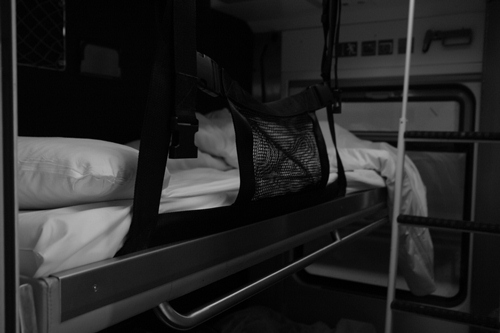
The night train is one of the great travelling experiences, and sadly – according to this article in the Guardian – it is one that is under threat. I have taken many night trains across Europe, from a first experience in an eight person compartment between Prague and Budapest that probably should have put me off the idea for life, to the journey we took a couple of years ago from Paris home to Berlin, introducing Lotte to the excitement of falling asleep as the train moved through the suburbs of one city and waking as a new city in a new country came into view. That service is one of the night trains that will no longer be running by the end of the year, and it is not only a great shame, but one that feels shortsighted in an era when we should be looking at ways of reducing the environmental impact of our travels.

Continue reading

Le Tour – Two days in Yorkshire

LeTour1

On the Thursday before the riders of the 101st Tour de France lined up along the Headrow in Leeds city centre for Le Grand Depart, we went for a walk through the market town of Otley, just a short way along the planned first stage route. The last time we had been in this part of West Yorkshire was back in February and it had been clear back then – from the first sightings of yellow bicycles leaning against dry stone walls or the first signs advertising camping the nearby farms – that the region was most definitely looking forward to their two days in the spotlight… but this was something else.

We found ourselves stopping at almost every shop window, whether a butchers, a newsagents, a bakery or an estate agents, to see how they were marking the arrival of the race, and it felt as if there was not a single shop front in the town that was not getting in on the act. The streets were criss-crossed with bunting – most frequently small representations of the three leaders jerseys from the race – and every pub had translated their name into French on banners that hung above the doors. Inside and yellow-jersey’d bar staff offered up a selection of themed real ales – pint of Saddle Sore anyone? – and the conversation in the snugs and lounges revolved around the impending arrival of the race from across the channel.

Continue reading

Under blue skies in Waren, Germany

Waren1

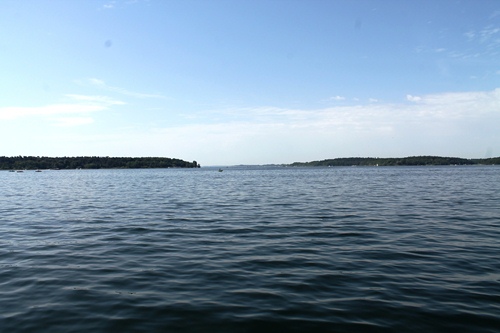
It is just over half a year since our last visit to Waren, the town that sits at the head of the Müritz lake, and the experience couldn’t be more different. Last time around we could barely see the other side of the bay as the lake was shrouded in mist, our boat tour was halved by the captain as it was nearly impossible to see anything, and many of the restaurants, cafes and bars that surround the harbour were closed for the winter. Now the harbour is alive. From the balcony of our apartment we can look across the marina, filled with boats of many sizes, and we can hear the general chatter of the drinkers and diners who occupy the waterside terraces seemingly from breakfast until late in the evening. The pleasure cruisers fill up quickly, exiting the harbour for the lake with a blast on their horn, the top decks packed with passengers. You get a sense, on this bank holiday weekend, that most of northern Germany has descended on this lakeside town, to walk and swim, explore the nearby Müritz National Park, rent bikes and canoes, or simply stroll between the cobbled market square and the harbour, where they can feast on locally-caught fish stuffed in crusty bread rolls, or Italian ice cream.

Continue reading

If you know your history… Prora, the Colossus of Rügen

Prora1

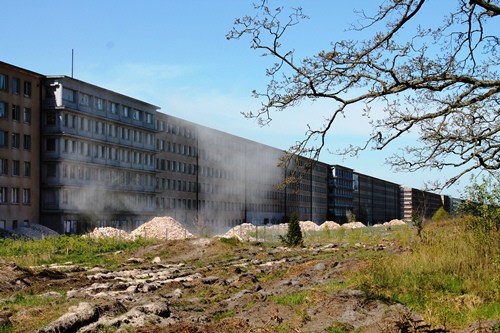
I first visited Prora, just up the coast from the seaside town of Binz, back in 2006. As we pulled into the car park on that November day, surrounded by tall pine trees, it did not seem up to much. There was a ramshackle building topped with a sign advertising “Rügen’s Largest Nightclub”, a building beyond the trees that was under renovation – it would open a year later as a youth hostel – and otherwise not much else beyond an eerie sense of abandonment.

The building clad in scaffolding was just part of an enormous complex that had been conceived of by the Nazis in the 1930s as the first of five massive resorts that would be run under the organization Kraft durch Freude (Strength through Joy). Prora was to house 20,000 holidaymakers at a time, sleeping in one of eight buildings each half a kilometre long that were to be laid out along the Prora Wiek, arguably Germany’s finest beach.

Continue reading

Photojournalism and the interest of proletarian revolution

Farbe_fuer_die_Republik_7_DHM_Altenheim_Koepenick_Martin_Schmidt__c__DHM

With the weather in Berlin suddenly reaching summer-like levels of warmth, it might seem like a funny time to write about and recommend a museum visit, but the skies were grey last weekend when we headed to the German History Museum, and the special exhibition we found there is definitely worth a look the nice time the temperatures drop.

FARBE FÜR DIE REPUBLIK (Colour for the Republic) is a collection of images taken by the photojournalists Martin Schmidt and Kurt Schwarzer in the German Democratic Republic. The two men were both freelance photographers, but were hired by different companies and mass organisations in the GDR to take images to be used for trade fairs, products, cookbooks and more. As the introduction to the exhibition makes clear, the images were supposed to depict elements of a fulfilled life under socialism in the GDR, and the fact that they were in colour was no accident:

Continue reading

A Gift from the Road: Walking the Woods and the Water

walking the woodsA review of Walking the Woods and the Water by Nick Hunt

Review by Paul Scraton:

In 1933 Patrick Leigh Fermor began a walk from the Hook of Holland that would take him across Europe, a journey he would later immortalise in three books – A Time of Gifts, Between the Woods and the Water, and (published posthumously) The Broken Road. The first two have, since publication, been long regarded as classics of travel literature. Reading them today you are struck with the sense that these are books written about a time when Europe was at a tipping point – much of A Time of Gifts for instance is set in a Germany where the Nazis are in the ascendant – but also and especially later in Fermor’s journey, in the lands to the East, where the books are filled with tales of aristocrats and peasants it is a world that became decidedly less “modern” the more he walked.

Continue reading

The ambivalence of technology at the mouth of the Peene River

Peene1

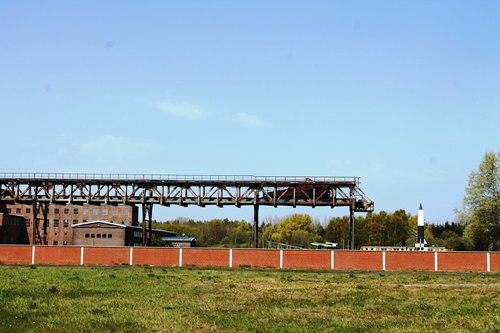
The first clues to the history of the village of Peenemünde, at the northern end of the island of Usedom, were the military signs amongst the trees on either side of the road that swept through the forest. Much of the countryside around the village remains restricted, as it has been since 1936 when the whole northern peninsula of the island was purchased by the Reich Air Ministry. Alongside the airfield, the German Army also established a research centre under the technical leadership of Wernher von Braun, whose mother had in fact recommended the site as “just the place for you and your friends”.

Von Braun was a rocket engineer, and the centre at Peenemünde was tasked with the development of the guided missiles and rockets that would, by the end of World War II, bring death and destruction to cities across Northern Europe. Altogether, the V1 rocket would be used some 22,000 times, and the later V2 on at least 3,000 occasions, including over a thousand aimed at London. An estimated 2,754 Londoners were killed in the rocket attacks, with a further 1,736 killed in Antwerp, Belgium, which had the dubious honour of being the Nazis most-targeted city with their new “miracle weapons” that were supposed to end the war in their favour. As it turned out, more people – mostly slave labourers – were killed in the production of these rockets than in their operation.

Continue reading