Category Archives: Diary

Two sides of the Schwarzwald

Black1

Sometimes I forget how flat Berlin is. On a glorious morning in the north of the Black Forest, running out from the village of Enzklösterle after the rain, I remembered. The road ran out from our campsite down by the river and up into a valley. At first it was paved, past the driveways of neat family houses and their colourful, flowered balconies. Then it was a gravel track. And then I turned onto a path through the trees, skipping from side to side to dodge the muddy puddles. All the way it was steep, so steep, and when it finally levelled, the trees retreating slightly to give me a view back down the valley, I had to stop, hands on knees, gasping for breath.

After a moment or two I recovered, and then started again. The path stayed more or less at the same altitude, clinging to the side of the hill, and I followed it for a couple of kilometres until I reached the next gravel path after, leading back down to the next village. The path was grassy, soaking my socks through my distinctly un-trail-shoes. But I did not care. The sun was warming but not yet hot, butterflies danced, and a jay crossed my path in a flash of turquoise, into the trees. When I reached the next village I dropped back down, to run home alongside the river at the bottom of the valley.

Continue reading

To the Hérisson Falls, France

Hérisson1

It took two attempts to visit the Hérisson Falls in the Jura region of France, not far from the Swiss border. On the first day we arrived in torrential rain that had turned the car park into a lake and the footpath up to the falls into a river. We did not even leave the car. A day later and it was still raining, but we tried again, and as we approached the same spot as the day before the sky began to clear and our way to the waterfalls was clear.

Altogether 31 waterfalls and rapids make up the Hérisson, which fall roughly 300 metres in altitude over nearly four kilometres, and to see them – especially after days of rain – is to experience something truly powerful as the water tumbles and falls over the rocks. For over seven hundred years this power had been harnessed by people to help them exploit the natural resources of the regions, including hemp, wood and iron ore. The advent of electricity in the nineteenth century meant that the waterfalls were no longer needed for their raw energy, but became instead a popular destination on the local tourism trail.

Continue reading

The Wiesenbeker Teich and the underground history of the Harz Mountains

Wies1

We returned to Berlin a week or so ago from our summer travels through Germany and France, straight back into the hectic normality of everyday life, and with a notebook filled with scribbles and reflections on the places we have seen and experienced. So where to start? On page one of course, and a man-made lake at the southern edge of the Harz Mountains…

On our second morning at the Wiesenbeker Teich and we emerged from our tents to a view of the forested mountains above the lake shrouded in mist. There was some rain in air, and from our camping spot above the water, it looked as if the lake itself was smoking in the early morning gloom. Apart from the campsite, there is not much around the lake. A crumbling hotel stands at the end closest to the town of Bad Lauterberg, but otherwise it is steep-sided hills falling into the water, with trees growing all the way down to the water’s edge.

Continue reading

Across the fields, through the woods, and over the moors

walk1

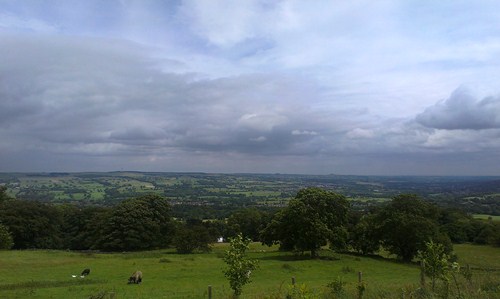
From the house Derry Hill rises steeply out of the village of Menston, a narrow lane along which drivers race just a little too fast and unsuspecting walkers have to keep their wits about them. So it is something of a relief, about halfway up, to follow a footpath sign over a style and to head out across the fields. From this point on, during our seven mile loop that will take us south and then back round to the village, we will only ever encounter roads as we cross them… apart from a couple of farm tracks along the way, the walk will very much be across the fields, through the woods, and over the moors.

So far… so Yorkshire. This part of the world has all the things you would hope to find on a walk such as this, from the dry stone walls to picturesque villages, lonely pubs on the edge of wild moorland, and amazing views across the rolling landscape. But beyond these clichés there is something else that makes walking in West Yorkshire so fascinating, and that is the opportunity – especially once you get up high and the countryside unfolds before you – to understand not only the natural beauty of the region, but also the social history of this landscape, and the human interaction that has shaped it.

Continue reading

Le Tour – Two days in Yorkshire

LeTour1

On the Thursday before the riders of the 101st Tour de France lined up along the Headrow in Leeds city centre for Le Grand Depart, we went for a walk through the market town of Otley, just a short way along the planned first stage route. The last time we had been in this part of West Yorkshire was back in February and it had been clear back then – from the first sightings of yellow bicycles leaning against dry stone walls or the first signs advertising camping the nearby farms – that the region was most definitely looking forward to their two days in the spotlight… but this was something else.

We found ourselves stopping at almost every shop window, whether a butchers, a newsagents, a bakery or an estate agents, to see how they were marking the arrival of the race, and it felt as if there was not a single shop front in the town that was not getting in on the act. The streets were criss-crossed with bunting – most frequently small representations of the three leaders jerseys from the race – and every pub had translated their name into French on banners that hung above the doors. Inside and yellow-jersey’d bar staff offered up a selection of themed real ales – pint of Saddle Sore anyone? – and the conversation in the snugs and lounges revolved around the impending arrival of the race from across the channel.

Continue reading

Running home from Bernau

Bernau1

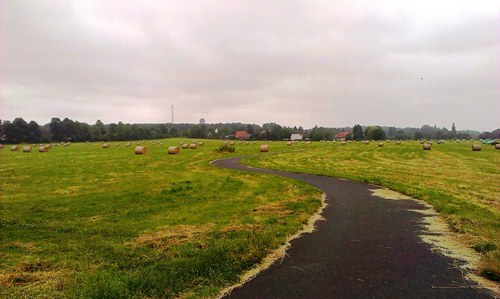
This morning I woke up, caught the S-Bahn to the end of the line, and ran home again. The route I chose was to follow the Panke river from Bernau for 25 kilometres until it arrived just a couple of footsteps away from our front door. It is a journey I have wanted to make for a while, passing through the north of the city alongside the river. As it happened, for the first third of the journey the Panke kept itself fairly well hidden. It was little more than a ditch when I began, running through an allotment colony just south of Bernau station, and then it swung away into some fields, only to appear periodically until I reached Buch, the Berlin city limits, and the overgrowth of the Schlosspark.

Continue reading

Under blue skies in Waren, Germany

Waren1

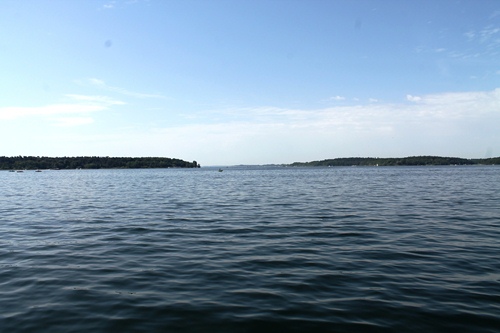
It is just over half a year since our last visit to Waren, the town that sits at the head of the Müritz lake, and the experience couldn’t be more different. Last time around we could barely see the other side of the bay as the lake was shrouded in mist, our boat tour was halved by the captain as it was nearly impossible to see anything, and many of the restaurants, cafes and bars that surround the harbour were closed for the winter. Now the harbour is alive. From the balcony of our apartment we can look across the marina, filled with boats of many sizes, and we can hear the general chatter of the drinkers and diners who occupy the waterside terraces seemingly from breakfast until late in the evening. The pleasure cruisers fill up quickly, exiting the harbour for the lake with a blast on their horn, the top decks packed with passengers. You get a sense, on this bank holiday weekend, that most of northern Germany has descended on this lakeside town, to walk and swim, explore the nearby Müritz National Park, rent bikes and canoes, or simply stroll between the cobbled market square and the harbour, where they can feast on locally-caught fish stuffed in crusty bread rolls, or Italian ice cream.

Continue reading

A love letter to my favourite place in the world…

Rhos1

We arrived in Rhoscolyn at around midnight, the headlights of our hire car jumping with each rut of the gravel track as we made our way to Cerrig-yr-Adar. Otherwise we were surrounded by darkness. At the bottom of Holy Island, in the north western corner of Wales there are very few streetlights, and though the stars can give you some spectacular illumination, on this occasion they were hidden behind the clouds. But of course it did not matter that we could not see the view in front of us as we crested the small hill just before we finally got there, for we know it so well, as regular readers of Under a Grey Sky will know. This is a place that I spent most of the summers of my childhood, a place that is close to the hearts of so many of my friends and family that if they were all to descend on Outdoor Alternative at the same time we would fill all the beds and probably most of the campsite for good measure. So it did not matter that we could not see across the bay to the beacon, or to the coastguard lookout on top of the hill, or across to the bay windows of the White Eagle pub, as we knew it was all there, in place, waiting for us as it ever does.

Continue reading

In Koserow, Usedom…

Koserow1

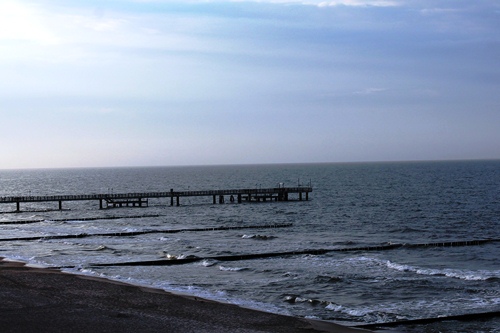
You might have noticed something of a theme on Under a Grey Sky in recent weeks, and that is a series of articles on the German Baltic Coast. This not only because we have made some trips there recently, but also a reflection on the fact that when the temperatures hit 30 degrees in Berlin – as they have this week –many Berliners begin to dream of the lakes of Brandenburg and the sea breeze of the Ostsee coast, and we are no exception:

Long before the island of Usedom became of popular destination for sun-seekers, bathers, and anyone looking to escape the dirt and grime of rapidly industrialising cities, it was a place where life was dominated by the twin goals of attempting the harvest the produce of the field and the sea. The village of Koserow dates back to the 13th Century, when fishing and agriculture were the main activities for the small population living in the shadow of the Streckelsberg hill. By the beginning of the 19th Century the first Salzhütte had been erected, thatched huts where the herrings caught under royal license where packed in salt and stored, before transportation across the German-speaking lands.

Continue reading