Exploring Olympic Berlin

Bell

We have been to the Olympic Village before, a few kilometres outside of the city limits, built for the athletes and their entourage when they came to compete in the 1936 Olympic Games. It was supposed to be a triumph for Hitler and the National Socialists, who had come to power three years earlier, but it would be remembered for the exploits of a black man from across the ocean. Jesse Owens made the Games his own, with four gold medals, and a recreation of his bedroom stands at the heart of the exhibition – most of which is in the open air.

It is a strange place. Many of the buildings are peeling and crumbling, although some renovation work has been done. There are photographs and information boards to tell you what was once here, although not so many further into the complex, when you stumble across the ruins of some more recent buildings – the remains of the Soviet military base that occupied the site during the GDR years, when this whole area was off limits for anyone without special permission to be here.
Continue reading

Following Rebecca at the Berlin Marathon

Marathon1

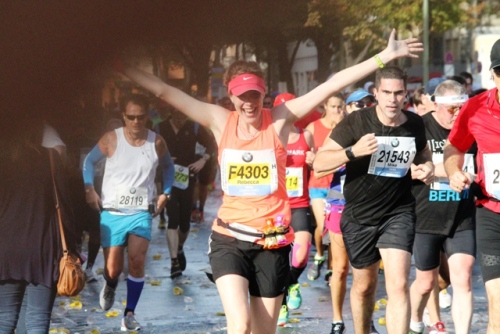
Every year we watch the marathon in Berlin, heading down to Unter den Linden to stand in the shadow of the Russian Embassy to watch the runners as they turn the final corner and can see the Brandenburg Gate for the first time. They are about a kilometre from home, and it can be pretty emotional to watch their reactions. This year we had a friend running – Rebecca – who I have known since primary school when we used to go to their house once a week and they came to ours the other, and we played spy games in the garden and her older brother Ben stole my Cadbury’s Cream Egg. Not that I am still bitter about it… anyway, where was I?

Oh yes, Rebecca. It was thanks to Rebecca that I first stayed at the Circus Hostel when I visited Berlin in October 2001, and therefore it is thanks to her for pretty much all my friends in Berlin, Katrin and Lotte, and everything else that has happened to me since. So it seemed only fair that if she was returning to the city to run her first marathon that we spent the day dressed up in t-shirts with her bib number of the back and caught U-Bahn after U-Bahn to cheer her on around the course. She did remarkably well, and it was very inspiring to watch her run, and made me think about my own running… a process that begin about three years ago with a new pair of shoes and a first difficult walk-run three kilometres through my home neighbourhood of Berlin-Wedding.

Continue reading

A bend in the river, Saarland

Saar1

Saarland passes by the car window in a blur of green hills and industrial buildings… it is always that way in my imagination, the red brick chimneys of the Völklinger Hütte standing tall against the backdrop of the forest beyond the motorway… and it is always raining against the window or snow is falling from the sky through a winter mist, which is strange as the first time I ever came to this corner of Germany pressed up against the French border it was May, the sun shone, and we drank beers in the cobbled square of Saarbrücken, and licked our ice creams down by the river in Mettlach.

Continue reading

No more night trains?

???????????????????????????????

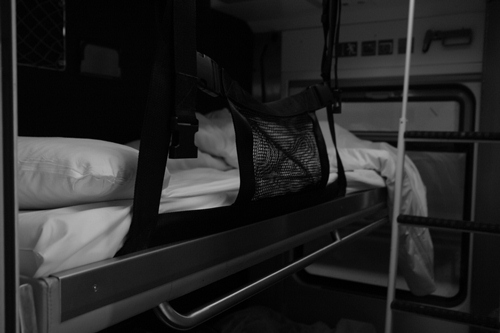
The night train is one of the great travelling experiences, and sadly – according to this article in the Guardian – it is one that is under threat. I have taken many night trains across Europe, from a first experience in an eight person compartment between Prague and Budapest that probably should have put me off the idea for life, to the journey we took a couple of years ago from Paris home to Berlin, introducing Lotte to the excitement of falling asleep as the train moved through the suburbs of one city and waking as a new city in a new country came into view. That service is one of the night trains that will no longer be running by the end of the year, and it is not only a great shame, but one that feels shortsighted in an era when we should be looking at ways of reducing the environmental impact of our travels.

Continue reading

Two sides of the Schwarzwald

Black1

Sometimes I forget how flat Berlin is. On a glorious morning in the north of the Black Forest, running out from the village of Enzklösterle after the rain, I remembered. The road ran out from our campsite down by the river and up into a valley. At first it was paved, past the driveways of neat family houses and their colourful, flowered balconies. Then it was a gravel track. And then I turned onto a path through the trees, skipping from side to side to dodge the muddy puddles. All the way it was steep, so steep, and when it finally levelled, the trees retreating slightly to give me a view back down the valley, I had to stop, hands on knees, gasping for breath.

After a moment or two I recovered, and then started again. The path stayed more or less at the same altitude, clinging to the side of the hill, and I followed it for a couple of kilometres until I reached the next gravel path after, leading back down to the next village. The path was grassy, soaking my socks through my distinctly un-trail-shoes. But I did not care. The sun was warming but not yet hot, butterflies danced, and a jay crossed my path in a flash of turquoise, into the trees. When I reached the next village I dropped back down, to run home alongside the river at the bottom of the valley.

Continue reading

To the Hérisson Falls, France

Hérisson1

It took two attempts to visit the Hérisson Falls in the Jura region of France, not far from the Swiss border. On the first day we arrived in torrential rain that had turned the car park into a lake and the footpath up to the falls into a river. We did not even leave the car. A day later and it was still raining, but we tried again, and as we approached the same spot as the day before the sky began to clear and our way to the waterfalls was clear.

Altogether 31 waterfalls and rapids make up the Hérisson, which fall roughly 300 metres in altitude over nearly four kilometres, and to see them – especially after days of rain – is to experience something truly powerful as the water tumbles and falls over the rocks. For over seven hundred years this power had been harnessed by people to help them exploit the natural resources of the regions, including hemp, wood and iron ore. The advent of electricity in the nineteenth century meant that the waterfalls were no longer needed for their raw energy, but became instead a popular destination on the local tourism trail.

Continue reading

The Wiesenbeker Teich and the underground history of the Harz Mountains

Wies1

We returned to Berlin a week or so ago from our summer travels through Germany and France, straight back into the hectic normality of everyday life, and with a notebook filled with scribbles and reflections on the places we have seen and experienced. So where to start? On page one of course, and a man-made lake at the southern edge of the Harz Mountains…

On our second morning at the Wiesenbeker Teich and we emerged from our tents to a view of the forested mountains above the lake shrouded in mist. There was some rain in air, and from our camping spot above the water, it looked as if the lake itself was smoking in the early morning gloom. Apart from the campsite, there is not much around the lake. A crumbling hotel stands at the end closest to the town of Bad Lauterberg, but otherwise it is steep-sided hills falling into the water, with trees growing all the way down to the water’s edge.

Continue reading

On the road…

On the road

Yep… it is that time again. Under a Grey Sky will be taking a little break for the next month or so, as we recharge our batteries, think about what we want to do with this project moving forward, and of course, to have some more adventures beyond the front door that we can write about here. Our plans will take us on a road trip through Germany, some time in the steephead valleys of the Jura, in France, and who knows what else closer to home? We hope all the readers and contributors to Under a Grey Sky have a great summer, and many thanks to all of you who have continued to read, write and comment over the past twelve months.

Paul and Katrin

Across the fields, through the woods, and over the moors

walk1

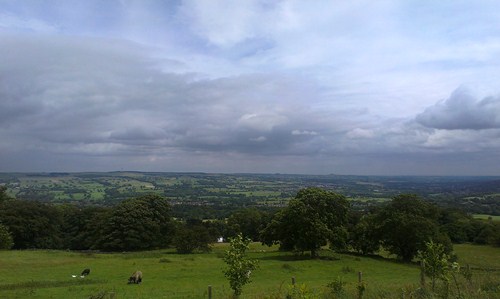
From the house Derry Hill rises steeply out of the village of Menston, a narrow lane along which drivers race just a little too fast and unsuspecting walkers have to keep their wits about them. So it is something of a relief, about halfway up, to follow a footpath sign over a style and to head out across the fields. From this point on, during our seven mile loop that will take us south and then back round to the village, we will only ever encounter roads as we cross them… apart from a couple of farm tracks along the way, the walk will very much be across the fields, through the woods, and over the moors.

So far… so Yorkshire. This part of the world has all the things you would hope to find on a walk such as this, from the dry stone walls to picturesque villages, lonely pubs on the edge of wild moorland, and amazing views across the rolling landscape. But beyond these clichés there is something else that makes walking in West Yorkshire so fascinating, and that is the opportunity – especially once you get up high and the countryside unfolds before you – to understand not only the natural beauty of the region, but also the social history of this landscape, and the human interaction that has shaped it.

Continue reading

Le Tour – Two days in Yorkshire

LeTour1

On the Thursday before the riders of the 101st Tour de France lined up along the Headrow in Leeds city centre for Le Grand Depart, we went for a walk through the market town of Otley, just a short way along the planned first stage route. The last time we had been in this part of West Yorkshire was back in February and it had been clear back then – from the first sightings of yellow bicycles leaning against dry stone walls or the first signs advertising camping the nearby farms – that the region was most definitely looking forward to their two days in the spotlight… but this was something else.

We found ourselves stopping at almost every shop window, whether a butchers, a newsagents, a bakery or an estate agents, to see how they were marking the arrival of the race, and it felt as if there was not a single shop front in the town that was not getting in on the act. The streets were criss-crossed with bunting – most frequently small representations of the three leaders jerseys from the race – and every pub had translated their name into French on banners that hung above the doors. Inside and yellow-jersey’d bar staff offered up a selection of themed real ales – pint of Saddle Sore anyone? – and the conversation in the snugs and lounges revolved around the impending arrival of the race from across the channel.

Continue reading