Category Archives: Places

Llanberis slate quarries – A photographic essay

Chris Hughes has often passed by the Dinorwig quarries across the lake from Llanberis and has photographed them from afar. For this photographic essay he got inside, to reflect on the miners, the climbers and the wildlife that have staked a claim to this corner of North Wales:

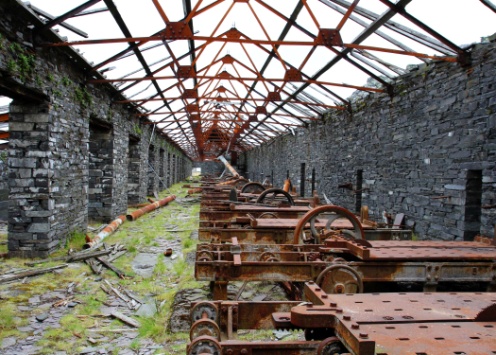
In the late 1960s we visited the slate quarries of Tilberthwaite in the Lake District, usually on wet days when we had been rained off climbing on the ‘better’ crags. Later we set up long abseils in the Cathedral quarry to impress the PE students we took there as part of their outdoor activities course. But it wasn’t the activity that was remembered, it was the incredible grandeur of the rock architecture, the wonderful effects of light and shade created within these deep pits and the quiet and stillness where once there had been the noise, constant movement, and the general mayhem of the hard and dangerous job of quarrying slate.

Driving through Llanberis you could not fail to notice the monstrous heaps of slate waste and vast rock faces of the Dinorwig quarries across the lake. The whole side of the mountain, and a good part of the inside, had been chopped, sliced, split and generally smashed into pieces. Much of it was thrown away, creating the huge heaps and screes of spoil, whilst the good bits were carted off for roofs, walls and garden rockeries, until it all came to a grinding halt as the price of slate made it all financially unviable. Continue reading
Memories of Quilmes, Argentina

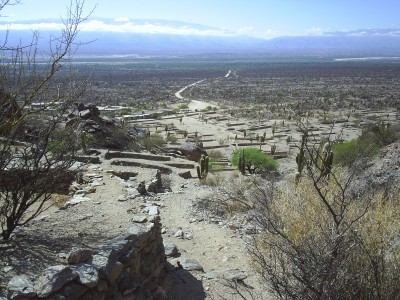
Tom Salmon on a journey through Argentina to the ruins of a fortress city and the history of the Diaguitan people that once called it home:

It’s amazing, and pretty primeval, how your senses can take you back to a place. I got home last night to find frost already settling on the ground, it was a clear and crisp January night in Yorkshire. After putting the kids to bed it was time to eat. Steak, thin chips, salad and malbec wine had been planned in homage to Argentina.

But it was the Quilmes beer that we drank after the meal that really brought the memories flooding back from our six week trip around Argentina in 2006. My highlight from that adventure was the region around the colonial Andean city of Salta, spending the days exploring high altitude deserts and the nights eating tamales, humitas and locro in piazzas around the city. Salta, founded in 1582, was once the most important administrative centre in Argentina and the region was extremely wealthy in the time before Buenos Aires became the capital. Continue reading

The last big freeze, Lake Constance

Three countries share Lake Constance, the communities of Switzerland, Germany and Austria facing each other across the water. Nowadays you can cross the border without formality – don’t tell anyone, but I spent an afternoon in Austrian Bregenz without a single piece of identification having left it behind in Germany – and there are plenty of boats that criss-cross the lake. The owner of our apartment lived in one country, worked in another, and no doubt went on Sunday bike rides in the third. There is another way to make these international journeys, although on average the opportunity strikes only a couple of times a century, if that, and that is when Lake Constance freezes over. Continue reading

Winter in Rocquetas, Spain

A Journal Entry from December 2008:

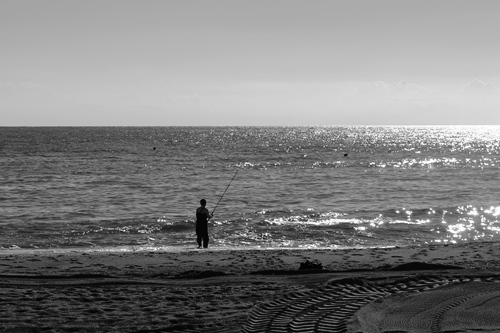
Ten at night in Roquetas. Waves crash against an empty beach, a cold wind chilling the few hardy late-night promenaders. From the sands the town is dark, with only a few buildings showing signs of life. The hotels, if they are not closed entirely for the winter season clearly have rooms to spare. It feels lonely on the beach, the wrong time of day in the wrong time of the year. But under the warming winter sun the following morning, it becomes clear that even in December there is life in the town. Continue reading

Sunday by the seaside, Whitby

Jasmine Salmon on an off-season jaunt to the North Sea coast:

Whitby.  Wintery, wild and windy.  Doesn’t sound too promising, but when you’ve got two children under the age of four with cabin fever – and possibly harbouring chicken pox – a two hour drive to the coast seems an attractive prospect.

And in fact many would argue that Whitby is at its best in January.  Devoid of tourists, the weak winter light and grey skies add to the dramatic atmosphere of the North Sea coast and fossil-rich cliffs, with the headland topped by the gothic architecture of the ruined Abbey and surrounded by the bleakly beautiful moorland of the North York Moors National Park. Continue reading

Surfing in Cuba: A different revolution

(Photo: Calle 70, Havana, 2009 / Michael Scott Moore)

The following extract is taken from Sweetness and Blood, by Michael Scott Moore, in which he explores how surfing spread from Hawaii to the rest of the world and the impact the sport has had in some extremely unlikely places:

In a beachside neighbourhood I flagged down a powder blue Cadillac with fins.

“¿A Habana Vieja?”

“Sí, sí.”

No room in back, so I sat in front. The dashboard had cheap wooden panels and backlighting provided by old pale bulbs. A Cadillac eagle logo rendered in steel reached its wings over my knees. Most of Havana’s máquinas, or gypsy cabs, are old American iron. They’re run by Cubans for other Cubans, and visitors aren’t supposed to ride them. But there was almost no way to move in Cuba without breaking the law.

“American?” the driver said when the car was almost empty.

“Yes.”

“What brought you to Cuba?” Continue reading

Facing the past: From the Wannsee shore to Indian Island

(Photo: Indian Island Tolowot California / Wikimedia Commons / Ellin Beltz)

Tony Platt travels from Berlin back home to California, comparing the ways in which societies deal with past, and the hidden history of the ‘outdoor paradise’ of Humboldt County:

In October I spent a few days in Berlin, not for oompah and pretzels, but to check out memorial culture. I don’t know of another country that assiduously remembers the worst of its history as Germany does. Fortunately, the nation that carries the weight of Nazism did not take Ronald Reagan’s advice when he visited Bitburg cemetery in 1985 – “I don’t think we ought to focus on the past.” That could be the mantra, though, for his home state. Back in northwest California, I’m struck by how scrupulously the region forgets its sorrowful history.

Throughout Germany there are close to two hundred “authentic sites of remembrance” of Hitler’s regime, as well as a lexicon of terms to describe the extraordinary variety of commemoration: memorials of apology, memorials of honor, active museums, memorial cemeteries, memorial plaques, thinking sites, learning places, documentation centers, and so on. In Berlin alone, you can spend a week going from site to site, as I did, and still not see everything. Back home in Humboldt County, a couple of hours once a year is all you need. Continue reading

Clare Woods at the Hepworth, Wakefield


Tom Salmon checks out the exhibition “The Unquiet Head” from Clare Woods, which is at the Hepworth Gallery in Wakefield until the 29th January 2012. The film above is an introduction to the artist and her work, and concentrates on the current exhibition:

On a typical wintery day in Yorkshire – grey, bleak, misty and great – we headed out to the Hepworth Wakefield, a new gallery that celebrates the area’s unique artistic legacy and exhibits the work of major contemporary artists. We were looking for a bit of culture, but the trip also gave me pause to reflect on how much I love living here and why Yorkshire is known (at least by us locals) as ‘God’s own county.’ Continue reading

In the Grunewald Forest, Berlin

(Photo: View through the trees / Paul Scraton)

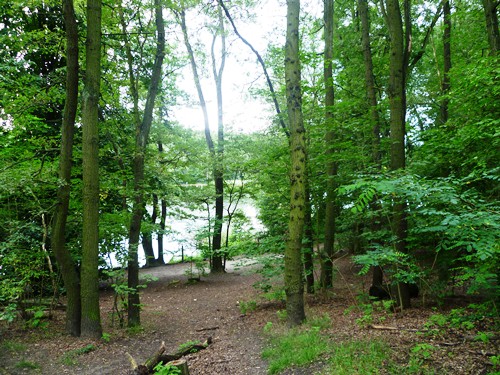
From the moment people began to make money in Berlin, they looked for ways to escape the city. The Grunewald, with its forest and lakes, became home to the mansions and villas of the rich at the end of the nineteenth century, and the neighbourhood was incorporated into Berlin in 1920. Not long after Christopher Isherwood was in town, and his impression of the place was less than favourable:

“Most of the richest Berlin families inhabit the Grunewald. It is difficult to understand why. Their villas, in all known styles of expensive ugliness, ranging from the eccentric-rococo folly to the cubist flat-roofed steel-and-glass box, are crowded together in this dank, dreary pinewood.”

A page or so later, on his way to teach the daughter of one of those rich Berlin families, he goes on to describe the place as a “millionaire’s slum”. But the wealthy and the well-to-do continue to be quite happy in their moneyed-sanctuary between the trees. Continue reading

Escape to the Alpujarras

“Mountain air and winter sun, chestnut trees and almond blossom, whitewashed village houses and reflective surfaces in the distance that may be the sea but could also be those plastic greenhouses that own the coast towards Almeria…” These are some of the scribbles in my notebook from the times we have been in the Alpujarras, these valleys only a short drive from Granada or the Mediterranean coast, and the words on the page fill me with dreams of escape and have me checking the cost of flights to Malaga. Continue reading