Category Archives: Diary

From the rocks at Kenmore, Scotland

Kenmore1

At the entrance to the village a sign warns us of free-running dogs and wild chickens. Not being a fan of either, I proceed with caution down the muddy track to the collection of cottages around an open green that makes up the tiny settlement of Kenmore on the banks of Loch Fyne. The green space between the cottages was no accident, it was the place to dry the fishing nets in this village that long made its living from the produce pulled from the loch.

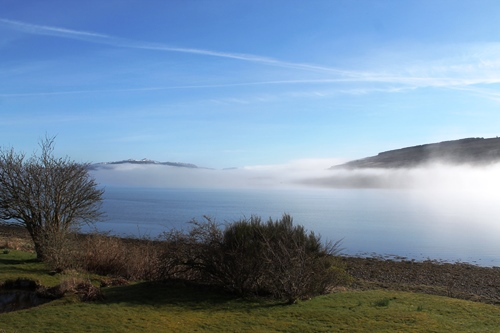
We follow the path down the side of the green (no sign of the dogs) until we reach a stone beach and a rocky promentory. The cloud is low, hiding the surrounding hills. The water is flat calm, glassy. A grey heron flies by with long, beating flaps of its wings. Down on the shore oystercatchers pick their way over the stones. At the top of the rocks the shells of their catch lay battered and smashed, a crunchy confetti. A twin-sailed boat makes slow progress down the loch. Not far away a group of divers, heads and bodies encased in black, slip over the side of their motor dinghy.
Continue reading

A walk to (and along) the border, Ahlbeck

Ahlbeck1

This post is from a trip Katrin and I made to Usedom in February this year… another Baltic exploration:

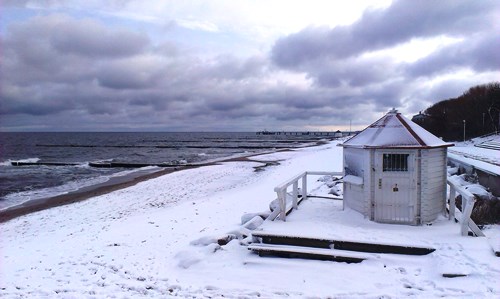
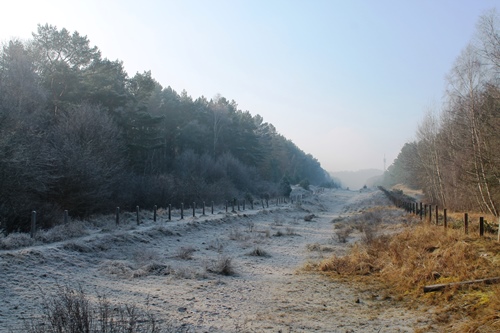
The Europapromenade leads the walker or the cyclist, the jogger or the rollerblader, out from the town of Ahlbeck on the island of Usedom in a straight line between the trees. The surface is smooth, the path lined with benches to rest and public toilets and bike parks at the points along the route where there is access to the beach beyond the trees and the dunes. Ahlbeck is the last town in Germany, and the promenade is well-named, linking as it does the bathing resorts of Usedom on both sides of the German-Polish border.

Continue reading

Great Reed Warblers, Rowing Clubs, and Fat Mary… Tegel, Berlin

Tegel1

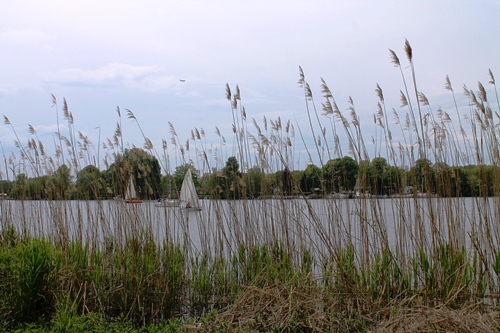
Just around the headland, having left the small village of Tegelort behind to once again be walking between the woods and the water, we were halted on the path by the noise. It was an incredible racket, disturbing and otherworldly, of frogs impersonating birds or birds impersonating frogs. We gazed down from the path, into the reeds, but there was no sign of what type of life was making the sounds that seemed to be surrounding us. Later, I listened to sound files on the internet, trying to trace it to source. The Great Reed Warbler seemed to be the closest, and once more I marvelled; this time at footage of a small bird capable of such an uproar.

Continue reading

Sunshine on Leith (and Newhaven)

Leith3

At the end of the Western Harbour breakwater we came to the abandoned lighthouse and climbed through a hole in the fence. The view back across the harbour was spectacular, to Leith and the Royal Yacht Britannia, and beyond the Arthur’s Seat, the castle, and the rest of the Edinburgh skyline. We picked our way cautiously through the broken stone and glass spreading out from the open doorways of the lighthouse. Graffiti and litter. Evidence of illicit parties. Few better places, on a clear day like this, looking across the Firth of Forth with a fly-by of eider ducks, exiting the harbour ahead of a Spanish warship.

Below us, on the slippery stones just above the waterline, a couple of fisherman discussed strategy. One was teaching the other, acting out the motions with empty hands as his friend gripped the rod intently. They both ignored the signs warning about eating shellfish from this particular shore.

Continue reading

Where the white gold comes from, Meissen

Meissen7

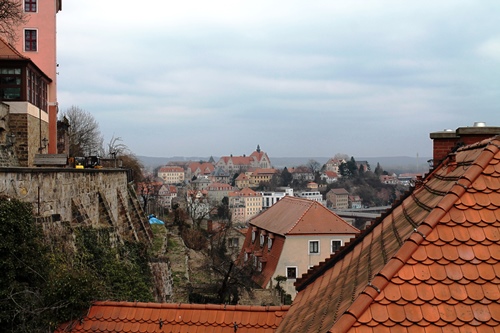
The town of Meissen keeps a cautious distance from the river Elbe, as if it has taken one look at the water before shuffling a couple of steps back from the edge. As we walk through the streets of the lower town we come across a couple of plaques screwed high into the walls, beside shops and above from doors. A white line and a date. High water marks above our heads. No wonder most of the town clings to side of the hill, atop which perches the Albrechtsburg.

Continue reading

Rubha nam Frangach – Loch Fyne

Foreland1

The Rubha nam Frangach, or the French Farland, can be found a few miles south of the town of Inveraray on the western shore of Loch Fyne. The name of the promontory, and also the  cottage that was our home for a week over Easter, dates back to the eighteenth century and the height of the herring fishing industry on the loch. Back then, over 500 boats a day would be operating on Loch Fyne, and on the French Farland a small settlement of traders bought, cured and packed herrings from the local boats and took them back to France, returning with brandy, claret, silks and laces that they sold to the aristocracy of the region, including the Duke of Argyll in his castle a few miles up the road.

Continue reading

Strange light in northern Berlin

Eclipse

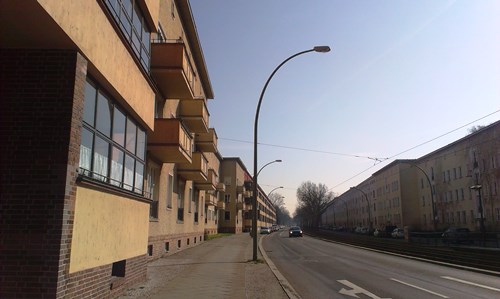
The newsreaders on the breakfast radio swung between breathless excitement and dark warnings of incinerated retinas. Television crews headed to our daughter’s school where, an email assured us, all the kids would be supplied with the proper eyewear. Our Hausmeister patrolled the central reservation – normally reserved for doggy toilet runs and the rumbling trams – waiting for the moment. I went for a run.

Continue reading

The Invisible Border, Priwall

PriwallFerryweb

The rain started to fall as I waited for the car ferry to take me from Travemünde across the mouth of the river that gives the town its name to the village of Priwall, on the opposite bank. Priwall sits at the end of a peninsula that belongs to the city of Lübeck. The hinterland to which the peninsula is attached belongs to the state of Mecklenburg-Vorpommern. None of this really matters, except for the need to use the ferry if you want to stay within the limits of the Lübeck transport system. But from the end of the Second World War until early 1990 it did. Priwall was cut off by the inner-German border, surrounded by water and wire, and gazed down upon by watchtowers. The ferry I am waiting for was the only connection to West Germany, of which Priwall was a part. For the best part of half a century, the peninsula was – to all intents and purposes – an island. Continue reading

An old summer camp in winter… Kühlungsborn

Camp1

I took the bus north, from the shabby concrete concourse of the Berlin ZOB. Waiting for the bus reminded me of travels that seem a long time ago now, catching the bus from Zagreb to Sarajevo or along the Croatian coastline, the entire series of Rocky films dubbed into the local language playing above my head as some of the most spectacular landscapes in the world passed by in darkness. As I stood in the cold with my fellow passengers I thought of Cape Town to Durban and the loss of feeling in my legs after thirty-odd hours, and the longest journey of all, from Berlin to Ormskirk via Hannover, Amsterdam and London. I have never been particularly fond of long distance bus travel.

Continue reading

From Grünau to Friedrichshagen

Grünau1

We started the walk at Grünau S-Bahn station where the huge tiled mural on the wall reminds you that this is the very edge of Berlin and a land of villas, lakes and forests. On a Sunday morning Berlin is a quiet city, and Grünau especially so… the only signs of life came from the bakery open for bread rolls and weekend tabloids, and a malfunctioning pay-toilet whose doors were opening back and forth.

We walked down to the ferry, and waited for the short journey across the lake to Wendenschloß and its villa colony and out-of-season bathing beach. This stood at the end of the road, where the tarmac turned into a dirt track which led us along the lake past abandoned boat jetties and the foundations of lost buildings before we headed in and up, into the Müggelberg hills that (at around a hundred metres) are the highest natural elevation in Berlin.

Continue reading