A walk through Springfield, MA

Springfield

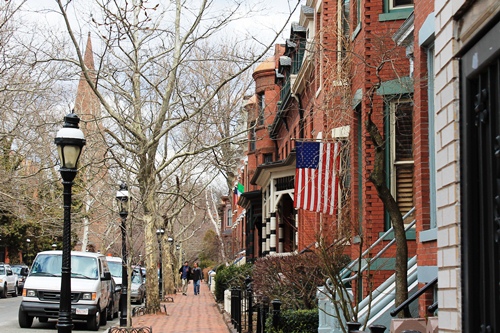
The interstate runs right through the heart of the city, dividing the high, gleaming towers of the downtown with the wide, sedate Connecticut River. We wait for our junction and then roll off, the ramp taking us down and into the concrete canyons of the city centre. Not that Springfield is a large place – 150,000 people live within the city limits, just over a half a million in the metropolitan area – but it is the only true city that we will spend any time in, and the contrast with the university towns, sleepy seaside resorts, and hillside villages that make up most of our two week trip to the United States is quite marked.

The creators of The Simpsons, when deciding on a name for the town where Homer, Marge and the rest of the gang would live, chose “Springfield” as Anytown, USA – and indeed it is the fourth most popular place name in the nation – but Springfield, Massachusetts can lay claim to being one of the oldest, founded as it was in 1636. The history of the city has been one dominated by manufacturing, from the first American musket factory, the discovery of vulcanized rubber, and the Indian motorcycle company. Other claims to fame are as the birthplace of the first American-English dictionary (Merriam Webster), the sport of basketball – created in the local YMCA – and the children’s writer and illustrator Theodor Seuss Geisel, better known as Dr Seuss.

Continue reading

Springtime and memory in the Schönholzer Heide, Berlin

Bike1

Just underneath the S-Bahn tracks, crossing from Wedding into Pankow not far from the Wollankstraße station, there is a collection of cherry trees gifted to the people of Berlin by the people of Japan, and which are currently in blossom. It remains one of my favourite “memorials” in a city that as so many, if only for its fleeting appearance every springtime. And thankfully spring has arrived, even if it is almost three weeks later than the Sunday last year when I captured the pink blossom at this exact point for another entry on Under a Grey Sky.

It was also possible to see the arrival of warmer weather by the coating of pollen on our bikes as we lifted them out from the rack in the courtyard of our apartment block, and in the number of people walking, riding and running along the Panke and Berlin Wall trails, which we followed to reach the Soviet Memorial in the Schönholzer Heide. We had decided to ride up there to capture some pictures of what is the third largest such memorial in Berlin, behind those in Treptower Park and the Tiergarten, and the final resting place for over 13,000 of the 80,000 Red Army soldiers who died during the final battle for Berlin. Unfortunately, we timed our trip during a period when the memorial is being restored, and so Katrin picked her way through the trees to try and get some pictures, but otherwise it was not possible to get any closer than the gates.

Continue reading

Off season in Ogunquit, Maine

Ogun1

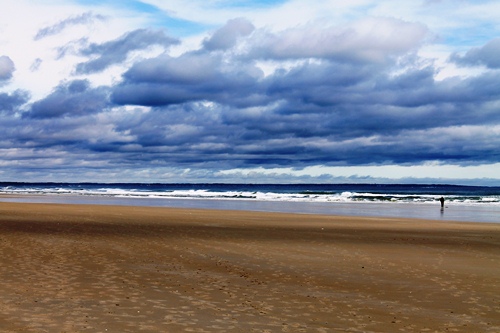
It is the Easter weekend and we have headed for the coast. Despite the fact that lawn signs advertise Egg Drops and oversized bunnies are posing for photographs in shopping malls, the seaside resort of Ogunquit, just north of the New Hampshire border, has a decidedly off-season feel to it. Many of the motels, inns and hotels are not yet open for the season, and the little trolley bus that travels around the town and its neighbouring resorts will not emerge from the garage for another month or so. Still, as we follow the Marginal Way trail along the coast from Ogunquit village to the boutiques, lobster shacks and clapboard houses of the scruffily-posh Perkin’s Cove, there are a good number of people on the trail, enjoying the first real warming sun of the year. Enough, in fact, to image what kind of a traffic jam must occur on these low cliffs during the high season.

Continue reading

Spring at last in Berlin

IMAG0193

It has been a long winter. The snow fell and was still on the ground way into April, even after the bathing lakes of Berlin were supposed to be open for business. Last year we welcomed spring with a walk around the lakes of Hohenschönhausen in the middle of March. This year we have had to wait almost a month longer to cast aside our winter jackets, but we were finally able to do so this weekend for a walk around the Weißensee.

Continue reading

The Wedding Crematorium, Berlin

Crem1

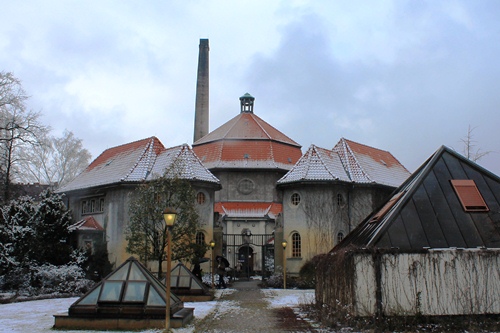
On three occasions in the past month, leading a tour around my home neighbourhood of Wedding, we came across the gates of the old Crematorium in the heart of what was once the loud and dangerous industrial heart of northern Berlin and found them locked. Each time it was a disappointment, because a few months ago during the Berlinale International Film Festival we stumbled across this space for the first time, it was open, and we were able to have a little explore behind the high walls and the iron gates.

Continue reading

A walk through the dark, Belfast

belfastblackout

Or what happens when the lights go out… by John McGovern:

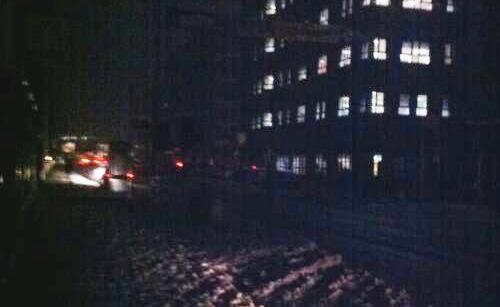
I didn’t really consider there would be any problem – the buses were running even though the streets were covered in March snow, our kitchen light was flickering but the rest of the power in the house was steady – I wasn’t even that cold.

It was when we got to the city centre that I started to worry.

“Er…where are we mate?”

“Power’s out all across the city.  This is Chichester St.  Last stop.”

And there was no-one else on the bus either.  I had noticed the extravagant blue glow of the Ulster Bank sign opposite the City Hall close to the 9A bus route – but it only served to confuse me further.  Now standing on the pavement, the dark created a collage of Belfast in my mind, as I scoured the charcoal buildings for familiar sights.

Continue reading

The College and the University, Amherst

Amherst

At the Black Sheep café in Amherst a group of three students work at their laptops at three different tables until the number of people searching for a place to sit becomes too large to ignore and they gather their things to sit together in the table by the window. The act of togetherness does not appear to aid their work ethic as they spend the next twenty minutes discussing whether or not it is too cold to go outside for a cigarette, and the relative merits of different graduate schools in California. On the strength of the first glance, most of our fellow customers appear to be either students or have some connection to one of the educational institutions of the town, and the noticeboard by the toilets is filled with posters and notes relating to political, social and cultural activities both on and off campus.

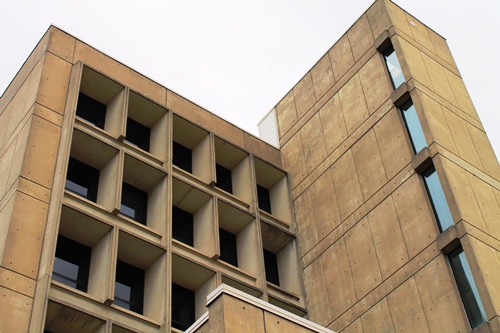
Amherst can be found on the Pioneer Valley in eastern Massachusetts, a couple of hours drive from Boston, and along with its neighbouring towns the business in these parts is education. The centre of Amherst – a collection of red-brick and wooden buildings scattered around a sloping lawn – is dominated by the campus of Amherst College, a private liberal arts institution that dates back to 1812 and offers undergraduate classes to just over a thousand students. Down the hill, towards the farmland that lies on either side of the Connecticut River, is the University of Massachusetts Amherst (UMass), the flagship campus of the University of Massachusetts state system and the largest public university in New England, with 27,000 students and more faculty members than the College has students.

Continue reading

To America…

America_Julia

Tomorrow morning we fly to the United States for a two week trip to two very different corners of the country; first to Orlando, Florida, and then on to Amherst, Massachusetts. It will be the first time I have set foot in the United States of America, although I have gazed across at it through the spray and the mist of Niagara Falls, and as with our journey to Paris last year, I am intrigued to see how this country that has played such a massive role in my own cultural life will live up to my expectations. Even more so than for the French capital, I think that it is an impossible task, as no other country lives so strongly in my imagination despite the fact I have never even been there. I cannot be the only one for, if you live in the west especially, American culture has been ever-present in our lives for the best part of a century.

In preparation for our trip I was looking through our bookshelves for something to read on the flight across the Atlantic, and I was struck by the number of books – and not just any books, but those formative books that shape your ideas and expectations – by American authors. However good certain books might be now, if I re-read them, they remain important to me because of the how and the when I first discovered them. Junky and Queer by William Burroughs, two slender volumes discovered on the shelves of Runshaw College library in my first year of Sixth Form. Fear and Loathing in Las Vegas, and  Fear and Loathing on the Campaign Trail, both bought at Manchester Airport on the way to Canada at the age of eighteen. Another Country, Giovanni’s Room and Notes of a Native Son, all part of a James Baldwin collection given to me by my dad during the first year of university and opened in the vast, cavernous hall of the Parkinson Building at Leeds.

Continue reading

Misty mornings in the Lake District, Cumbria

OLYMPUS DIGITAL CAMERA

By Matt Lancashire:

We recklessly chose to spend the end of February in the Lake District – statistically the wettest part of England – but were blessed with blue skies and t-shirt weather while the rest of the country got the cloud cover we were expecting. There was still snow on the mountains and broken ice washing down them into the lakes, but it was ideal weather for us, with misty mornings and red sunsets.

I’d not been before and my initial reaction was amazement at how the mountains appeared to have been upholstered with tweed, and how many beautiful shades of dusty brown there were. I kept stopping the car every ten minutes to get out and look at the view; partly because it kept surpassing the last view, and partly because the constant blind bends and bumps on the road made it too dangerous to gawp as I drove, even without the high-season crowds. Every mountain differed from the last and barren, rounded hills sit next to craggy, tree-covered slopes.

Continue reading

The hills of Volkspark Prenzlauer Berg, Berlin

PB1

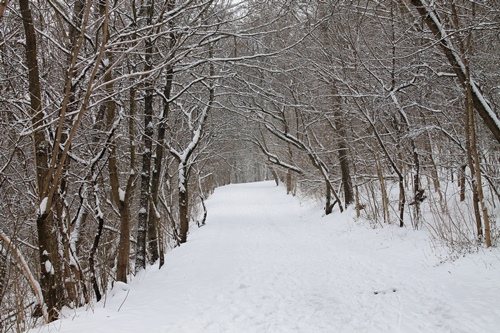
We went for a walk in the park, the snowfall of March calling us to the hills – or at least, such hills as we have here in Berlin. We decided to go to another one of those places in the city that I had never been to before. But unlike Hermsdorf, a week or so ago, this time it was somewhere that I may have never been to but I had seen many times, looking up at the tree-lined hills through trams windows on the journey between Mitte and Hohenschönhausen.

The Volkspark Prenzlauer Berg, as it is laid out today, was created by the tons and tons of rubble created by the bombing raids of World War II, the Red Army’s battle for the city, and the clearances of the area around Alexanderplatz to make way for the new socialist city centre that was to emerge from the wreckage in the heart of East Berlin. Berlin has a number of such rubble “mountains”, and I was surprised by the steepness and the height of the first that we climbed, trudging through the snow to a plateau at the top, where Katrin came with friends and a few bottles of wine to celebrate their Abitur (A Levels) around about the same time I was doing similar at a pub by the canal in Lathom.

Continue reading