A Gift from the Road: Walking the Woods and the Water

walking the woodsA review of Walking the Woods and the Water by Nick Hunt

Review by Paul Scraton:

In 1933 Patrick Leigh Fermor began a walk from the Hook of Holland that would take him across Europe, a journey he would later immortalise in three books – A Time of Gifts, Between the Woods and the Water, and (published posthumously) The Broken Road. The first two have, since publication, been long regarded as classics of travel literature. Reading them today you are struck with the sense that these are books written about a time when Europe was at a tipping point – much of A Time of Gifts for instance is set in a Germany where the Nazis are in the ascendant – but also and especially later in Fermor’s journey, in the lands to the East, where the books are filled with tales of aristocrats and peasants it is a world that became decidedly less “modern” the more he walked.
Continue reading

The ambivalence of technology at the mouth of the Peene River

Peene1

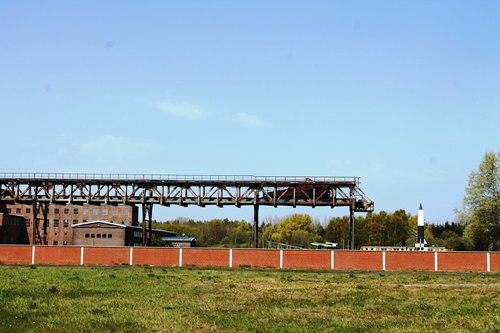
The first clues to the history of the village of Peenemünde, at the northern end of the island of Usedom, were the military signs amongst the trees on either side of the road that swept through the forest. Much of the countryside around the village remains restricted, as it has been since 1936 when the whole northern peninsula of the island was purchased by the Reich Air Ministry. Alongside the airfield, the German Army also established a research centre under the technical leadership of Wernher von Braun, whose mother had in fact recommended the site as “just the place for you and your friends”.

Von Braun was a rocket engineer, and the centre at Peenemünde was tasked with the development of the guided missiles and rockets that would, by the end of World War II, bring death and destruction to cities across Northern Europe. Altogether, the V1 rocket would be used some 22,000 times, and the later V2 on at least 3,000 occasions, including over a thousand aimed at London. An estimated 2,754 Londoners were killed in the rocket attacks, with a further 1,736 killed in Antwerp, Belgium, which had the dubious honour of being the Nazis most-targeted city with their new “miracle weapons” that were supposed to end the war in their favour. As it turned out, more people – mostly slave labourers – were killed in the production of these rockets than in their operation.

Continue reading

Welcoming the spring in Weißensee

Weißensee 013

The first outdoor beers of the year are a sign of spring to equal the golf in Augusta or the yellow fields of Brandenburg. Normally we find ourselves at the Prater Garten in Prenzlauer Berg, but this year we toasted the onset of good weather at the beach bar in Weißensee before a stroll around the lake. Finding a spot in the sunshine with a view across the water it was easy to forget that the city and one of the major roads out of the north of Berlin were just on the other side of the trees.

Continue reading

The Streckelsberg and the Amber Witch

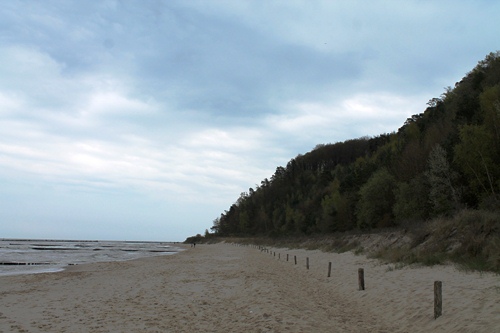
Amber1

We get our first view of the Baltic Sea only once we have walked through the beech forest – much of which was planted over 180 years ago – and climbed the Streckelsberg hill. At fifty eight metres above the sea, the Steckelsberg is the third highest point on the island of Usedom in Germany’s north-eastern corner, and from the top we have a view not only along the beach but across the open water towards the island of Rügen, in one direction, and Poland, in the other.

Continue reading

A trip to the market…

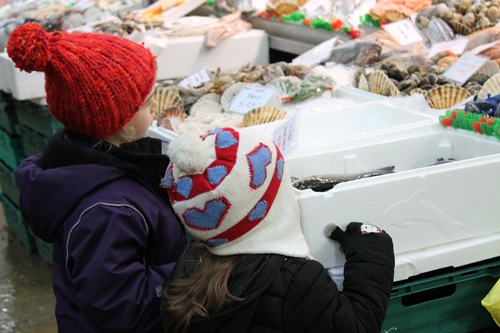
Market1

At the fish stalls in Leeds Kirkgate Market we must look like a bunch of tourists, gawping at the produce of rivers and seas laid out on the ice before us. The stallholders look down on us with no-nonsense scowls, as if suspecting that we might be too intimidated to buy something. Perhaps this is why Tom points at the nets of mussels sitting there on the counter and orders two, receiving them in an orange plastic bag.

“Do you know what to do with them?” I say, trying hard not to imagine the consequences if we get this wrong.

He shrugs.

“We’ll work it out. It’ll be fine”

Continue reading

The Wannsee-Kladow Ferry, Berlin

Kladow1

At the harbour at Kladow most of the waterside restaurants and beer gardens were empty, although they were obviously getting ready for the weekend. As the weather gets warmer, this corner of Berlin becomes a popular spot for walking and bike riding on both sides of the Havel, and the next few days would see hundreds of people heading down to the water, but on this Friday afternoon we had the place pretty much to ourselves.

We sat on a bench and looked across to a small island and a colony of cormorants nesting high in the trees. We ate the remains of our sandwiches and sipped at cups of tea. Across the water we could see the Peacock Island and the Wannsee shore. That was where we wanted to be, to find a shady table at the beer garden before catching the S-Bahn home. But first of all we had to get across the water.

Continue reading

The Landscapes of Berlin

Cover

What do we think of when we hear the word “landscape”? The first thought might involve hills and mountains or endless prairie fields and wide, wide rivers. It might involve sea cliffs and beaches, bleak moors or a Postman-Pat patchwork of land divided into neat parcels by high hedges. Landscape feels like it should be somehow “natural”, and it is tempting to idealise it as such, even though there are very few places – especially in Europe – that can truly claim to have been untouched by the influence of humankind. After all, we introduced the sheep that tore away the natural vegetation of the Welsh hills and we planted the corn that waves back and forth across the Mid-West. But still, more often than not the word is used to describe something different to the built-environment of the city, which is why I remain amazed when I find those corners of Berlin where it feels as if no other word will do.

Continue reading

The flickering of panic

cairnsmore-of-fleet-1

Cairnsmore of Fleet, Galloway, Scotland, February 2014

By Daniel Greenwood

A wading bird bursts from the bog. I watch its sharp wings cut into the wall of mist and descending treeline. I put my binoculars to my eyes and the bird is lost. The world has been reduced. All terrestrial life but for water, a few lichens, heather and wintry moor grasses has escaped. I have left behind oak woods overcome by rhododendron and cherry laurel, and Cairnsmore Burn choked by the former, its water crashing from the shadows. It was not right. Snowdrops still managed to create small rugs of white flowers and winter green leaves. Bluebells peeked through the leaf litter amongst them. Behold the denizens of Galloway’s oldest woods. Up here those are images in the mind. The life in the lap of the Cree estuary – the buses, postman, trees and gentle flowering plants are mere memory. The cover of Glenure Forest’s regimental spruce is the last notion of protection. It’s now up to willpower, my body and clothing. The path leads clear from 20 metres, visibility coming and going with cloud.

Continue reading

Walking with friends at Hardcastle Crags

Hardcastle1

At the car park just downstream from the Hardcastle crags we met. These were friends I had known since school or university, with partners and children, a rare shared afternoon together with a walk by the river. Some of the kids ran off ahead, searching for the next bird sign laid out by the side of the track by the National Trust. Along the way we split, into smaller groups and pairs. We talked about work and life, trying to fit in the different events since the last time we’d met.

Continue reading