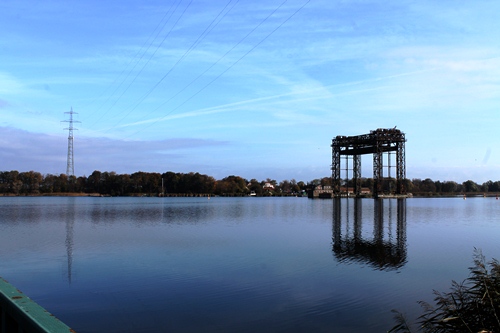
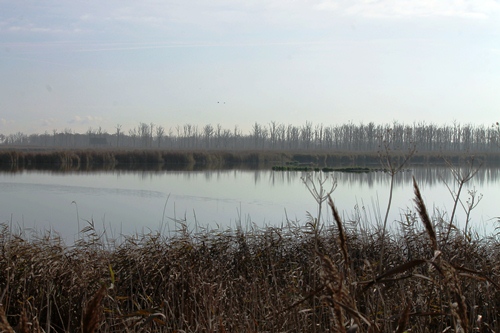
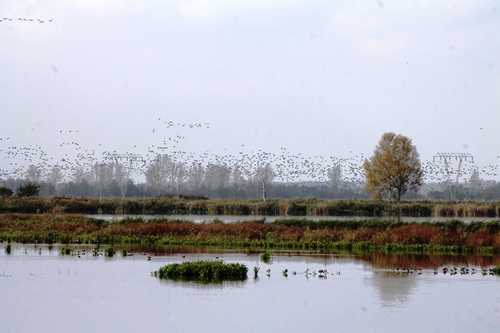
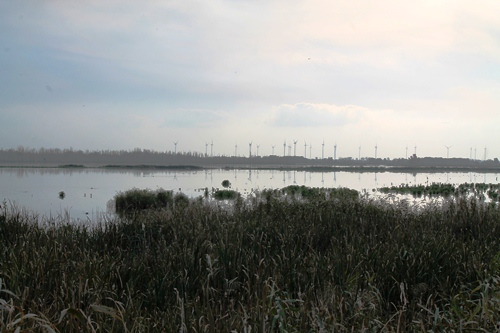
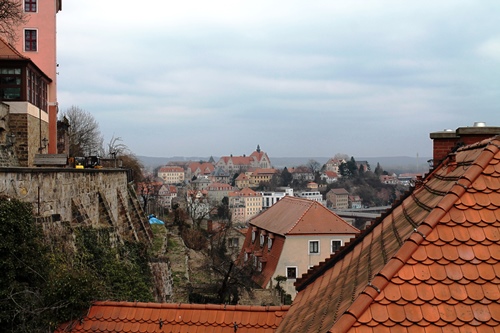
The town of Meissen keeps a cautious distance from the river Elbe, as if it has taken one look at the water before shuffling a couple of steps back from the edge. As we walk through the streets of the lower town we come across a couple of plaques screwed high into the walls, beside shops and above from doors. A white line and a date. High water marks above our heads. No wonder most of the town clings to side of the hill, atop which perches the Albrechtsburg.
Category Archives: Walks
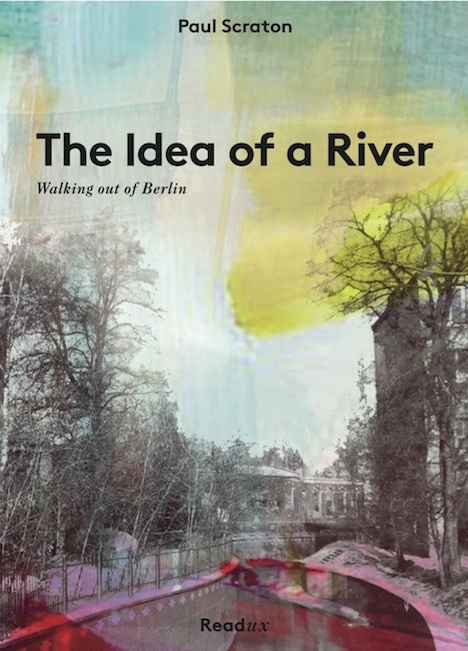
New Book… The Idea of a River: Walking out of Berlin
The fisherman sits on a squat stool, rod resting on a stand between his legs, his hat pulled over his head. He looks at peace, eyes cast forward across the calm waters of the canal, his thermos flask of coffee on one side, a cool box filled with supplies on the other. I can see him an hour or so earlier, stepping out from his nearby apartment, walking along the river to his regular patch on the canal bank. He’s been coming here for years, since a time when no-one came to this corner of the city, when the neighbourhood was enclosed by the Wall and he could feel the eyes of the East German border guards on his back…
My new book is an essay based on a walk along the Panke river, upstream from where it tips into the Spandau Ship Canal in the heart of Berlin (and not far from my apartment) to its source in the town of Bernau, just beyond the city limits. Along the way the walk takes in city neighbourhoods and the path of the Berlin Wall, stories of would-be Kings and other wannabe royals, suburbs and edgelands, nature reserves and farmer’s fields, and the line of commuter towns stretched out along the S-Bahn that shadows the river for much of the way.
The book was released this month as part of a series of four mini-books published by Readux. Three times a year Readux publish such a series, of short stories and essays, often in translation. My book is part of the fifth such series, titled Urban Voids: Paris and Berlin, and we launched it last week at an event in Berlin-Kreuzberg with three writers and three translators, including readings and conversation (and a few drinks afterwards).
For my part I was joined on stage by my fellow walker-writer Marcel Krueger, and in order to prepare for the event we met a few days earlier to walk half of the thirty kilometre length of the river from Karow in the north of Berlin to Bernau. Walking it again I was struck once more by how much you can discover about a place through its more forgotten and ignored corners, and even though I have spent a lot of time on the banks of the Panke before before and during this particular project there were still more things to stumble across with each new walk along the path.
The Idea of a River: Walking out of Berlin
Readux Books
2015
ISBN: 978-3-944801-31-5
Print and EBook editions available
Website
The Invisible Border, Priwall
The rain started to fall as I waited for the car ferry to take me from Travemünde across the mouth of the river that gives the town its name to the village of Priwall, on the opposite bank. Priwall sits at the end of a peninsula that belongs to the city of Lübeck. The hinterland to which the peninsula is attached belongs to the state of Mecklenburg-Vorpommern. None of this really matters, except for the need to use the ferry if you want to stay within the limits of the Lübeck transport system. But from the end of the Second World War until early 1990 it did. Priwall was cut off by the inner-German border, surrounded by water and wire, and gazed down upon by watchtowers. The ferry I am waiting for was the only connection to West Germany, of which Priwall was a part. For the best part of half a century, the peninsula was – to all intents and purposes – an island. Continue reading
From Grünau to Friedrichshagen
We started the walk at Grünau S-Bahn station where the huge tiled mural on the wall reminds you that this is the very edge of Berlin and a land of villas, lakes and forests. On a Sunday morning Berlin is a quiet city, and Grünau especially so… the only signs of life came from the bakery open for bread rolls and weekend tabloids, and a malfunctioning pay-toilet whose doors were opening back and forth.
We walked down to the ferry, and waited for the short journey across the lake to Wendenschloß and its villa colony and out-of-season bathing beach. This stood at the end of the road, where the tarmac turned into a dirt track which led us along the lake past abandoned boat jetties and the foundations of lost buildings before we headed in and up, into the Müggelberg hills that (at around a hundred metres) are the highest natural elevation in Berlin.
Familiar Spaces… New Year Exploration
On the first weekend of the year we decided to escape not so much the madness – for that was all reserved for New Year’s Eve and the early hours of the following morning – but the debris and the feeling of the morning after the night before. Outside our apartment on Osloer Straße the street was strewn with firework casings, empty and smashed bottles, piles of grit from the snow flurry earlier in the week, and first of the abandoned Christmas trees, branches drooping and the needles scattered across the pavement.
We caught the S-Bahn from Bornholmer Straße, that famous bridge where the Berlin Wall was first opened and – with its dramatic views south towards the city centre – the venue for one of the larger impromptu firework displays on the 31st December. The half-empty train took us north, through Pankow and towards the suburbs, always close to the Panke river that flows, mostly hidden, by the raised railway tracks. At Karow – still Berlin and yet, with its detached houses and neat village centre, feeling like a place apart – we sought out the river and the route to the Karow ponds.
The Strange Beauty of the Anklamer Stadtbruch
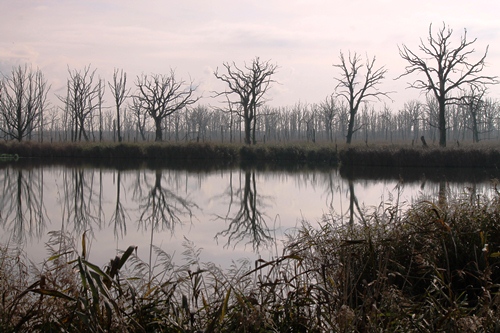
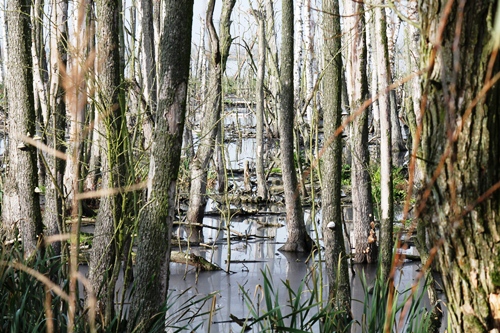
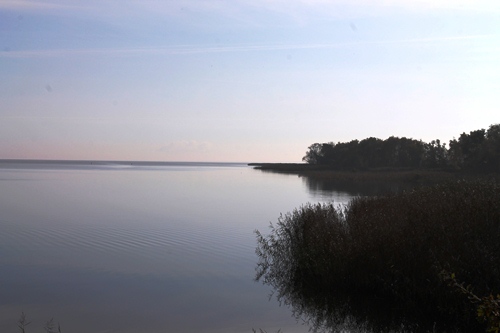
The strangeness began on the approach to Anklam, a massive collection of dead trees swamped at their base with water and surrounded by reeds, like something out of an apocalypse movie. It looked spooky and brutal, as if some cataclysmic event had taken place here, and so of course we stopped for a photograph.
Half an hour later we were sitting in a minibus being driven through the streets of Anklam. We did not spend any time in the town, so we have to be careful not to rush to judgement, but it looked like a place that had seen better days. Many of the old Wilhelmine buildings were crumbling, but they looked more solid than the GDR-era plattenbau that looked ready to fall down at any moment. We were being taken by a guide from the city out into the Stadtbruch, a marshland and peat bog area on the edge of the inland sea that divides the mainland of Germany with the Baltic island of Usedom.
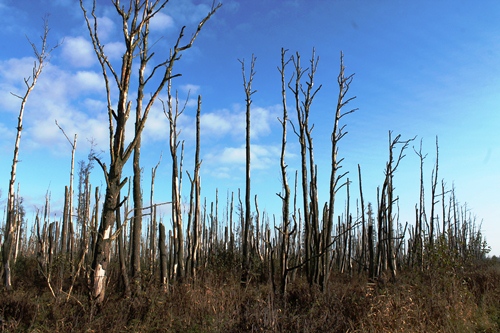
The walk was between two peat bog areas that had been drained for farmland but over the last twenty years allowed to return to something approaching a natural state. This is the case for a lot of the land between Anklam and the inland sea, and along the banks of the Peene river, which explained those dead trees we had come across earlier. We would see a lot more of them over the next couple of hours.
But first, before dealing with natural ruins, we started with some man-made ones. With a white-tailed eagle soaring overhead, we were looking across the water towards Usedom and the remnants of the old railway bridge that once transported the Berlin trains to and from the island, and which helped transform the fishing and farming communities into the seaside resorts I have written about on Under a Grey Sky over the past year. In 1945, with the end of the war approaching, the SS destroyed the bridge to prevent the approaching Red Army from making use of it, and ever since this particular line has been out of action. To get to Usedom now by train requires a more circular route, north and through the harbour town of Wolgast.
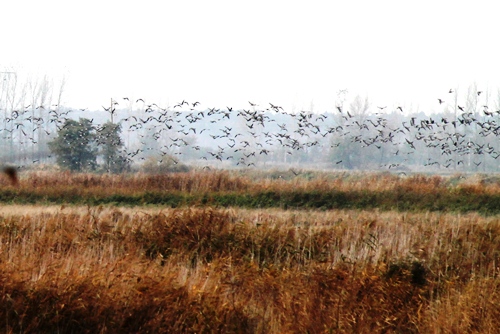
The long absence of the trains does have a benefit for the walkers and the birdwatchers who have discovered this strangely beautiful corner of Germany, for the raised embankment is high enough above the reclaimed bog to allow you to walk right through the middle of it without even getting the soles of your shoes wet. And so we walked, stopping to look and identify the wealth of birdlife that call this place home, as well as the traces of otters, dancing butterflies and one of the last remaining elm trees in Germany. Apparently the disease that wiped out the elm in Germany began a few kilometres to the south, and so this one survived… a remarkable story from a remarkable place.
Words: Paul Scraton
Pictures: Katrin Schönig
The Gnitz Peninsula, Usedom
When most people travel to the Baltic island of Usedom, the attention is taken – understandably – by the sea. Most of the island is in Germany – with only the town of Świnoujście at the eastern end in Poland – and from north to south it is a line of holiday resorts that date back to the nineteenth century, the coming of the railway, and the development of seaside rest cures and vacations for the growing populace of the cities of northern Germany.
But the island is not only built on tourism. Before the first bathers arrived, the main economic activities on Usedom were agriculture and fishing, and that continues to this day. But whilst some of the fish would be and are pulled from the Baltic, a good proportion of the industry is focused on the inland sea that separates the island from the mainland. The communities that face the Achterwasser as it is known still target the tourists, with campsites and signs advertising rooms and apartments for rent, marinas offering boat trips and kayak tours, but it feels less developed than those resorts along the coast, and that these are still places where people live and work, even in the off season.
Water and Concrete: Walking Cologne and the Rhine
By Marcel Krueger:
I turn away from the plastic people and plastic boutiques of the Belgian Quarter, and cross the Friesenplatz and its puke pancakes from the night before. On my way to the cathedral and the water I pass through Steinfeldergasse, a small lane where every one of the small colourful low-rise buildings on either side is owned by the Catholic Church or a Catholic association. The church is still a dominating presence in this town.
I arrive at the cathedral shortly afterwards, walking past Komödienstrasse and An den Dominikanern, where a cameraman of the US army filmed a tank battle in March 1945. A German Panther tank destroyed a Sherman, killing three of its crew, and was in return blown up by a Pershing tank destroyer in one of the last tank fights in the destroyed city. The dramatic manoeuvres and firefights amidst the rubble around the cathedral could have been scripted by Hollywood, but the dismembered dead were all too real, futures obliterated by high-explosive shells. Now, on the streets where they died, I could buy an ‘original German cuckoo clock’, or pause to eat a döner kebab.
25 Years since the fall of the Berlin Wall
Next Sunday it is the 9th November, and the 25th anniversary of the night the “wall came down”. Of course, it didn’t, but the first checkpoints were opened and people streamed from one side to the other and danced atop the hated structure at the Brandenburg Gate in scenes that would become some of the most iconic, not only of the collapse of communism in central and eastern Europe, but of the twentieth century as a whole.
As some Under a Grey Sky readers will know, the history of this city that I have called home for over a decade continues to fascinate me, and just over a year ago I began a project called Traces of a Border – a series of explorations of the Berlin Wall Trail as a means to not only understanding the history of the division of Berlin and what it meant for people on both sides, but also the legacy of that division and how it has shaped and continues to the shape the contemporary city.
A bend in the river, Saarland
Saarland passes by the car window in a blur of green hills and industrial buildings… it is always that way in my imagination, the red brick chimneys of the Völklinger Hütte standing tall against the backdrop of the forest beyond the motorway… and it is always raining against the window or snow is falling from the sky through a winter mist, which is strange as the first time I ever came to this corner of Germany pressed up against the French border it was May, the sun shone, and we drank beers in the cobbled square of Saarbrücken, and licked our ice creams down by the river in Mettlach.