Category Archives: Places

You shouldn’t always walk alone – Buckow, Germany

This piece was inspired by a walk in Brandenburg with Nicky and Greg Gardner. Nicky is the co-editor of Hidden Europe, and you can read her own impressions of the walk by following the link below.

Many writers would argue that if you want to walk for inspiration you need to walk alone. I have some sympathy for this view, and often find that a solitary walk gives me the time and space to get things clear in my head, finding solutions on the pavement or the parkland track to problems that seemed insurmountable sitting in the accusing glare of the anglepoise lamp on my desk. It is for this reason that I rarely leave the house without a small notebook in my pocket, using park benches, stone walls and tram-stops as temporary office space along the way.

But sometimes it is company and conversation that can make a walk inspiring, and so it proved on a wet Friday afternoon at the beginning of October, as I walked with friends around the lake at Buckow, fifty-odd kilometres east of Berlin. “Normally I am known for taking copious amounts of notes when I walk,” Nicky said to me, about halfway around, but her notebook, like mine, stayed firmly in the pocket. Instead, we talked.
Continue reading

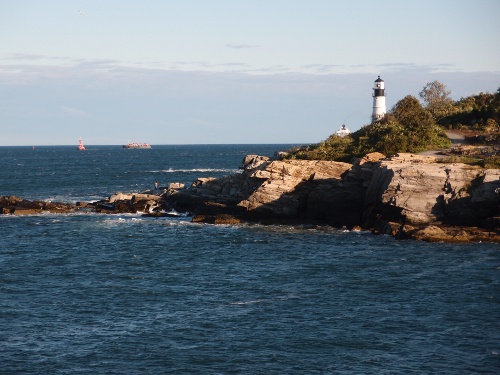
Coastal Maine, USA

By Matt Lancashire:

Maine is not one of the more obvious destinations in the US for the European traveller, even though the state slogan repeated on local car licence plates is simply “Vacationland”. However, I found myself there last month to visit a friend, and was startled at how much the area appealed to me. To most people who have any thoughts on the matter, the word Maine appears to conjure images of lighthouses, lobsters, and moose. The state feels to align itself into two camps along these lines, between the sea and the woods, or fishermen and hunters. The locals are stereotypically hardworking, stoic, and raised in close contact with nature. They have a consciousness that they’re stuck out on a limb at the very eastern edge of the country, and you suspect they probably wouldn’t want to have much more to do with everyone else anyway. Slightly aloof, they make a point of distinguishing between those born and raised in the state and everyone else, who will forever be described as From Away, and cannot hope to be considered a Mainer. While I found a definite grain of truth in this reputation, it seemed that if you are just open and show your own true colours, everyone will get along famously.

Continue reading

Swallows and Amazons, Red Devils, and Alntorps Island

When I was younger I loved the Swallows and Amazons series of books. It was not so much the “adventure” aspect, but the fact that the things the kids got up to, and the dangers they faced along the way, were so completely believable. Of course, even my younger self got recognise that this was another world that Arthur Ransome was writing about – from the freedom granted to the children to the gender politics expressed in the stories – but I think that the books and the stories told therein were massively influential in the games that we would play each summer in Rhoscolyn.

We were from a few different families and we called ourselves the Red Devils. We mapped the headland and (with Capt’n Rob) took to the high seas, went exploring and made a magazine… it is amazing to think back now about the range of ages in the group, and somehow we all managed to play together as we created our own world in and around Cerrig-yr-adar and the Outdoor Alternative campsite.

Continue reading

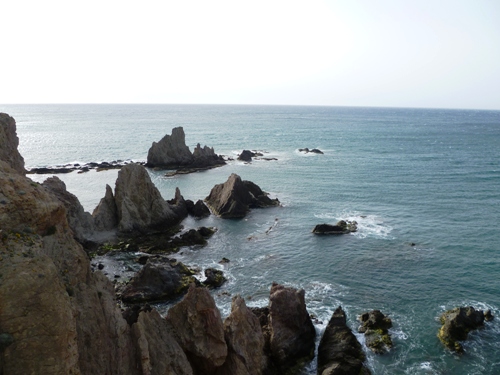
Along the cliffs – Cabo de Gata, Spain

Our route took us out from San Jose, along a dusty, windswept valley until we began a steep climb up a crumbling track to a lookout point just below an old tower, where once they would light fires to pass messages and warning signals along the coastline. We paused for a moment, to catch our breath and to look back towards the town. The night before we had eaten fish down by the harbour and walked through the quiet streets towards our hotel. It was spring, and there was not much happening in the town, as everyone took to their local bars or their living rooms to watch Madrid in the Champions League.

The coastal path took us north, above jagged and dramatic cliffs, finding its way between the water and the dormant volcanos that give this corner of the national park such a distinctive look. The track had once been a mine road, and we came across abandoned buildings and old quarries that were a reminder of an industrial past in this corner of Andalucia. But all was quiet now, and in the ten kilometres we walked between San Jose and the Castillo San Felipe, where waves crashed against salt-eroded stone walls, we did not meet a single soul.

Continue reading

Platform 17 at the Grunewald Station, Berlin

As the S-Bahn swings south at Charlottenburg and heads for Potsdam, the cityscape shifts from six-storey buildings and balconies upon which satellite dishes are precariously balanced to one of detached houses with the occasional, modest apartment block here and there, and the wide expanse of the forest, through which it is possible to glimpse the odd dwelling, tucked away between the trunks and beneath the branches like a fairy-tale cabin.

The S-Bahn drops us on the platform of the Grunewald Station, and we take the steps down to a long brick tunnel that runs beneath the tracks. We emerge into the daylight. At a kiosk cyclists sit lyric clad and lightly sweating, drinking bottles of water and licking ice creams. In front of the station entrance is a cobble-stoned turning circle, a drop off point for the trains into town. You can picture the early days of the railway, when the city still felt separate from this community, as the merchants and bankers caught the Berlin train for another day amassing the wealth upon which these tree-shaded villas were built. But more than that you can picture a very different train, and a memory of this suburban station that is altogether darker.

Continue reading

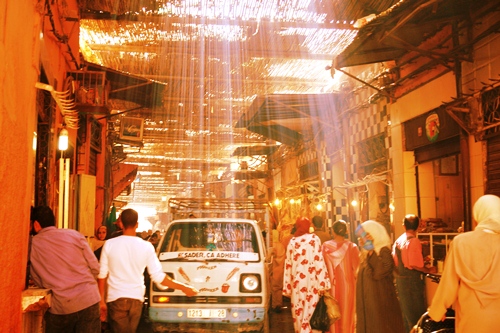
Through the Marrakech Medina, Morocco

It is easy to get lost in the Marrakech Medina – a cliché, but it’s true, and also half of the fun. The buildings are squeezed together, to use all available space, and limit the penetration of the hot sun to the heads of those walking within. Through these narrow alleyways people throng day and night, between stalls that sell everything imaginable, dodging the vans, taxis, carts and bikes that compete for space with a sound of the horn and relentless momentum.

The business of the Medina is trade, transactions completed on the street or in wardrobe-sized shops piled high with products for sale. The cries follow you everywhere… “My friend…” the shopkeepers say, with a smile on their face. “Look in my shop…just a look…no need to buy…” And if you want to, it seems as if there is nothing you can’t take home with you. Carpets, scarves, pottery, leather, tables, door frames, candle-holders, all produced in backstreet workshops and sold on the main tourist routes. No money, no problem. A friend two shops down has a machine for AmEx, Visa or Mastercard.

Continue reading

Morning on the Alexanderplatz, Berlin

 “Alexanderplatz is both the GDR capital’s architectural centre and the city’s central point of attraction and a favourite meeting place where thousands of Berliners and people visiting the city meet every day at the World Time Clock for a walk in the new socialist city centre.”

(From the 1980 guidebook, Berlin: Capital of the GDR)

Twenty-three years after the fall of the Berlin Wall, people still use the clock as a meeting point. The House of the Teachers is still adorned with a suitably inspiring, socialist mural, and the television tower still gazes down upon the whole scene. But much else has changed on the Alexanderplatz. The old Centrum Department Store is now the Galeria Kaufhof and got a facelift eight years ago, the Pressecafe is now a steak house, and the old Interhotel Stadt Berlin has had a couple of new names even in the time I have been in the city. Even some post-Wall changes, such as the text from Döblin’s Berlin Alexanderplatz that once graced the facades of the buildings on Karl-Marx-Allee have now faded, although if you look closely you can still see the outline of some of the letters washed away by time and the elements.

In the past ten years the re-development of Alexanderplatz and the surrounding area has accelerated, with the opening of the enormous Alexa shopping mall and the new Saturn building on the edge of the square. The tram lines have been re-laid and all the major international shops and fast-food outlets can be found somewhere around the square. But if the area is no longer a “new socialist city centre”, the echoes of the German Democratic Republic and the brave new heart of (one half) of the city that was built out of the ruins of the Second World War in the 1960s can still be heard.

Continue reading

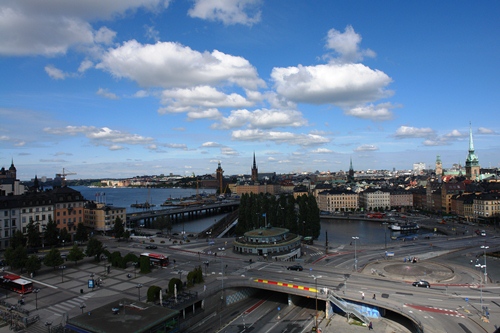
Snapshots of Stockholm

What to say about Stockholm? It was the one place in Sweden where I already had certain preconceived ideas about what to expect; from the islands and the parklands to the particular style of houses of the old town quayside that I had seen on pictures before we left. We stayed at a campsite in the woods and right on the water, but only ten minutes walk from the T-bana metro line into the city, and it was an interesting way to experience a “city break”, returning each evening to our tent beneath the trees and late night walks down to the water’s edge.

The one downside/advantage of camping – depending on how you see it – is the early morning starts, and we arrived into Stockholm’s central metro station on a Sunday morning where it felt like the majority of the population were sleeping off the after-effects of the night before, whilst council-workers hosed down the mess that they had left behind. The walk down the pedestrianised Drottninggatan shopping street towards the Gamla stan (old town) was relaxed, aside from the whirring brushes of the street-cleaning vehicles, as the owners of souvenir shops stood on the steps of their businesses and looked hopefully up and down for custom.

Continue reading

Postcard from Wyk, Germany


(One from the personal archives that seemed apt as the summer comes to an end. Back in the summer of 2006 we took our new-born baby to a holiday island in the north sea… the World Cup had just taken place, which might explain the number of flags flying from the beach chairs)

Early morning and the town is waking up slowly. A few early risers stroll along the pavement towards the bakery. Dog walkers meander along the promenade, the North Sea glassy and still at the end of the sands. Council workers, their orange overalls bright in the early morning sunshine, pick litter and rake the beach between the uniform rows of wicker beach chairs waiting patiently to be rented.

As the morning progresses waiters appear from behind the shuttered interiors of cafes and ice cream parlours, to wipe down tables, unfurl sun umbrellas and distribute ashtrays and menus. The beach begins to fill up as holidaymakers erect windbreaks and washing lines between the beach chairs, flags fluttering in the slight breeze that has picked up as the morning moves lazily along. Children and pensioners take to the water with enthusiasm that is only differentiated by volume, whilst up on the viewed platform a lifeguard surveys the scene, scanning the beach with his binoculars or looking out onto the water, towards the German mainland and Denmark beyond.

Continue reading

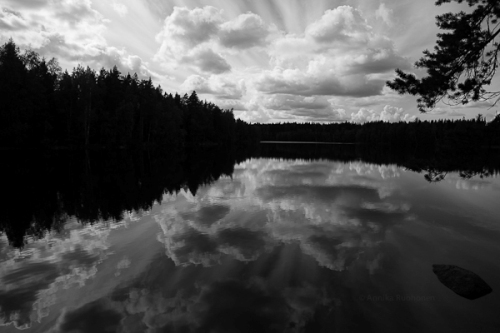
Hiking at Lake Kukuljärvi, Finland

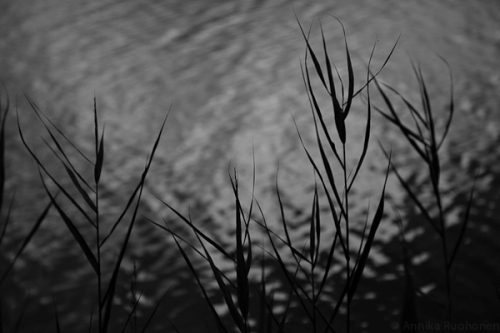
By Annika Ruohonen

Finns who live by the sea like to celebrate the last weekend in August as the last weekend of summer. We call it Venetsialaiset, the Venetians and to celebrate it most people like to go boating or spend time in their summer cottages. It is a celebration of water, fire and light. Due to the midnight sun, most summer nights aren’t dark here at all, and that is why August nights are special for us – dark and warm nights with the sound of crickets and the mirror like reflections of fireworks and bonfires on waters.

Continue reading