
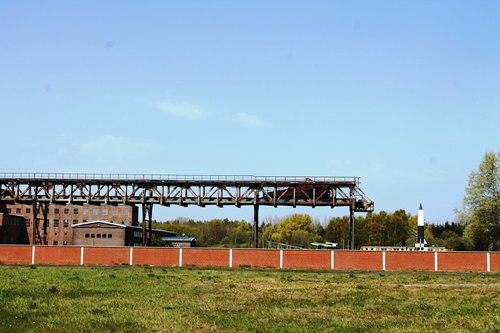
The first clues to the history of the village of Peenemünde, at the northern end of the island of Usedom, were the military signs amongst the trees on either side of the road that swept through the forest. Much of the countryside around the village remains restricted, as it has been since 1936 when the whole northern peninsula of the island was purchased by the Reich Air Ministry. Alongside the airfield, the German Army also established a research centre under the technical leadership of Wernher von Braun, whose mother had in fact recommended the site as “just the place for you and your friends”.
Von Braun was a rocket engineer, and the centre at Peenemünde was tasked with the development of the guided missiles and rockets that would, by the end of World War II, bring death and destruction to cities across Northern Europe. Altogether, the V1 rocket would be used some 22,000 times, and the later V2 on at least 3,000 occasions, including over a thousand aimed at London. An estimated 2,754 Londoners were killed in the rocket attacks, with a further 1,736 killed in Antwerp, Belgium, which had the dubious honour of being the Nazis most-targeted city with their new “miracle weapons” that were supposed to end the war in their favour. As it turned out, more people – mostly slave labourers – were killed in the production of these rockets than in their operation.
Continue reading →





 Under a Grey Sky