
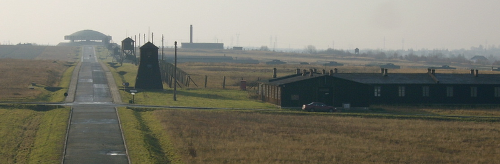
(above: Majdanek concentration camp. Photo: Ralf Lotys)
by Phil Scraton:
We left the coach quietly, idle conversations of the journey overtaken by due reverence to our destination. Wandering the path through well-kept grass speckled by bright red poppies, I entered the red brick building alone. Inside it was barren, empty. Above my head were rusting shower heads. A bath house, a death chamber into which Zyklon B was released to gas people of all ages and diverse backgrounds; naked not for showering, but for swift transportation to mass graves or incineration.
Overwhelmed and without warning I sobbed uncontrollably. Leaning on the wall against which the dying collapsed, I pressed my flushed cheek against cold brick as if to self-inflict pain. On leaving the desolation of the chamber to the blue sky, bright sun and rustling trees I trembled, overcome by vicarious grief. Walking slowly I looked across Majdanek where some 80,000 perished, over 18,000 on one November day in 1943. In the foreground stand the huts, fences, watch-towers and the Mausoleum containing the excavated ashes of so many who died. The backdrop is the busy Polish city of Lublin. Continue reading



 Under a Grey Sky
