Monthly Archives: January 2012

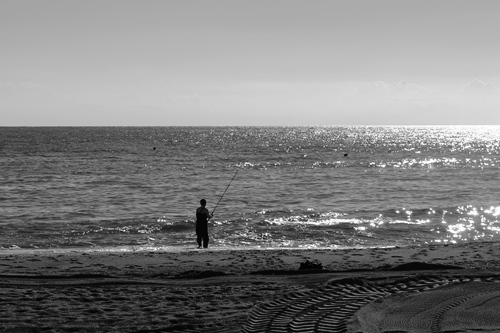
Winter in Rocquetas, Spain

A Journal Entry from December 2008:

Ten at night in Roquetas. Waves crash against an empty beach, a cold wind chilling the few hardy late-night promenaders. From the sands the town is dark, with only a few buildings showing signs of life. The hotels, if they are not closed entirely for the winter season clearly have rooms to spare. It feels lonely on the beach, the wrong time of day in the wrong time of the year. But under the warming winter sun the following morning, it becomes clear that even in December there is life in the town. Continue reading

Letter from (Hidden) Europe

Yesterday the new Letter from Europe from Nicky and Susanne of Hidden Europe landed in my inbox, titled “Frisian waves”. As well as their wonderful magazine that explores the nooks and crannies of our fascinating continent, they send out these letters three times a month and they are always a treat. Subscribe to the magazine and sign up for the newsletter. You won’t regret it…

Dear fellow travellers

We map our way around Europe using antique guidebooks, just as we map our way through the year using long-obsolete ecclesiastical calendars. So we are in a small minority of Europeans who happen to know that today, 16 January, was long observed as the Feast of St Marcellus. Quite what happened to St Marcellus we don’t know, but it seems he was ousted from his January perch by this or that papal reform sometime in the last century.

We have been staying for a spell on the North Frisian Islands, a part of Europe where locals have good cause to remember St Marcellus Day. For it was on this day in 1362 that North Sea coastal geography was reshaped by the most terrible flooding. A fierce Atlantic storm caused inundations in the Low Countries, throughout the Frisian Islands and north along the coast of Jutland.

Read the rest of “Frisian waves” at Hidden Europe

Sunday by the seaside, Whitby

Jasmine Salmon on an off-season jaunt to the North Sea coast:

Whitby.  Wintery, wild and windy.  Doesn’t sound too promising, but when you’ve got two children under the age of four with cabin fever – and possibly harbouring chicken pox – a two hour drive to the coast seems an attractive prospect.

And in fact many would argue that Whitby is at its best in January.  Devoid of tourists, the weak winter light and grey skies add to the dramatic atmosphere of the North Sea coast and fossil-rich cliffs, with the headland topped by the gothic architecture of the ruined Abbey and surrounded by the bleakly beautiful moorland of the North York Moors National Park. Continue reading

A walk in Neukölln, Berlin

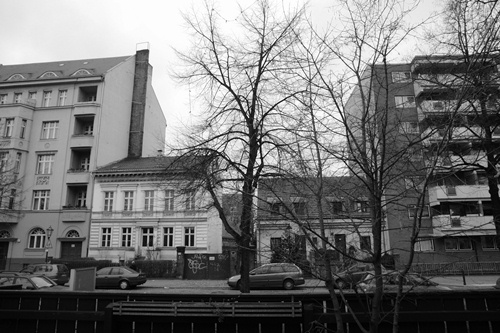
Photo diary from Thursday 12th January 2012, taken very much under grey skies. Julia showed me around her kiez – along busy roads crammed with second hand electronics stores, internet cafes and takeaways – through the old Rixdorf village long subsumed by the city, and across some patches of green, either sculpted on the whim of industrialists or built upon the rubble of Second World War bombing raids. More photographs after the jump, and keep an eye out for a more detailed report on Slow Travel Berlin at some point in the future… Continue reading

Surfing in Cuba: A different revolution

(Photo: Calle 70, Havana, 2009 / Michael Scott Moore)

The following extract is taken from Sweetness and Blood, by Michael Scott Moore, in which he explores how surfing spread from Hawaii to the rest of the world and the impact the sport has had in some extremely unlikely places:

In a beachside neighbourhood I flagged down a powder blue Cadillac with fins.

“¿A Habana Vieja?”

“Sí, sí.”

No room in back, so I sat in front. The dashboard had cheap wooden panels and backlighting provided by old pale bulbs. A Cadillac eagle logo rendered in steel reached its wings over my knees. Most of Havana’s máquinas, or gypsy cabs, are old American iron. They’re run by Cubans for other Cubans, and visitors aren’t supposed to ride them. But there was almost no way to move in Cuba without breaking the law.

“American?” the driver said when the car was almost empty.

“Yes.”

“What brought you to Cuba?” Continue reading

The Things Around Me – Malachy Tallack


Wounded Man by Malachy Tallack with Steven Laurenson, from the album from the thorn (buy here)

I discovered the music of Malachy Tallack through another project, The Things Around Me. Last year Malachy moved to a house in the village of Vidlin, on the north east coast of the Shetland mainland. After six months, and still feeling like a stranger, he began to write a series of essays in an attempt to come to some understanding with his surroundings, and these essays are wonderfully evocative of the animals, birds and plants all around him. They are also beautifully illustrated by Will Miles, and artist and ornithologist who lives and works in Fair Isle. Continue reading

Facing the past: From the Wannsee shore to Indian Island

(Photo: Indian Island Tolowot California / Wikimedia Commons / Ellin Beltz)

Tony Platt travels from Berlin back home to California, comparing the ways in which societies deal with past, and the hidden history of the ‘outdoor paradise’ of Humboldt County:

In October I spent a few days in Berlin, not for oompah and pretzels, but to check out memorial culture. I don’t know of another country that assiduously remembers the worst of its history as Germany does. Fortunately, the nation that carries the weight of Nazism did not take Ronald Reagan’s advice when he visited Bitburg cemetery in 1985 – “I don’t think we ought to focus on the past.” That could be the mantra, though, for his home state. Back in northwest California, I’m struck by how scrupulously the region forgets its sorrowful history.

Throughout Germany there are close to two hundred “authentic sites of remembrance” of Hitler’s regime, as well as a lexicon of terms to describe the extraordinary variety of commemoration: memorials of apology, memorials of honor, active museums, memorial cemeteries, memorial plaques, thinking sites, learning places, documentation centers, and so on. In Berlin alone, you can spend a week going from site to site, as I did, and still not see everything. Back home in Humboldt County, a couple of hours once a year is all you need. Continue reading

Goodbye England (Covered In Snow)


When I hear this song it makes me think of a day between Christmas and New Year’s Eve, not only long before Laura Marling ever released it, but probably whilst she was still at school. I had been given a camera for Christmas, my first SLR, and I was staying at my Mum’s house in Menston, near Ilkley, during the university break. It had snowed overnight, and – and here my memory is a little hazy – I was on my own and decided to head out and up towards the moor to try out the camera. Continue reading

Clare Woods at the Hepworth, Wakefield


Tom Salmon checks out the exhibition “The Unquiet Head” from Clare Woods, which is at the Hepworth Gallery in Wakefield until the 29th January 2012. The film above is an introduction to the artist and her work, and concentrates on the current exhibition:

On a typical wintery day in Yorkshire – grey, bleak, misty and great – we headed out to the Hepworth Wakefield, a new gallery that celebrates the area’s unique artistic legacy and exhibits the work of major contemporary artists. We were looking for a bit of culture, but the trip also gave me pause to reflect on how much I love living here and why Yorkshire is known (at least by us locals) as ‘God’s own county.’ Continue reading

By the Weißer See, Berlin

We take a Sunday walk around the Weißer See, at the heart of its near-namesake neighbourhood of Weißensee, to the north east of Berlin and a short tram ride from the popular and supposedly hip neighbourhoods of Prenzlauer Berg and Mitte. The cultural centre on the edge of the park that leads down to the lake looks as if it has seen better days, like the area as a whole, but there is no denying the small but important role this corner of Berlin has played in the city’s cultural history. During the early years of cinema, the Weißensee Film Studios produced a number of legendary films, most famously The Cabinet of Dr. Caligari. The Antonplatz – the central square of Weißensee – once boasted no fewer than eight cinemas, such was the influence of the art form on the neighbourhood. Into the 21st Century, only one remains. Continue reading