Category Archives: Places

A West Berlin Utopia: The Hansaviertel

You might remember that a few weeks ago I was invited to take part in a tour, which included the Karl-Marx-Allee in the eastern half of Berlin. The title of that tour was the Divided City, and it covered the differing approaches to architecture and post-war reconstruction either side of the Berlin divide (there was no wall at that point). From Karl-Marx-Allee we jumped on the U- and S-Bahn to cross over to the west and the Hansaviertel, a residential quarter tucked away in a bend in the river at the northern boundary of the Tiergarten Park.

Continue reading

Then and Now: On the Potsdamer Platz

“The announcements of music halls, movies, the promotion of cigarettes, the fervor of business advertising – their nightly blaze above the roofs of Potsdamer Platz – drown, suffocate, and obliterate any of the political battle cries in an inferno of light and noise and color.” – Joseph Roth

In between the World Wars Potsdamer Platz was the busiest intersection in Europe. Berlin’s population had grown to 4.4 million – larger than it is today – and the neighbourhood immediately around the square was the ultimate symbol of this modernity, of the Metropolis on the Spree… a relentless intersection celebrating commerce, modernism and a glittering future. This was a place of crowds and noise, of lights and buildings that towered above the individual standing on the street. A hundred thousand such individuals passed through the Potsdamer PLatz each day, alongside 20,000 cars, as well as numerous bicycles and other vehicles such as horse drawn carts.

Continue reading

Sonic Iceland: The end is the beginning is the end

Sonic Iceland is the story of a journey by Marcel Krüger and Kai Müller to discover the music of a country. They collected interviews, pictures and notebooks filled with texts, which became the basis for a website and what will be a book. Here is Chapter 0 – the short introduction for how the idea for Sonic Iceland was conceived.

It’s a cold and miserable winter morning in Cologne, and I am grumpy. It is the day after Boxing Day 2009, and in recent years Christmas has not been a good time for me, so I don’t feel very motivated as I walk up the stairs of the subway station in Ehrenfeld and towards the Weltempfänger-Café. I’m supposed to meet my friend and former housemate Kai, who is planning to visit Iceland. He wants to create some kind of documentary about Icelandic music, and has asked me to join his project. I have no idea of what this whole thing is going to look like, but besides my holiday-grumpiness I’m stoked about the idea of combining a visit to one of my favourite travel destinations with good music. I enter the café, and as I see Kai, beaming and sitting beneath a large map of the world, my mood lifts even higher. After a short shake-hands and catch-up (he lives in Cologne and I in Ireland), we set to work.

Kai and I have been fascinated by Icelandic music for a long time. It was always surprising how many different sounds and styles such a tiny nation produces, compared to Germany, for example. Plus we have watched the “Heima”-movie of Sigur Rós once too often. So the idea for Sonic Iceland was born: to go and talk to the Icelandic musicians in their natural habitat, record the interviews and document this with pictures and text. We set up a blog and started talking to people to help us get to Iceland.

Continue reading

The hills above Belfast

When I began this website back in December of last year, I knew only that I wanted to create a place that would be an interesting diversion for those who subscribed or stumbled across its pages, giving people the chance to explore not only places but also books, music and anything else, and hopefully inspire others to get out and search for what is there to be discovered beyond the front door. Many of the pieces have come from my own experiences, but one of the most gratifying things about Under a Grey Sky is the number of people who have contributed their own words, pictures and experiences to these pages, helping to create this virtual flea market of stories and images through which visitors to the archive can rummage.

Continue reading

A Chance Encounter, Dubrovnik

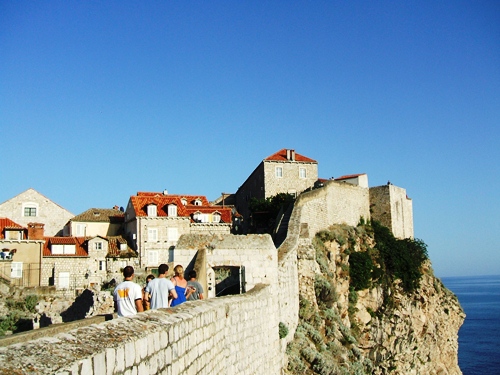
He was standing by the side of the road, leaning against the roof of a white Fiat, talking into his mobile phone. We had slowed to a walking pace, confident that we had out-run the polyester-clad gaggle of old ladies that had descended upon us as we climbed down from the bus. As we approached the man he switched off his phone and crossed the road towards us.

“Hi, do you need any help?”

Kevin looked at me, suspicious. I shrugged.

“We’re looking for this hotel,” I said, holding out a piece of paper. The man looked at it, whistled through his teeth and shook his head.

“No good. Let me show you somewhere better.”

“Your place?”

“How did you guess?” The man smiled, a twinkle in his eye. I decided to trust him and looked at Kevin. His expression said why not. We climbed into the Fiat. Inside the car he turned to us and offered his hand.

Continue reading

Through the forest to the lake: Tegel, Berlin

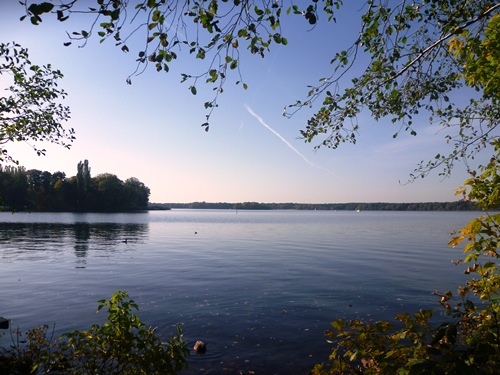
We climb down from the U-Bahn and onto leaf-strewn streets of a distinctly French flavour. Here, where the French military were based during the years of occupation, the roads are marked “Rue” and the avenues, well, “Avenue” in a small cluster of a community on the northern fringe of the Tegel airfield. Most of the French community is gone now, and the doorbells and postboxes are labelled with suspiciously German names, but the site of neatly laid-out petanque courts of the “Boulodrome” remind us that we are in one of those places in Berlin shaped by the unique history of the city.

Continue reading

Memories of Catalonia

I

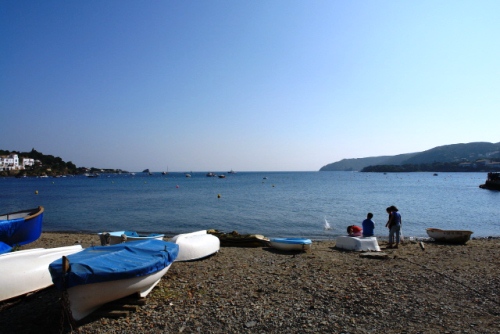
The town of Cadaqués on the Costa Brava, a couple of hours north of Barcelona meets all expectations of a Mediterranean fishing village-turned-tourism hot spot. You know it because you have been there, have the postcard, or have had the quick tour via some search-for-the-sun relocation programme… Whitewashed houses cluster around a sandy beach protected from the sea by rocky promontories on either side. Local lads and lasses buzz around on scooters, whilst at the shaded tables of the cafés in the main square pale-faced would-be Shirley Valentines flirt with moustachioed waiters. Along the beach self-satisfied businessmen stroll, well-fed with their well-dressed, heavily made-up wives, while good-looking police men and women loiter on street corners, tanned and inscrutable behind reflective sunglasses.

Continue reading

Karl Marx Allee, Berlin

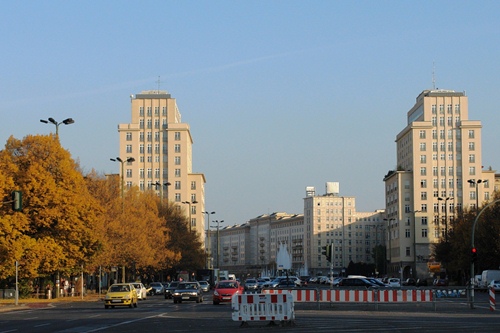
On a fine autumn morning I was invited to join a tour exploring the architecture of “divided Berlin”, starting with the wonderfully grand and only slightly-preposterous stretch of Karl Marx Allee that was built as a showcase to the wonders of the newly-established and socialist German Democratic Republic back in the early 1950s. A few days later, when the boulevard was once again bathed in autumnal sunshine, we returned for a stroll and to capture its glories on camera.

Continue reading

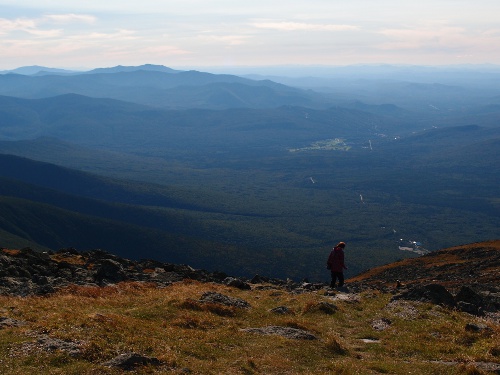
The White Mountain National Forest, New Hampshire, USA

By Matt Lancashire:

In many ways, New Hampshire was the most libertarian place I have ever visited. The hints started as soon as you drive over the state line, past the sign saying “Welcome Bienvenue / New Hampshire / Live Free or Die”. The confrontational choice of slogan certainly reflects the seriousness of the sentiment for the state. Before long, there was another sign: “N.H. LAW / BUCKLE UP UNDER AGE 18”. The inverse implication that you don’t have to wear a seatbelt if you’ve survived your first 18 years took a moment to settle in. Before long, another official road sign appears, advertising that the next service station doubles up as a “state liquor store”, which a more meddlesome local government might consider a poor combination.

Continue reading

Window on the west, St Petersburg

I

To walk along the Nevskiy Prospekt is to walk along the main street of a European city. From the Alexander Nevskiy Monestary to the Admiralty, past the Moscow train station, the Kazan Cathedral and the House of Books, this bustling street, jammed with traffic at almost all times of day and night, has more in common with its spiritual brothers in Mitteleuropa than its big brother down the railway line. Peter the Great conceived of St Petersburg as a “window on the west”, the showpiece city at the heart of his project to Europeanise his nation.

That was over three hundred years ago, but even now you can see in the canals, boulevards, gardens and palaces that populate the heart of St Petersburg the concept in action. But despite Peter’s intentions, the city remains as much a window on Russia as it does on the rest of Europe, and at all times you are aware of the looming mass of the country spreading out east from this Baltic port all the way across the mountains and steppes to the Pacific shore, not least in the faces of the many and varied nationalities that call St Petersburg home, but whose origins lie elsewhere in the empire.

Continue reading