Category Archives: Places

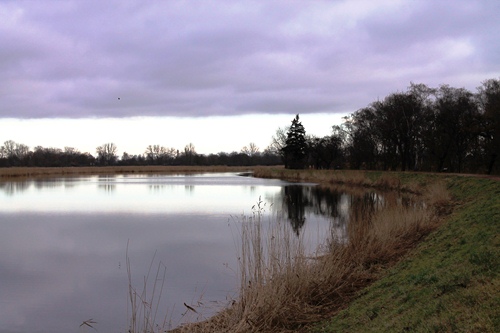
Misty mornings in the Lake District, Cumbria

OLYMPUS DIGITAL CAMERA

By Matt Lancashire:

We recklessly chose to spend the end of February in the Lake District – statistically the wettest part of England – but were blessed with blue skies and t-shirt weather while the rest of the country got the cloud cover we were expecting. There was still snow on the mountains and broken ice washing down them into the lakes, but it was ideal weather for us, with misty mornings and red sunsets.

I’d not been before and my initial reaction was amazement at how the mountains appeared to have been upholstered with tweed, and how many beautiful shades of dusty brown there were. I kept stopping the car every ten minutes to get out and look at the view; partly because it kept surpassing the last view, and partly because the constant blind bends and bumps on the road made it too dangerous to gawp as I drove, even without the high-season crowds. Every mountain differed from the last and barren, rounded hills sit next to craggy, tree-covered slopes.
Continue reading

The hills of Volkspark Prenzlauer Berg, Berlin

PB1

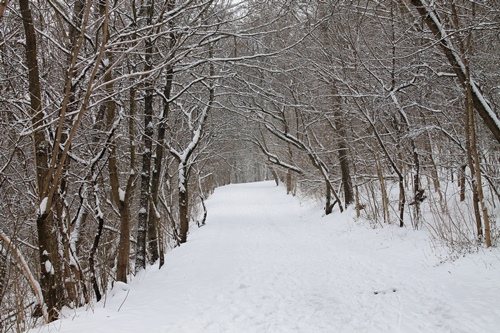
We went for a walk in the park, the snowfall of March calling us to the hills – or at least, such hills as we have here in Berlin. We decided to go to another one of those places in the city that I had never been to before. But unlike Hermsdorf, a week or so ago, this time it was somewhere that I may have never been to but I had seen many times, looking up at the tree-lined hills through trams windows on the journey between Mitte and Hohenschönhausen.

The Volkspark Prenzlauer Berg, as it is laid out today, was created by the tons and tons of rubble created by the bombing raids of World War II, the Red Army’s battle for the city, and the clearances of the area around Alexanderplatz to make way for the new socialist city centre that was to emerge from the wreckage in the heart of East Berlin. Berlin has a number of such rubble “mountains”, and I was surprised by the steepness and the height of the first that we climbed, trudging through the snow to a plateau at the top, where Katrin came with friends and a few bottles of wine to celebrate their Abitur (A Levels) around about the same time I was doing similar at a pub by the canal in Lathom.

Continue reading

Walking and the imagination in London

London1

On our last day in London we left the hostel in Knightsbridge, not far from the Natural History Museum, and walked across Kensington Gardens and Hyde Park before making our way past Buckingham Palace, the Houses of Parliament, through to Whitehall and eventually up to Leicester Square, Chinatown, and Covent Garden. I realised as I walked that although I have been to London a number of times in the past fifteen or so years, I don’t think I have walked those particular streets, and past those particular sights, since a primary school trip to the capital in what must have been 1989 or 1990. I had sudden flashbacks, such as walking past Baden Powell House, or Westminster Abbey, that took me right back to that school trip, and memories that I would have presumed were long forgotten.

The other thing about walking through these most famous of London cityscapes, along with all my fellow tourists from around the world, was how familiar it all was. How many times have I seen the Houses of Parliament, on the news credits or on a bottle of brown sauce? So many time that it was only standing there looking at it in the flesh that I considered how preposterous the architecture of the place actually is, whilst trying to imagine how it was in the days of the plague and the Great Fire when the river was so polluted and foul that they had to hang chlorine-soaked sheets in the windows of the Parliament to try and alleviate the smell. I heard that story on one of the archive editions of In Our Time that I had downloaded to listen to before the trip, trying to get a crash course in London history as I waited on the S-Bahn platform at 5 in the morning for the train to the airport.

Continue reading

Ghosts of Elephant and Castle, London

Heygate

Last week I was in London for work, and stayed for a night in a new hostel that has opened in Elephant & Castle and occupies the former headquarters of the Labour Party. Indeed, in the reception area – all shiny surfaces and plush carpets – the foundation stone as laid by James Callaghan occupies pride of place. The date too is symbolic, as the building work was begun in the summer of 1979, just after Margaret Thatcher’s election victory and the start of eighteen years of Conservative rule. I was born three days after that election, and would watch Labour’s victory in 1997 five days shy of being able to vote for them myself.

Across the street from the hostel is the southern edge of the Heygate Estate, once home to around three thousand people, and now empty as it awaits demolition and redevelopment as part of a regeneration strategy for the neighbourhood. Hmmm. As we walked the next morning down the road to find something for breakfast, there was a corner shop front filled with images of how the Heygate would look once the development was finished. The artists impressions painted a picture of sunny days and green spaces, of large balconies and evening strolls, but it made me wonder; how many of these shiny new flats and apartments would be occupied by former residents of the estate, and also, where have the three thousand that once called it home gone?

Continue reading

Outside the front door – A walk through Wedding, Berlin

Wedding

Since we moved to the neighbourhood of Wedding* at the end of 2010 we have enjoyed exploring and getting to know a new corner of the city. Not long after we moved, I wrote about my experiences and first impressions for Slow Travel Berlin, and even then I was quite taken by this corner of the city that has a pretty poor reputation in the city and yet has not only a fascinating history, but is also home to a number of really interesting grassroots cultural, artistic and community projects that reflect the diversity and also the “neighbourhood pride” in an area where the population is mixed between those with long-established roots here and those of us who are in the 35% who were born in another country – the highest percentage of foreign-born residents anywhere in Berlin.

Continue reading

The Joys of Essex

Diana1

(above: Essex Marsh, by Diana Hale)

By Diana Hale:

Jonathan Meades‘ recent BBC4 programme ‘The Joy of Essex‘, replete with characteristic provocations, utopian visions and other little known eccentricities, inspired me to relive some of my own joys of Essex, searching out paintings and photographs and taking advantage of an opportunity for some biogeography, or topography of the self. Not difficult as I was actually born there, or at least in what used to be Essex, as was everything east of the River Lea at one time.

Although my birth certificate says the London borough of Redbridge as that was where the hospital was, in fact my parents were living with my grandparents in Buckhurst Hill, in the Epping Forest district of Essex. Appropriately, as it was where my father’s family had ended up, it is not far from Hale End (on the map between Walthamstow and Chingford).  Incidentally there is now a new Hale village next to Tottenham Hale, not that far away from Hale End and not far from where I now live – a pleasing circularity. ‘Hale’ apparently means ‘a hollow place’ in Old English so I think there are plenty around.

Continue reading

The Road Not Taken, Amherst

By Phil Scraton:

I was 17 when I first heard The Dangling Conversation. The song’s simple beauty contrasted with the complex emotion of its lyrics. The mood, the characters, caught my imagination. Written by Paul Simon, recorded with Art Garfunkel, we are introduced to the lives of two lovers caught in the quiet solitude of a seemingly lost relationship. ‘You read your Emily Dickinson’ and ‘I my Robert Frost’; we ‘note our place with bookmarkers’ that ‘measure what we’ve lost’.

Like a poem poorly written
We are verses out of rhythm,
Couplets out of rhyme,
In syncopated time
Lost in the dangling conversation
And the superficial sighs,
Are the borders of our lives.

In a ‘lost’ relationship, ‘out of rhythm’, ‘out of rhyme’ what was the relevance of the Emily Dickinson/ Robert Frost juxtaposition? I soon discovered that both were fine North American poets, two generations apart. Their personalities and lives had little in common; she a virtual recluse and a home-based correspondent, he an affable teacher with a love of the outdoors. Yet comparisons of their poetry have been endless – books, theses, articles, essays.

Continue reading

A walk by the river

Ryck1

A few weeks ago we were in Greifswald, an old Hanseatic League city in the north of Germany, made famous by its university and the paintings of Casper David Friedrich. Whilst we were there, Katrin and I took a walk along the River Ryck, from our hotel in the fishing village of Wieck to the old town of Greifswald itself, and back again. The short piece that I wrote about the walk for Caught by the River was published yesterday:

Continue reading

Point Zero and Moscow’s Red Square

A recent survey in Russia suggested that over two thirds of Russians want Lenin’s embalmed body removed from Red Square, at a time when the mausoleum is closed for renovation and speculation is rife as to what the future holds for the former Soviet leader. It is almost exactly five years since we stood on the cold expanse of cobblestones on a grey February day, and the mausoleum was closed for repairs that day as well, just a week before the election that saw Putin replaced as President by Medvedev. Putin is back in charge again, and he recently appears to have come down in favour of leaving Lenin exactly where he is.

Continue reading

A walk on the Contraviesa, Southern Spain

O

By Sheila Scraton:

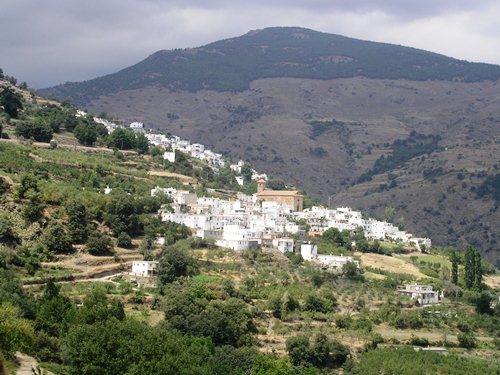
We were staying at our cortijo in the Alpujarras that lie to the south of Granada on the slopes of the Sierra Nevada. We had had a great family Christmas in Bad Saarow, Germany and were now enjoying unusually mild winter weather in Spain. Most people who know that we visit Spain seem to think that this means an escape from the cold weather of the UK and relaxation in warm Spanish sun. Whilst this can be the case, we have regularly experienced long icicles from our patio roof and deep snow making even access to the house a bit tricky.

However, this January we had two weeks of wonderful weather – blue sky and warm sunshine. The air temperature can be cool, we are at over 1500 m (above the height of our highest mountain in the UK, Ben Nevis, at 1344m) but this is more than compensated by the strong sun coming directly from the south and North Africa. Today we met up with our friend, Jeremy, who has lived and worked in the Alpujarras for 20 years as a walking guide. We were doing one of our favourite walks at this time of the year, along the Contraviesa, the mountain range between the Sierra Nevada and the Mediterranean Sea. It is a favourite winter walk because its mild location means that it’s not possible, or at least comfortable, to walk here in the summer months.  It is also the area that we look across to each day and evening from the patio of our cortijo, making it a nice change to reverse the view and look back to our village and the high mountains behind.

Continue reading