It is a holiday in Beeskow, a small town on the river Spree about an hour and a half drive from Berlin. Not long after Christmas and the town feels like it is indulging in a collective hangover; there is barely a soul to be seen, and as we walk through the cobbled streets of the Altstadt the only people we come across are a group of men, a little worse for wear on beer and schnapps, who are making their way to a smoky bar down on the embankment. But before we come across them – filled as they are with alcohol-fuelled bonhomie – we have walked through the picturesque market square, complete with town hall and the odd half-timbered house. Even the buildings that date back to the German Democratic Republic and beyond have been built to fit with the ensemble, and it is easy to imagine it cheerful and bustling on an early summer market day, the outdoor seating of the cafes and restaurants spreading out across the cobblestones.
Category Archives: Places
Surfing in the shadow of the Alps, Munich
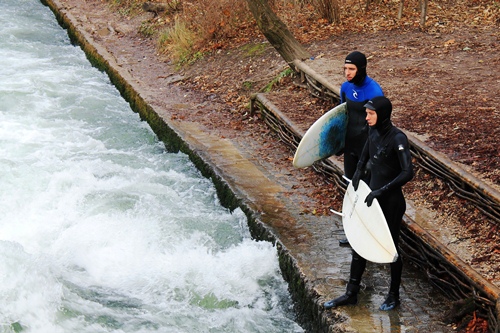
Just before Christmas, as we walked through the Englische Garten in Munich, I realised the water level in the Eisbach – a man-made river that flows through the park – was particularly high.
“I bet the surfers would love this…” I remarked, having seen the young men and women dance atop the man-made wave during an early summer’s visit a few years ago.
“Do you think they will be surfing today?” Katrin asked, but I was doubtful. It was barely above freezing, and that was on the footpath. How it must have been in the water itself I could not imagine. But of course, the failure of imagination was all mine, for as we turned the corner to come within sight of the permanent wave that curls back on the river just after it passes beneath the road at the bottom of the park, there were some black-clad figures, only their eyes and noses exposed to the elements, dropping down onto their surfboards from the brick embankment to the amazement (and bemusement, it has to be said) of the onlookers gathered on the bridge above.
From the Dolomites
By Annika Ruohonen
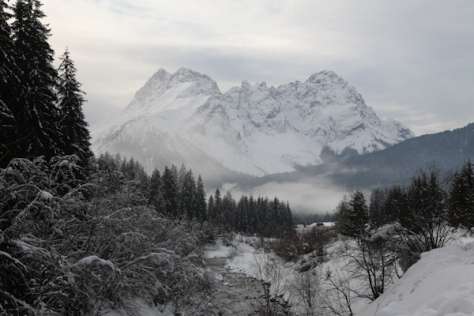
For the past few days I’ve been exploring a remote mountain village called Sappada in Northern Italy. The valley is secluded amongst gorgeous, steep, snow-topped mountains Monte Sierra, The trio of Monte Terza and Monte Ferro. At the bottom of the valley there is the beautiful Fiume Piave, a mountain river that runs all the way down to Mediterranean. We have been following it on our trips back and forth to Venice. At some parts there are fantastic rapids and waterfalls, and sometimes there is just a peaceful little stream in the middle of a huge valley with limestone pebbles.
Pieskow Village and the Family Schultze
Walking through the lakeside village of Pieskow in Brandenburg is a lesson in history through architecture. There is the grand manor house, with a garden that sweeps down to the lake, high fences to keep out the riff-raff, and mysterious initials on the doorbell where – in a more humble abode – there would be a surname or even two. There are the classic, single-storey Brandenburg farmhouses arranged around cobble courtyards. There are prefab blocks from the GDR-era, once belonging to a holiday camp, now abandoned in the woods. Further along the shore there is a functioning holiday camp, built after the fall of the Berlin Wall, in the style of Swedish or Danish boathouses… all wooden decks and stoves to keep out the cold. And there is the village church, of uneven brick and a tiled roof, the tower looking out over it all…
Early in the New Year at Wannsee, Berlin
A few days into the New Year and we have headed down to Wannsee, the resort on a lake that sits within Berlin’s city limits. In the summer thousands head for the bathing beach, or walk and ride the shoreline path, but in the early days of January it feels as if we have the place to ourselves. As we leave the villas that line the lake behind us and walk through the trees with the water just a few metres away, all we can hear are the birds, the distant hum of a main road, and the occasional airplane. The lake is still, and there is little breeze. It is almost as if the weather has taken a holiday, along with most of the city.
After a walk out to the headland and a long view down the Havel towards the Teufelsberg in the north, we head back to the statue of a lion that stands above the boathouses and marks the beginning of town. There are still remnants of the New Years Eve fireworks standing at the foot of the statue, and the odd discarded beer and sekt bottle. From the balcony where the lion stands it is possible to look out over the lake from a slightly elevated position, but there is little to see, except for a pair of kayakers chasing the slipstream of the BVG ferry that crosses each hour between Wannsee and Kladow on the opposite bank.
Ending the year on the small heart of things
Just before Christmas I was invited once again by the lovely folks of Caught by the River to write my “Shadows and Reflections” for 2013 as the year comes to an end. I got down to it on the train back to Berlin from Munich, and my thoughts as the German countryside rushed beside me outside the window turned to this land and its landscape, and feelings of home and belonging:
The Bavarian English Garden, Munich
We step out of the hustle and bustle of Münchner Freiheit and make our way down sleepy side streets until we reach the edge of the Englischer Garten, central Munich’s large park that runs alongside the river north of the city centre. We are at the very edge of winter, wrapped up warm against the cold, the joggers blowing steam along the pathways as dogs chase each other over the frosted grass. As we make our way to the lake at the heart of the park we are frozen in our tracks at the sight of a flock of geese, taking to flight from the grass about half a kilometre away and now flying low in our direction. Instinctively we duck as they pass on the way to the water, the air filled with squawks and squeals and the beating of wings.
A tiny collection of Dublin myths
By Marcel Krueger:
The German tourists on the bus laugh as the pack of feral dogs crosses the street at the airport roundabout. And why should they not? There are three dirty Jack Russell terriers and one lanky greyish-brown greyhound, an odd-looking combination for a modern day pack of hounds. The tourists do not know that the dogs hunt hares in the bushes and undergrowth around the business parks in Dublin 15, tearing them to pieces. The dogs leave shreds of paws and ears and bits of bone lying around the car parks for unsuspecting call centre workers. Dublin in autumn is a nice and gentle city only upon first glance.
Two days later, I take the local commuter train, the DART, from north Dublin to the city centre. Along the canals that the train passes and on the small squares next to the playgrounds in the estates kids in tracksuits and in grubby-white sneakers erect pyramids of wood; temporary pyramids to burn. They pile old wooden pallets, doors, window frames upon twigs, mouldy floor boards, plastic rubbish and the occasional refrigerator to form large heaps of tinder; offerings to the old Irish harvest gods and their own juvenile lust for destruction. One of the piles I see is crowned with a decapitated doll’s head on a wooden pole, its blue plastic eyes staring into nothingness.
Still trying to make sense of South Africa
(above: View from a balcony, Cape Town)
With the death of Nelson Mandela recently, and the acres of newsprint and billions of pixels devoted to the past, present and future of South Africa now that he has gone, I have been thinking a lot about Mandela and the country that I visited three and a half years ago during the World Cup, the final of which happened to be his last, major public appearance. I have also been thinking further back, to those posters on the wall at our home in the 1980s, the two concerts we went to as kids at Wembley Stadium, and standing in the drizzle of Millennium Square in Leeds a decade later as he addressed the crowd.
I thought about the fact that Nelson Mandela was – along with Vaclav Havel – one of the heroes of my political education, and one of the inspirations for my long-standing and continuing interest in societies in transition and how we manage our collective past and memory to move forward to a more positive future. Both men were flawed, because – after all – everyone is and must be, but in post-apartheid South Africa and post-communist Czechoslovakia (and later the Czech Republic), both Mandela and Havel offered examples of how we can bring together a fractured and damaged society, and how appealing to the good in people, the positive and the progressive, can shape that society for the better.
Little Langdale
By Chris Hughes:
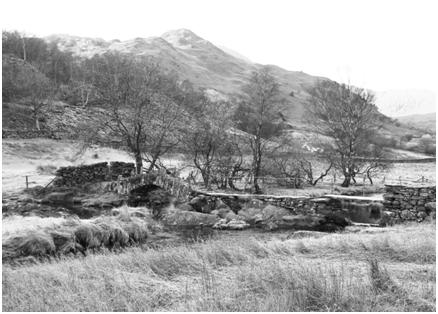
I have driven along the small valley of Little Langdale many times. En route for the Wrynose Pass and Hard Knott and then on to Wasdale in the 1960s, over the Blea Tarn road and down into Great Langdale for the climbing on Gimmer, Raven Crag, White Ghyll and Pavey Ark and visiting the hugely impressive Big Hole slate quarry containing the vast and wonderful cathedral hole, but rarely stopping very much back then – just the occasional pint in the tiny back bar of The Three Shires Inn. With our children we often visited the ford on the track to Tilberthwaite to play in the clear waters of the River Brathay but it is many years since we had actually stopped in the valley and spent some time there. So when visit to Grange-over-Sands was necessary it gave us the excuse – unnecessary really – to have a short stay at The Three Shires Inn and revisit the little gem of the south Lakes, Little Langdale. The hotel was excellent and to be recommended – especially their winter offers – but it was the day, a Monday in late November, which made a little gem into a real, and hugely valued jewel of a place.