For the past few months I have been walking the outskirts of Berlin for a new book project. Along the way I published a series of postcards from the edge here on Under a Grey Sky. The walks are now completed, and you can find the postcard archive here. Now I just need to write the book…
Outside the old brewery friends gather in the spring sunshine, taking a seat on one of the benches that line the waterfront north of Spandau’s old town. There has not been beer produced here for a long time. Instead, the old brewery has been transformed, with a mix of re-purposed old red-brick buildings and architecturally complementary new-builds to create a harbourside complex of apartments and a ‘premium residence’ old people’s home, with restaurants and cafes on the ground floor. The view from the upper floors includes both the citadel and the power stations beyond.
An iron bridge takes me across the river to an island. The remnants of an armaments factory still stand, re-purposed during the Cold War to store the reserves of the West Berlin government should the USSR attempt another blockade of the island city. Now the warehouses and factory spaces are used for events, part of a multi-million euro plan to re-invent this island on the Havel as a residential and commercial zone. The landscaped paths and gardens are ready and waiting. As are the jetties and landing stages. Only the apartments remain imaginary; depicted on a billboard that stands on the edge of a muddy expanse of wasteland.
The re-imagining and re-purposing of places and spaces built for very different uses can take time. Off the island once more, the old industrial complexes that fuelled the rapid rise of Berlin in the second half of the 19th century are now less about making things and more about providing space for those 21st century activities that have square metres as the highest priority when it comes to real estate. Film studios and storage halls (private and commercial). Indoor football pitches and paintball. Logistics companies and winter parking for campervans. Infrastructure is still important, but whereas once it was the canal, the river and the railway, it is now access to the autobahn and a pledge of high speed internet access that is offered up outside properties with square metres to spare.
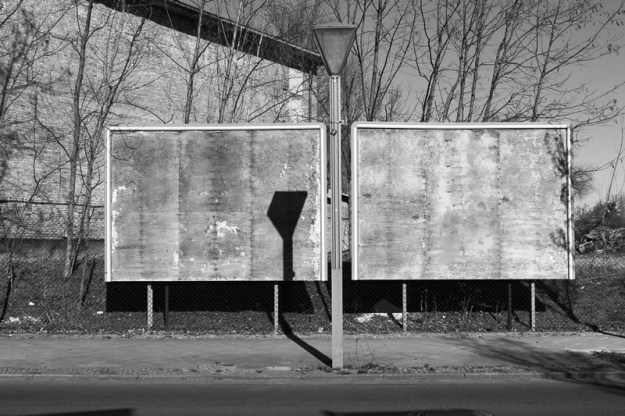
Lots of space, but little passing traffic. A red kite hovers above a fenced-off strip of marshy land, that somehow escaped the city’s relentless advance. Apart from the odd car on the main road, there is little other movement to catch the eye. No one waits at the bus stop. No one is following me along the pavement. And across the street the billboards stand empty. In this corner of the outskirts, on a weekday morning, there is no one to advertise to.


 Under a Grey Sky