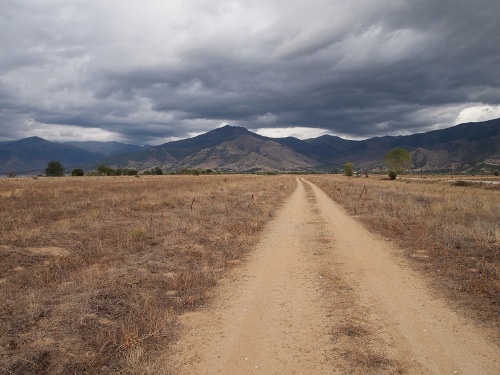
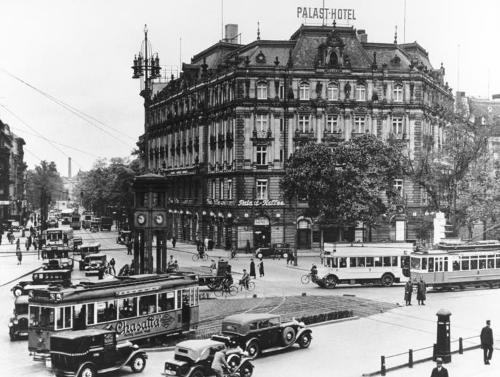
We were supposed to go to the Saxon Switzerland, that dramatic landscape alongside the Elbe between Dresden and the Czech border. The visit had been a long time planned, because we had last visited in autumn 2004 – a Lotte-lifetime and then some – and we wanted to experience again the great colour-change of the leaves on the trees, the mist on the river, and the spectacular rock formations that make this place one of Germany’s natural wonders. And we would get some excellent photographs for Under a Grey Sky whilst we climbed a low mountain at the edge of the National Park. That was the plan.
Monthly Archives: October 2013
In the Tiergarten, Berlin
On my first ever day in Berlin, roughly twelve years ago in October 2001, I walked across the Tiergarten. It wasn’t planned. I had started my day at Alexanderplatz before walking down Unter den Linden with the idea of seeing the Brandenburg Gate. I was almost through it, with the buses and cars, when I realised that it was completely covered in scaffolding. I remember thinking that it was a shame that I would not see it on my visit to Berlin, for who knew when I would return.
Sand, Starlings and The Small Heart of Things
Julian Hoffman writes the wonderful blog Notes from Near and Far, and last week he celebrated the publication of his book, The Small Heart of Things:
The two Prespa Lakes are split by a flat isthmus, a spur of sand which pelicans glide across in summer as they swap one body of water for the other. Those two lakes, though, were once one, a single blue bowl encircled by steep slopes. Over thousands of years, silt and sediment from the mountains were sluiced down their gullies and creeks into the river that drains the valley. As the river emptied, spilling its mountain hoard into the lake – all the spoil of sand and silt that had been worn down by wind, rain and time – those tiny grains built up in a slow process of accumulation until they spread out across the water, building a bridge one particle at a time, turning one lake into two.
Cities built on sand
By Ian Hill
I cross the square, and the damp sand squeaks beneath my feet. Wet from rain, it seams the cobbles of the pavements, sifts into the gutters and drains. The sand smells of gunmetal and earth, with a scent of the sea, as though tides once lapped these ancient squares. It is a reminder of our proximity to water, the shifting base of rivers on which we build our monuments to progress.
Here, sand is like the innards of the city; its hidden viscera, its soft core beneath a carapace of buildings and roads. I pass a construction site where a vacant plot is being excavated for development, and I see a vast hole in the ground, foundations for a new building, which is layered with stacks of yellow and ochre sand, like the glass lighthouse-shaped paperweights I remember from beach holidays of my youth, filled with striped layers of coloured sediment, like a history of geological time. As the construction deepens, older and older layers are exposed, each one a slightly different colour to the last, each one telling a story of water, holding a memory of currents gently teasing the sand into ripples and banks.
Brocken Diary: The Mountain Never Climbed
I don’t tend to make New Year resolutions – perhaps because of football seasons and growing up surrounded by people who work in Higher Education, autumn always feels much more like a “new beginning” that the 1st January – but I have decided to hatch a plan for some point over the next twelve months: to climb what was the highest mountain in East Germany…
On December 25th 2006 our daughter Lotte was six months old. We were celebrating her first Christmas with some friends in a small town on the edge of the Harz Mountains, and decided on the day itself to drive into the National Park and go for a walk. The Harz straddle the border between the German states of Lower Saxony and Saxony-Anhalt, which means that during the years of division the inner-German border. We were staying in the old West. We went for a walk in the old East.
Flâneur – Franz Hessel’s ‘In Berlin’
“Walking slowly down bustling streets is a particular pleasure. Awash in the haste of others, it’s a dip in the surf. But my dear fellow citizens of Berlin don’t make it easy, no matter how nimbly you weave out of their way. I always catch wary glances when I try to play the flaneur among the industrious. I believe they take me for a pickpocket.”
And so begins Franz Hessel’s The Suspect, the first of two essays that make up In Berlin, a flâneur’s view of the city by day and by night in the 1920s, translated by Amanda DeMarco and about to be published this October as part of a new series of small-but-perfectly-formed books from Readux, based here in Berlin.
Franz Hessel was born in 1880 and grew up in Berlin, before moving in his twenties to Munich and Paris. Into the 1920s and 1930s he worked back in his home city as an editor, whilst writing widely praised novels and essays, as well as translations of Proust, Casanova, Stendhal and Balzac. In 1938 he fled to France, where he would end up in an internment camp, passing away shortly after his release in 1941.
On Ilkley Moor…
This weekend we were back in Yorkshire for just a couple of days, celebrating a very special birthday with close friends and family, including quite a few Under a Grey Sky contributors! The images and text below were actually put together during a trip a month or so ago… this time around there were no views from the airplane as Leeds Bradford was shrouded in mist. In fact, we were unable to land and we were diverted to Doncaster…
Coming in to land at Leeds Bradford airport I look out of the window and can see Ilkley Moor, squat and smooth, not so much towering over the surrounding towns and villages as hulking in its presence. Perhaps it is because we don’t have much in the way of moorland in Germany that the sight of it always makes me feel as if I have returned home, even if the wheels have yet to touch down on the runway tarmac.