Memories of Catalonia

I

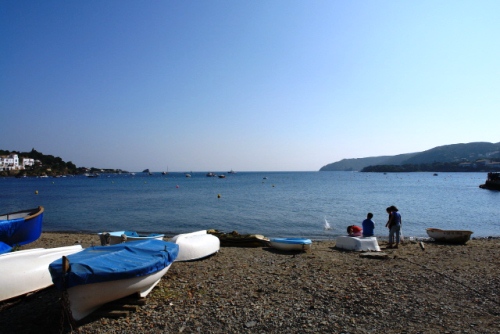
The town of Cadaqués on the Costa Brava, a couple of hours north of Barcelona meets all expectations of a Mediterranean fishing village-turned-tourism hot spot. You know it because you have been there, have the postcard, or have had the quick tour via some search-for-the-sun relocation programme… Whitewashed houses cluster around a sandy beach protected from the sea by rocky promontories on either side. Local lads and lasses buzz around on scooters, whilst at the shaded tables of the cafés in the main square pale-faced would-be Shirley Valentines flirt with moustachioed waiters. Along the beach self-satisfied businessmen stroll, well-fed with their well-dressed, heavily made-up wives, while good-looking police men and women loiter on street corners, tanned and inscrutable behind reflective sunglasses.
Continue reading

Karl Marx Allee, Berlin

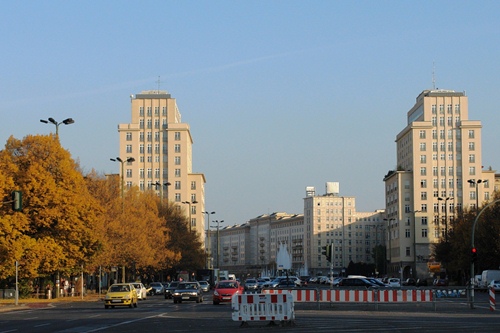
On a fine autumn morning I was invited to join a tour exploring the architecture of “divided Berlin”, starting with the wonderfully grand and only slightly-preposterous stretch of Karl Marx Allee that was built as a showcase to the wonders of the newly-established and socialist German Democratic Republic back in the early 1950s. A few days later, when the boulevard was once again bathed in autumnal sunshine, we returned for a stroll and to capture its glories on camera.

Continue reading

The White Mountain National Forest, New Hampshire, USA

By Matt Lancashire:

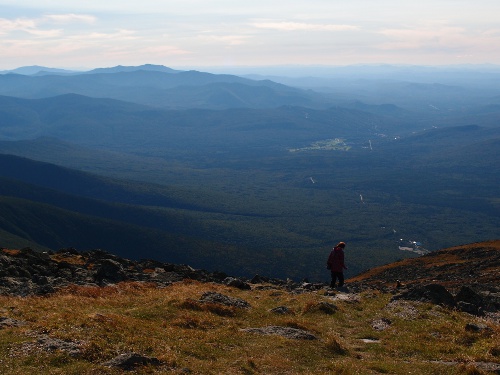
In many ways, New Hampshire was the most libertarian place I have ever visited. The hints started as soon as you drive over the state line, past the sign saying “Welcome Bienvenue / New Hampshire / Live Free or Die”. The confrontational choice of slogan certainly reflects the seriousness of the sentiment for the state. Before long, there was another sign: “N.H. LAW / BUCKLE UP UNDER AGE 18”. The inverse implication that you don’t have to wear a seatbelt if you’ve survived your first 18 years took a moment to settle in. Before long, another official road sign appears, advertising that the next service station doubles up as a “state liquor store”, which a more meddlesome local government might consider a poor combination.

Continue reading

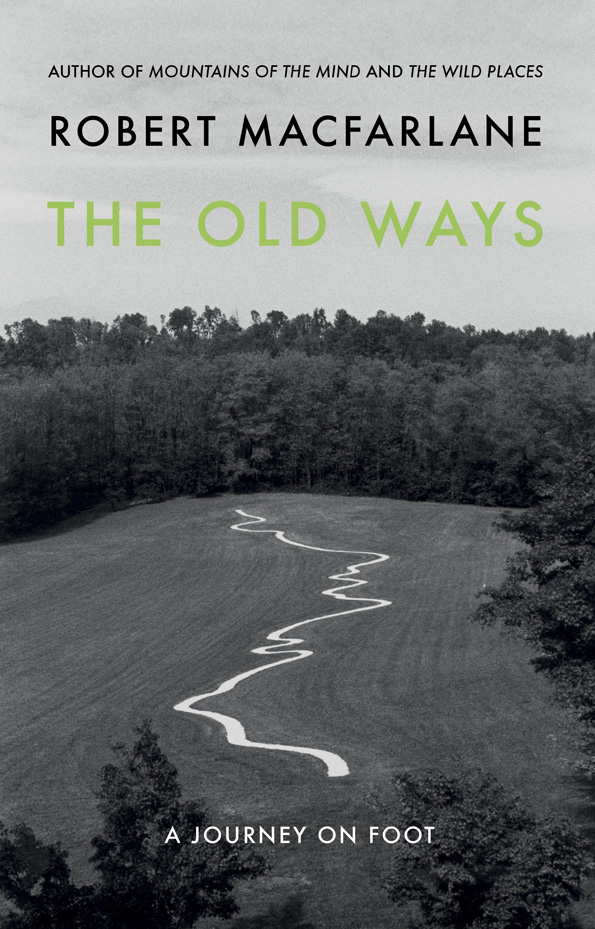
The Old Ways, by Robert Macfarlane

Review by Sharon Blackie:

‘I have met with but one or two persons in the course of my life who understood the art of Walking’, said Thoreau in his essay on precisely that subject: ‘… that is … who had a genius, so to speak, for sauntering .’ One suspects that Robert Macfarlane, as presented in his latest book The Old Ways, would have met with Henry David’s approval. For whatever else there may or may not be in this book, there is indeed a clearly displayed ‘genius for sauntering’, as Macfarlane sets off to explore a disparate collection of ancient paths by land and sea, in the British Isles and elsewhere.

Continue reading

Architecture of East Berlin Tour – this coming Saturday

As regular readers might know, I have written a number of pieces for Slow Travel Berlin – so I might be a little biased when I say what a wonderful and informed resource it is for travellers and even locals to the city, but there you have it. Recently, Slow Travel Berlin have begun offering some tours (another project I am involved in) and this coming Saturday, the 27th October, they are hosting a very special tour through the architecture of East Berlin, led by Richard Carter. Here are some more details:

Continue reading

The Festival of Lights and a city of diversity, Berlin

Unter den Linden, the famous old boulevard in the heart of Berlin, is being ripped up in order to extend the U-Bahn from Alexanderplatz to the main train station, and perhaps it was the squeezing of the space that made the whole centre of the city feel jam packed on Friday night, as crowds wandered with eyes aloft at the various illuminations of Berlin’s Festival of Lights. I can only remember the street that busy during December and the Christmas markets, and so we struggled through the throng without even the promise of a bratwurst or a mug of glühwein as a reward at the end.

Continue reading

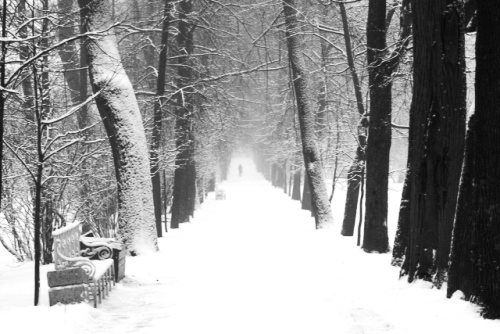
Window on the west, St Petersburg

I

To walk along the Nevskiy Prospekt is to walk along the main street of a European city. From the Alexander Nevskiy Monestary to the Admiralty, past the Moscow train station, the Kazan Cathedral and the House of Books, this bustling street, jammed with traffic at almost all times of day and night, has more in common with its spiritual brothers in Mitteleuropa than its big brother down the railway line. Peter the Great conceived of St Petersburg as a “window on the west”, the showpiece city at the heart of his project to Europeanise his nation.

That was over three hundred years ago, but even now you can see in the canals, boulevards, gardens and palaces that populate the heart of St Petersburg the concept in action. But despite Peter’s intentions, the city remains as much a window on Russia as it does on the rest of Europe, and at all times you are aware of the looming mass of the country spreading out east from this Baltic port all the way across the mountains and steppes to the Pacific shore, not least in the faces of the many and varied nationalities that call St Petersburg home, but whose origins lie elsewhere in the empire.

Continue reading

Sunday morning in the Britzer Garten, Berlin

Berlin has so many wonderful green spaces, from the Tiergarten in the heart of the city to the forests that occupy the edges though very much within the city limits, so perhaps it is not so surprising that it took me the best part of ten years to find my way south of the Ringbahn to the district of Neukölln and the Britzer Garten. The garden was created for the Federal Flower Show in 1985, and although it still charges a small admission, it is clearly used by Berliners from this corner of the city as their local park. Indeed, as we were trying to find our way from the bus stop to the entrance, an old lady guided us expertly whilst telling us that this was already the 32nd time she had visited this year. I guess at that rate, the season ticket pays for itself.

Continue reading

You shouldn’t always walk alone – Buckow, Germany

This piece was inspired by a walk in Brandenburg with Nicky and Greg Gardner. Nicky is the co-editor of Hidden Europe, and you can read her own impressions of the walk by following the link below.

Many writers would argue that if you want to walk for inspiration you need to walk alone. I have some sympathy for this view, and often find that a solitary walk gives me the time and space to get things clear in my head, finding solutions on the pavement or the parkland track to problems that seemed insurmountable sitting in the accusing glare of the anglepoise lamp on my desk. It is for this reason that I rarely leave the house without a small notebook in my pocket, using park benches, stone walls and tram-stops as temporary office space along the way.

But sometimes it is company and conversation that can make a walk inspiring, and so it proved on a wet Friday afternoon at the beginning of October, as I walked with friends around the lake at Buckow, fifty-odd kilometres east of Berlin. “Normally I am known for taking copious amounts of notes when I walk,” Nicky said to me, about halfway around, but her notebook, like mine, stayed firmly in the pocket. Instead, we talked.

Continue reading

Coastal Maine, USA

By Matt Lancashire:

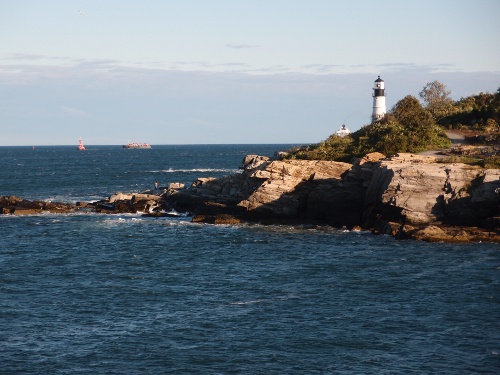
Maine is not one of the more obvious destinations in the US for the European traveller, even though the state slogan repeated on local car licence plates is simply “Vacationland”. However, I found myself there last month to visit a friend, and was startled at how much the area appealed to me. To most people who have any thoughts on the matter, the word Maine appears to conjure images of lighthouses, lobsters, and moose. The state feels to align itself into two camps along these lines, between the sea and the woods, or fishermen and hunters. The locals are stereotypically hardworking, stoic, and raised in close contact with nature. They have a consciousness that they’re stuck out on a limb at the very eastern edge of the country, and you suspect they probably wouldn’t want to have much more to do with everyone else anyway. Slightly aloof, they make a point of distinguishing between those born and raised in the state and everyone else, who will forever be described as From Away, and cannot hope to be considered a Mainer. While I found a definite grain of truth in this reputation, it seemed that if you are just open and show your own true colours, everyone will get along famously.

Continue reading