The Joys of Essex

Diana1

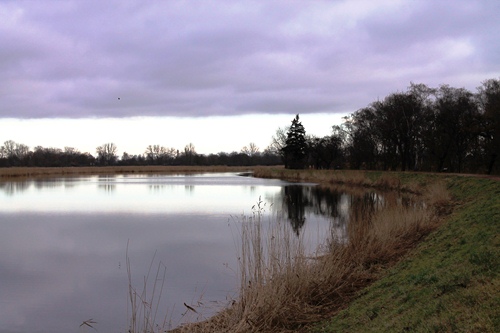
(above: Essex Marsh, by Diana Hale)

By Diana Hale:

Jonathan Meades‘ recent BBC4 programme ‘The Joy of Essex‘, replete with characteristic provocations, utopian visions and other little known eccentricities, inspired me to relive some of my own joys of Essex, searching out paintings and photographs and taking advantage of an opportunity for some biogeography, or topography of the self. Not difficult as I was actually born there, or at least in what used to be Essex, as was everything east of the River Lea at one time.

Although my birth certificate says the London borough of Redbridge as that was where the hospital was, in fact my parents were living with my grandparents in Buckhurst Hill, in the Epping Forest district of Essex. Appropriately, as it was where my father’s family had ended up, it is not far from Hale End (on the map between Walthamstow and Chingford).  Incidentally there is now a new Hale village next to Tottenham Hale, not that far away from Hale End and not far from where I now live – a pleasing circularity. ‘Hale’ apparently means ‘a hollow place’ in Old English so I think there are plenty around.

Continue reading

The Road Not Taken, Amherst

By Phil Scraton:

I was 17 when I first heard The Dangling Conversation. The song’s simple beauty contrasted with the complex emotion of its lyrics. The mood, the characters, caught my imagination. Written by Paul Simon, recorded with Art Garfunkel, we are introduced to the lives of two lovers caught in the quiet solitude of a seemingly lost relationship. ‘You read your Emily Dickinson’ and ‘I my Robert Frost’; we ‘note our place with bookmarkers’ that ‘measure what we’ve lost’.

Like a poem poorly written
We are verses out of rhythm,
Couplets out of rhyme,
In syncopated time
Lost in the dangling conversation
And the superficial sighs,
Are the borders of our lives.

In a ‘lost’ relationship, ‘out of rhythm’, ‘out of rhyme’ what was the relevance of the Emily Dickinson/ Robert Frost juxtaposition? I soon discovered that both were fine North American poets, two generations apart. Their personalities and lives had little in common; she a virtual recluse and a home-based correspondent, he an affable teacher with a love of the outdoors. Yet comparisons of their poetry have been endless – books, theses, articles, essays.

Continue reading

The heart of winter

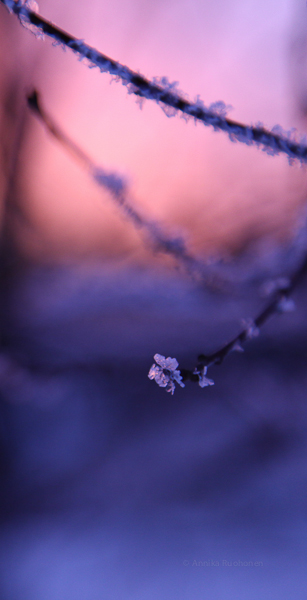
annika_winterA lovely and evocative snapshot of winter, by Annika Ruohonen:

The sound of snow under your feet marks the heart of winter. Prints in the snow hold stories like a bookshelf full of winter tales. There is the one rushing off to work. There is the one coming home from school, kicking an ice block ahead of him, stopping to examine sticks and rocks on his way. There is the one searching for food, ruffling up his feathers in the merciless minus degrees. There is the one who roams free, hunting birds and mice, paying the price of freedom in his search of a place for the night. Smoke rising from the pipes, frost popping in the corners. Time for the blue moment. Only a rare occasion in the course of the year. In the heart of winter.

This first appeared on Annika’s website and we are extremely pleased that she gave us permission to reproduce it here.

A walk by the river

Ryck1

A few weeks ago we were in Greifswald, an old Hanseatic League city in the north of Germany, made famous by its university and the paintings of Casper David Friedrich. Whilst we were there, Katrin and I took a walk along the River Ryck, from our hotel in the fishing village of Wieck to the old town of Greifswald itself, and back again. The short piece that I wrote about the walk for Caught by the River was published yesterday:

Continue reading

Something about birds

bird_julia

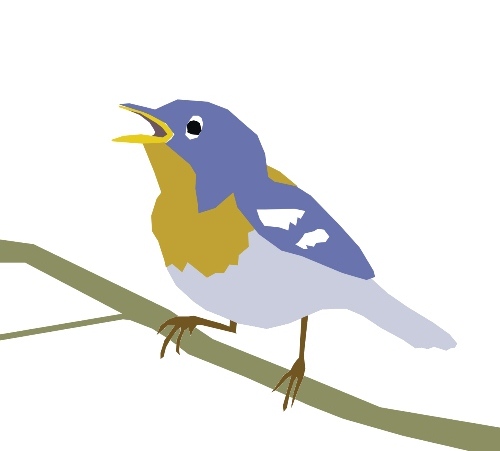
Illustration by Julia Stone

Our feathered friends have become the number one topic in our house, thanks to it being the current project in Lotte’s first grade class. As well as the fact that each walk to school now takes twice as long as we try to identify the various sparrows, tits, blackbirds, ducks, crows and pigeons along the short stretch of the Panke river we walk along to reach the U-Bahn station. She has a book as well, a lovely thing from the RSPB that has pictures of the most common birds and tick boxes so that she can start her collection. In school the project allows the teacher to cover all kinds of things, from reading and writing to drawing and maths, without the kids cottoning on that they are actually learning. Because after all, birds are fun.

Continue reading

Point Zero and Moscow’s Red Square

A recent survey in Russia suggested that over two thirds of Russians want Lenin’s embalmed body removed from Red Square, at a time when the mausoleum is closed for renovation and speculation is rife as to what the future holds for the former Soviet leader. It is almost exactly five years since we stood on the cold expanse of cobblestones on a grey February day, and the mausoleum was closed for repairs that day as well, just a week before the election that saw Putin replaced as President by Medvedev. Putin is back in charge again, and he recently appears to have come down in favour of leaving Lenin exactly where he is.

Continue reading

Memory and memorials in Berlin

Memorial1

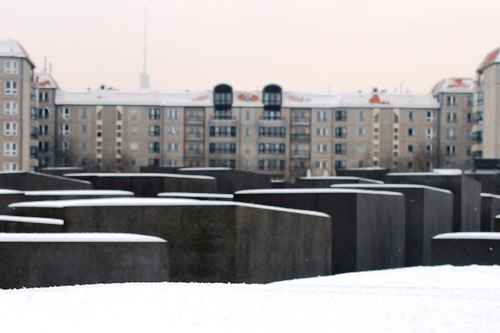
Sunday 27th January is International Holocaust Remembrance Day, an event with obvious resonance here in the German capital. It has been cold over the past few weeks, with temperatures falling below zero and snow on the ground, snow which covered the slabs of the Memorial to the Murdered Jews of Europe when Katrin went by on Thursday to take some photographs. The Memorial was subject to a lot of debate at its time of building, and has since been joined by nearby memorials to Homosexual victims of the Holocaust, as well as the more recent memorial to the Roma and Sinti who perished at the hands of the Nazi regime. All cities have memorials to their past, sometimes glorious and glorifying, other times reflective and sorrowful. Berlin has so many you fear that you will start to look through them, to no longer reflect on what they mean and what they stand for as they  become simply part of the fabric of the city.

Continue reading

A walk on the Contraviesa, Southern Spain

O

By Sheila Scraton:

We were staying at our cortijo in the Alpujarras that lie to the south of Granada on the slopes of the Sierra Nevada. We had had a great family Christmas in Bad Saarow, Germany and were now enjoying unusually mild winter weather in Spain. Most people who know that we visit Spain seem to think that this means an escape from the cold weather of the UK and relaxation in warm Spanish sun. Whilst this can be the case, we have regularly experienced long icicles from our patio roof and deep snow making even access to the house a bit tricky.

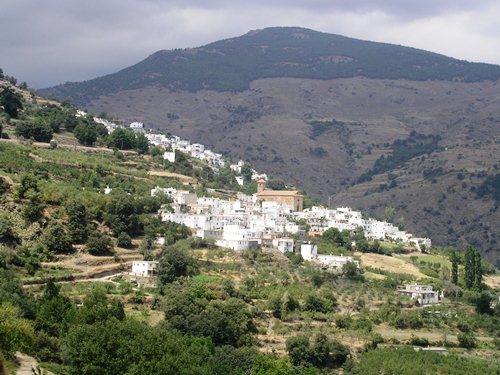
However, this January we had two weeks of wonderful weather – blue sky and warm sunshine. The air temperature can be cool, we are at over 1500 m (above the height of our highest mountain in the UK, Ben Nevis, at 1344m) but this is more than compensated by the strong sun coming directly from the south and North Africa. Today we met up with our friend, Jeremy, who has lived and worked in the Alpujarras for 20 years as a walking guide. We were doing one of our favourite walks at this time of the year, along the Contraviesa, the mountain range between the Sierra Nevada and the Mediterranean Sea. It is a favourite winter walk because its mild location means that it’s not possible, or at least comfortable, to walk here in the summer months.  It is also the area that we look across to each day and evening from the patio of our cortijo, making it a nice change to reverse the view and look back to our village and the high mountains behind.

Continue reading

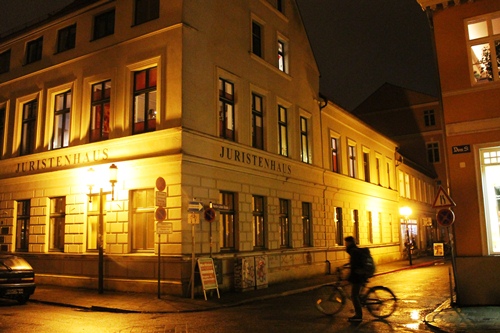
In the city after dark, Greifswald

Night1

“Any serious flaneur walks by night as much as by day; for by day it’s too easy to be drawn into a complacent acceptance of normalcy. This much we plainly know: the panel truck disgorging toilet paper; the smoking secretary with laddered tights; the dosser senatorial, sporting a sleeping bag for a toga. But by night these are shape-shifters, capable of defeating our expectations.”

The quote comes from Will Self and an Independent column from six years ago on the pleasures of night walking. He is a fan of the nocturnal ramble and describes one such walk from a restaurant to his hotel through the dark streets of Glasgow. I can see him as I read, imagination stimulated by the words on a page, but despite his enthusiasm for walking under the glow of streetlights there remains a sense of foreboding or threat, and I am relieved for him when the automatic doors swish open and he steps inside at the end of his walk. This almost definitely says more about me than it does about him, and my own mild fears of being out – whether in the city or beyond – after dark.

Continue reading

Memories of the road, USA

Roadtrip1

By Anja Ahrens:

We were only in the United States for two weeks – a flying visit really – and we had decided to spend three of those days driving through the desert. With a four year old child and my in-laws in the back seat. Everyone said we were crazy, and maybe we were. But we loved it. During those days on the road I understood how fascinating the mountains can be, how the desert does not stay the same (as you might imagine) but instead the landscape was changing every twenty minutes, or with every bend in the road. The back seat passengers were happy and so were we.

My memories of that trip begin with the turn off along the old Route 66 and an abandoned town, my son playing cowboys amongst the buildings before it was time to hit the road again towards the Grand Canyon. We drove along a dead straight road for hours, passing only a lonely hotel and an airstrip to deliver those tourists who flew in rather than driving across the desert. We got to the canyon with fifteen minutes before nightfall, the amazed guard of the National Park surprised that we wanted to enter. Within less than an hour all daylight had gone, an incredibly fast process that we were not used to, and so we picked our way through the darkness to find our hotel.

Continue reading