Category Archives: Reflections

Special places: Coniston

Coniston1

By Chris Hughes:

The English Lake District is well known to contain some of the most popular and celebrated landscapes in the UK. There will be as many people who disagree with that statement as do actually agree and no doubt arguments and debates have ranged for many hours over the remains of meals and empty beer glasses as to which landscape is the finest – the Snowdon Horseshoe, The Cuillin Ridge, the Cornish coastline, The Sussex Downs. The choice of the finest landscape is both personal and frequently changes dependent on mood, company and even the weather! But no doubt favourites are places that people will return to time and time again, will enjoy over and over without tiring of seeing and will rejoice in whatever the weather, time of day or company.

Continue reading

Ormeau Park, Belfast 1913-2013

???????????????????????????????

The 1913 women’s walk for suffrage in Britain is well-known. Over 50,000 women arrived in Hyde Park London demanding the vote. The abuse they endured extended to imprisonment and the brutal force-feeding of those on hunger-strike in prison. In Ireland’s nine counties that comprised Ulster suffragettes, Unionist and Nationalist together, held mass rallies in Ormeau Park. A century later their struggle and their bravery was commemorated in Ormeau Park. Dr Margaret Ward, the Director of the Women’s Resource and Development Agency in Belfast and renowned women’s suffrage scholar addressed the meeting and led the commemorative walk for women in the park. This is her address:

Sisters and friends,

We are here today to commemorate the fact that 100 years ago women throughout Ireland were marching, protesting and going to jail because they demanded the vote. Women from Ireland, England, Scotland and Wales were part of a mass, international, movement of women. In Ulster there were around 1,000 members in 20 different suffrage organisations.  Proportionally the Suffrage Movement had as many members in Ireland as they had in England.

Continue reading

The Ghost Bike

OLYMPUS DIGITAL CAMERA

By Phil Scraton

I remember walking to Moreton Cross with my mum to catch the 77 bus to Landican Cemetery on the Wirral. I guess we went once or twice a month. Mum knelt on an old towel clearing weeds and trimming the edges of the flower bed that marked Aunty Mary’s grave. I was off running between the headstones with my invisible friend, Ben – like Calvin and Hobbes. Neither Ben nor I ever stepped on a grave. The souls might have ascended to heaven but the interred bodies had to be respected. Back from my imaginings I’d find mum silently weeping. I hugged her so hard thinking how she loved her older sister. Only recently did I discover that Mary was, in fact, her mother.

Cemeteries house the dead, their neat avenues and walkways are like miniature housing estates. A reverential solitude accommodates remembrance, grief and, on occasion, celebration of a life well lived. Having renewed the flowers on Mary’s grave we would drop by the ice cream shop and take the bus home. As an altar boy in a Catholic family I regularly served requiem mass and stood alongside numerous gravesides. I suppose I accepted memorialisation as part of life. Death was not an end, but a beginning. Not a proposition that endured into my adult life!

Continue reading

Farewell to the Thomas Cook European Rail Timetable

Timetable

It was with some sadness that I read the news earlier this week that Thomas Cook are closing the publishing branch of their business, which means the end of the legendary European Rail Timetable, which only this year had celebrated its 140th anniversary. Having worked on the last couple of editions of the Europe by Rail guidebook – which is also a victim of the closure – I had cause in recent years to reacquaint myself with the timetable in all its glory. It seems hard to imagine now in this era of extensive internet access and smartphones – in itself a reason why travel publishers have been having a hard time of it – but when I first when interrailing at the end of the 1990s, the printed timetable was the most important part of our luggage. Checking down the columns for the next train from Budapest to Ljubljana, or Florence to Milan, and making sure that it was not subject to any exceptions, or perhaps even a supplement on our rail pass, was an essential part of the routine as we crisscrossed Europe.

Continue reading

The best view in North Wales?

View_1

We have been here on Under a Grey Sky before, but we make no apology… for a good number of the contributors, the Rhoscolyn headland is a very special place, and one of our number who wants to take us back there, asking a question of our readers as he does so whilst leaving those of us a long way from North Wales feeling distinctly homesick, is Chris Hughes:

Is this the best view in North Wales? If it’s not, it must be one of the best and certainly one of the most extensive. I have thought hard about posing this question and putting it out into a  ‘public arena’ but in doing so I am really asking all those of you who visit North Wales to walk, climb, canoe, paint, photograph or picnic by the side of your car to express an opinion and, preferably, post you own contender for the title of “Best View in North Wales”.

For those of you who are not familiar with this magnificent view the photograph is taken from the headland at Rhoscolyn a short walk from Outdoor Alternative. The scene shows the full range of the Snowdonia mountains starting on the left with the Carnedds, Glyders, the Snowdon range, the Nantle ridge and then out to the mountains along the Lleyn Peninsula and eventually as far as the island of Bardsey.

Continue reading

Giants of the Landscape in the North East of England

Angel of the North

By Barry Sheppard:

As far as I’m aware, one region which has not been covered in Under a Grey Sky as of yet, is the North-East of England.  In truth, it is a place I haven’t thought about in quite a while myself, until recently.  So this edition of Under a Grey Sky will be more of a walk down memory lane than a walk of a physical nature.

The North-East of England is a place that I know quite well, having spent a couple of years living in the region in the late 90s.  I have a lot of good memories, and many more fuzzy ones, of a place which I haven’t visited in quite a while yet still occupies a special place in what passes for my heart.  One of my enduring memories of that period was when a group of us decided to go, and (unsuccessfully) explore the famous Hadrian’s Wall.  Our primary failure being that we couldn’t find it!  I still don’t know how we managed to miss a structure that goes on for 73 miles and is ten foot high in places, but safe to say the feats of Shackleton or Livingstone were in no danger of being surpassed by our hardy band of intrepid misfits.

Continue reading

Death and Life on the Strand

???????????????????????????????

By Phil Scraton: 

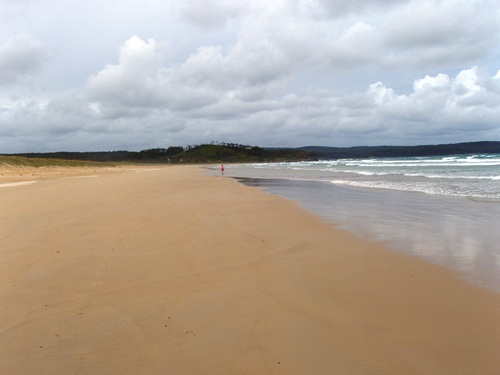
Throughout my childhood the coast had special meaning. The River Mersey did not offer its ports, Liverpool and Birkenhead, easy access. Shallow channels were dredged of their silt and sand to allow access to the Irish Sea and to the world. Ports built on the backs of slaves traded through the Atlantic triangle, on the last hopes of Irish migrants as they escaped the Great Hunger and on the wool, cotton and coal industries of Yorkshire and Lancashire whose labour was exploited in pursuit of Empire.

Where I lived they called it the ‘shore’, holiday-makers preferred ‘the beach’. I can’t remember the first time I heard the word ‘strand’ but wrongly assumed, as my German friends know so well, it had a Celtic connection. I can’t explain why, but for me ‘the strand’ has always evoked expansiveness; the power and vastness of the ocean, the constant movement of the tide – incoming, outgoing, only calm for fleeting moments each day, each night.

Continue reading

Physicality and Art by Mark Tweedie

mark_steps

(above: Steps by Mark Tweedie)

The pinhole photography of Mark Tweedie is stunning… I cannot be the only person that finds the images of places, and indeed the series of self portraits, atmospheric and haunting. I have never been to Dartmoor, but I have an imagination of the landscape shaped by things that I have read or perhaps even seen. The photographs in this series are fairly close to what I see in my own imagination.

On Mark’s website he also has a blog, and the articles are well worth a read. It was the most recent piece that drew me there in the first place, and one which – when I think about my own feelings about walking and the creative process – resonates in such a way that I really wanted to share it here…

A good day’s walk makes you feel like your heart has overflowed, that it cannot be contained by the physical confines of the body. It spills out into the trees and hills, it is carried in the wind, winds its way through the air-blown grass like a serpent, runs at your heels like a happy dog. Joy is impossible to describe, for what lifts me may not have any kind of effect on you. But when I walk I feel a part of the world and not apart from it. This sense mixes with everything, I mix with it and, quite literally, en-joy.

Walking, when done in the right spirit, is creative, or at least fills me with the same ineffable sense that something essential, something visceral is happening. It is a feeling that anyone who has created something satisfying will recognise. Moving across the world slowly – from a distance little appears to change, just as an artist’s pencil second by second alters the paper insignificantly – it feels like the landscape and the walker have at the day’s end become a manifestation of more than the sum of themselves.

Travelling on foot gives so much time for mental release thanks to its basic slowness. It creates a psychic momentum which carries one’s thoughts and emotions onward long after the stepping out is finished. It gives a mental space, an openness, which is ripe for fledging ideas and firming up reflections. There is so much in its inherent, rhythmical slowness which is essential to the emotive understanding of all kinds of issues, problems and inspirations. Much of this is also down to the being there, wind on face, earth under foot, straining, feeling muscle and sinew as they negotiate a passage through the elements. The physical engagement transforms everything, makes our sometimes leaden lives golden once more – the philosopher’s stone for those of us who by necessity live our modern lives once removed from the elemental.

Read the rest of Physicality and Art on Mark’s website here

Springtime and memory in the Schönholzer Heide, Berlin

Bike1

Just underneath the S-Bahn tracks, crossing from Wedding into Pankow not far from the Wollankstraße station, there is a collection of cherry trees gifted to the people of Berlin by the people of Japan, and which are currently in blossom. It remains one of my favourite “memorials” in a city that as so many, if only for its fleeting appearance every springtime. And thankfully spring has arrived, even if it is almost three weeks later than the Sunday last year when I captured the pink blossom at this exact point for another entry on Under a Grey Sky.

It was also possible to see the arrival of warmer weather by the coating of pollen on our bikes as we lifted them out from the rack in the courtyard of our apartment block, and in the number of people walking, riding and running along the Panke and Berlin Wall trails, which we followed to reach the Soviet Memorial in the Schönholzer Heide. We had decided to ride up there to capture some pictures of what is the third largest such memorial in Berlin, behind those in Treptower Park and the Tiergarten, and the final resting place for over 13,000 of the 80,000 Red Army soldiers who died during the final battle for Berlin. Unfortunately, we timed our trip during a period when the memorial is being restored, and so Katrin picked her way through the trees to try and get some pictures, but otherwise it was not possible to get any closer than the gates.

Continue reading

The College and the University, Amherst

Amherst

At the Black Sheep café in Amherst a group of three students work at their laptops at three different tables until the number of people searching for a place to sit becomes too large to ignore and they gather their things to sit together in the table by the window. The act of togetherness does not appear to aid their work ethic as they spend the next twenty minutes discussing whether or not it is too cold to go outside for a cigarette, and the relative merits of different graduate schools in California. On the strength of the first glance, most of our fellow customers appear to be either students or have some connection to one of the educational institutions of the town, and the noticeboard by the toilets is filled with posters and notes relating to political, social and cultural activities both on and off campus.

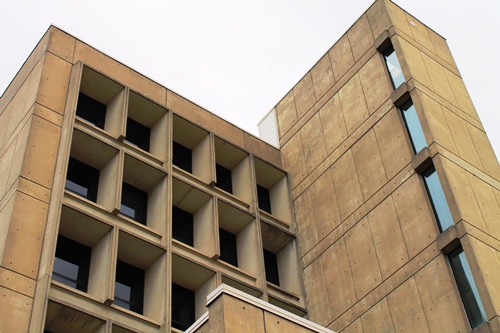
Amherst can be found on the Pioneer Valley in eastern Massachusetts, a couple of hours drive from Boston, and along with its neighbouring towns the business in these parts is education. The centre of Amherst – a collection of red-brick and wooden buildings scattered around a sloping lawn – is dominated by the campus of Amherst College, a private liberal arts institution that dates back to 1812 and offers undergraduate classes to just over a thousand students. Down the hill, towards the farmland that lies on either side of the Connecticut River, is the University of Massachusetts Amherst (UMass), the flagship campus of the University of Massachusetts state system and the largest public university in New England, with 27,000 students and more faculty members than the College has students.

Continue reading