Category Archives: Memory

Once a park for Pioneers, Wuhlheide – Berlin

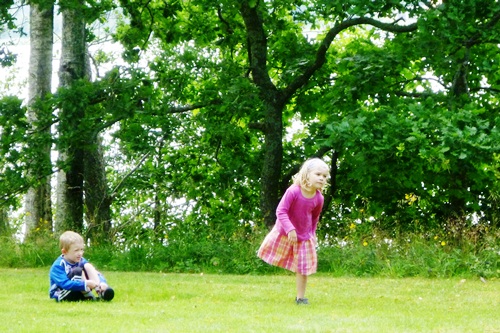
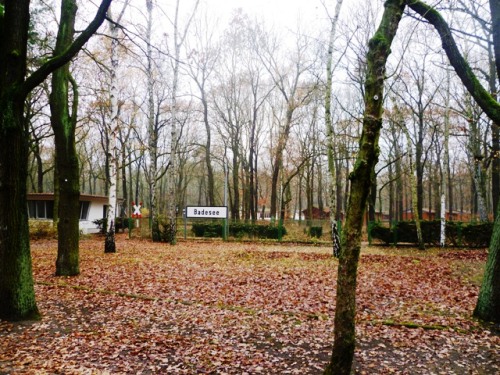
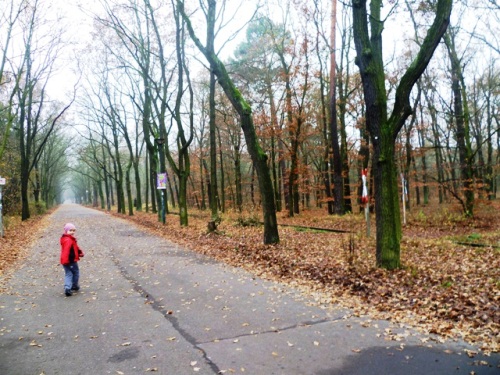
Katrin takes Lotte to the FEZ in the Wuhlheide, south-east of Berlin city centre. The park is quiet on this November weekend, although in the main hall kids crowd around the arts and crafts tables or wait, patiently or otherwise, for the play on the stage of the Astrid Lingren Theatre to begin. When Katrin first came here, as a child herself, this was the Ernst Thälmann Pioneers’ Park, inaugurated by the first President of the German Democratic Republic in 1950. It was the location for the 3rd World Festival of Youth and Students one year later, and again for the tenth edition in 1973. By that point it had grown from the original tent village to a facility including an open air stage, a sports stadium and indoor activity rooms… tens of thousands of children who grew up in East Germany came to the Pioneer Park each year. Most of attractions that Katrin enjoyed as a child are still there for her daughter, from the playground and forest trails, swimming pool and stages for different events and shows. The railway still runs – although it is no longer operated by the Pioneers themselves, for they have all grown up now and are bringing their own children to the park, to find their own adventures beneath the trees.

Continue reading

Then and Now: On the Potsdamer Platz

“The announcements of music halls, movies, the promotion of cigarettes, the fervor of business advertising – their nightly blaze above the roofs of Potsdamer Platz – drown, suffocate, and obliterate any of the political battle cries in an inferno of light and noise and color.” – Joseph Roth

In between the World Wars Potsdamer Platz was the busiest intersection in Europe. Berlin’s population had grown to 4.4 million – larger than it is today – and the neighbourhood immediately around the square was the ultimate symbol of this modernity, of the Metropolis on the Spree… a relentless intersection celebrating commerce, modernism and a glittering future. This was a place of crowds and noise, of lights and buildings that towered above the individual standing on the street. A hundred thousand such individuals passed through the Potsdamer PLatz each day, alongside 20,000 cars, as well as numerous bicycles and other vehicles such as horse drawn carts.

Continue reading

A Chance Encounter, Dubrovnik

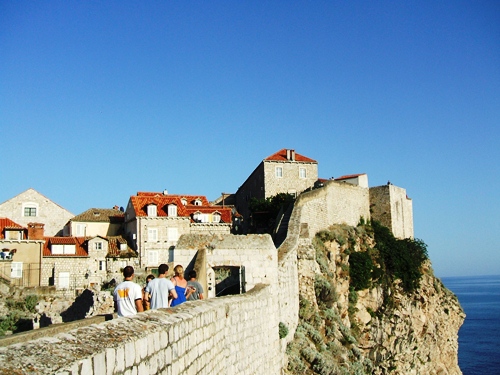
He was standing by the side of the road, leaning against the roof of a white Fiat, talking into his mobile phone. We had slowed to a walking pace, confident that we had out-run the polyester-clad gaggle of old ladies that had descended upon us as we climbed down from the bus. As we approached the man he switched off his phone and crossed the road towards us.

“Hi, do you need any help?”

Kevin looked at me, suspicious. I shrugged.

“We’re looking for this hotel,” I said, holding out a piece of paper. The man looked at it, whistled through his teeth and shook his head.

“No good. Let me show you somewhere better.”

“Your place?”

“How did you guess?” The man smiled, a twinkle in his eye. I decided to trust him and looked at Kevin. His expression said why not. We climbed into the Fiat. Inside the car he turned to us and offered his hand.

Continue reading

Memories of Catalonia

I

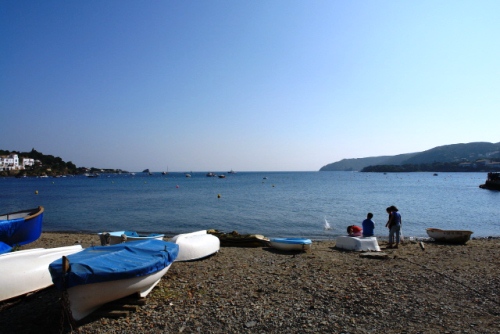
The town of Cadaqués on the Costa Brava, a couple of hours north of Barcelona meets all expectations of a Mediterranean fishing village-turned-tourism hot spot. You know it because you have been there, have the postcard, or have had the quick tour via some search-for-the-sun relocation programme… Whitewashed houses cluster around a sandy beach protected from the sea by rocky promontories on either side. Local lads and lasses buzz around on scooters, whilst at the shaded tables of the cafés in the main square pale-faced would-be Shirley Valentines flirt with moustachioed waiters. Along the beach self-satisfied businessmen stroll, well-fed with their well-dressed, heavily made-up wives, while good-looking police men and women loiter on street corners, tanned and inscrutable behind reflective sunglasses.

Continue reading

Karl Marx Allee, Berlin

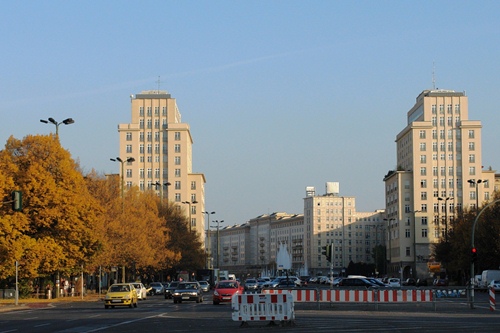
On a fine autumn morning I was invited to join a tour exploring the architecture of “divided Berlin”, starting with the wonderfully grand and only slightly-preposterous stretch of Karl Marx Allee that was built as a showcase to the wonders of the newly-established and socialist German Democratic Republic back in the early 1950s. A few days later, when the boulevard was once again bathed in autumnal sunshine, we returned for a stroll and to capture its glories on camera.

Continue reading

Waiting for the ferry

The following piece was inspired by the above photograph, taken at Rostock in northern Germany:

At the ferry port the vehicles line up in rows beneath the enormous floodlights that will make the scene as bright as daytime as soon as darkness falls. Families pile out of overloaded cars – playing cards and pillows, crumbled magazines and half-eaten biscuits, fall onto the tarmac as doors open – whilst lorry drivers lean patiently against open windows or watch films on laptops balanced on the dashboard. A coach driver bows to pressure from the back rows and releases the smokers with a pneumatic hiss of the doors, and the foot passengers and bike riders sit on wooden picnic tables lined up by the raised footbridge, next to a row of brilliant blue portaloos.

If travel is as much about the journey as the destination, and anticipation of what is to come heightens the experience when we finally get there, then waiting is part of the deal. Train stations, airports, ferry terminals and even service stations become the moments where the journey must pause, and we find ourselves killing time before we can get on the move again. Sometimes you hear these places – especially airports and service stations – described as neutral, or nowhere zones, because they are designed with a certain uniformity, or they do not necessarily reflect their surroundings. But ask any frequent flier about airports and they will tell you their favourites, the places they are happy to transit through and those which they avoid if they can possibly help it.

Continue reading

Swallows and Amazons, Red Devils, and Alntorps Island

When I was younger I loved the Swallows and Amazons series of books. It was not so much the “adventure” aspect, but the fact that the things the kids got up to, and the dangers they faced along the way, were so completely believable. Of course, even my younger self got recognise that this was another world that Arthur Ransome was writing about – from the freedom granted to the children to the gender politics expressed in the stories – but I think that the books and the stories told therein were massively influential in the games that we would play each summer in Rhoscolyn.

We were from a few different families and we called ourselves the Red Devils. We mapped the headland and (with Capt’n Rob) took to the high seas, went exploring and made a magazine… it is amazing to think back now about the range of ages in the group, and somehow we all managed to play together as we created our own world in and around Cerrig-yr-adar and the Outdoor Alternative campsite.

Continue reading

Platform 17 at the Grunewald Station, Berlin

As the S-Bahn swings south at Charlottenburg and heads for Potsdam, the cityscape shifts from six-storey buildings and balconies upon which satellite dishes are precariously balanced to one of detached houses with the occasional, modest apartment block here and there, and the wide expanse of the forest, through which it is possible to glimpse the odd dwelling, tucked away between the trunks and beneath the branches like a fairy-tale cabin.

The S-Bahn drops us on the platform of the Grunewald Station, and we take the steps down to a long brick tunnel that runs beneath the tracks. We emerge into the daylight. At a kiosk cyclists sit lyric clad and lightly sweating, drinking bottles of water and licking ice creams. In front of the station entrance is a cobble-stoned turning circle, a drop off point for the trains into town. You can picture the early days of the railway, when the city still felt separate from this community, as the merchants and bankers caught the Berlin train for another day amassing the wealth upon which these tree-shaded villas were built. But more than that you can picture a very different train, and a memory of this suburban station that is altogether darker.

Continue reading

Itching to Climb by Barbara James

Review by Sheila Scraton:

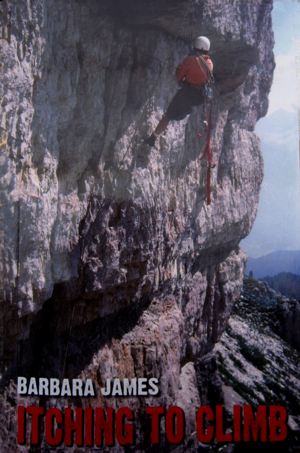
“By now I’d led two classic climbs, graded hard severe plus, in the Llanberis pass. They were on a dramatic lump of rock, Dinas y Gromlech, usually abbreviated to The Cromlech that stood, like a vertically opened book, above a steep scree slope. The well- protected ‘Cenotaph Corner’, in the ‘spine’ of the book was a mixture of bridge and balance moves but ‘Cemetry gates’, a climb on the vertical right-hand wall was harder. I needed strong arms because hanging from the fingers of one hand, I needed the other to reach upwards and insert a protecting runner. I used my powerful thigh muscles as much as possible to move upwards”

This book, about the life of the climber Barbara James, stirred many personal memories for me as I read about her many exploits both on and off the rock.  ‘Itching to Climb’ is a very personal account of Barbara’s life, particularly her traumatic struggles with eczema and other serious allergies. The book is the story of a determined, capable woman that not only provides an interesting read but is also focused on encouraging others to follow their dreams and pursue their goals.

Continue reading

Morning on the Alexanderplatz, Berlin

 “Alexanderplatz is both the GDR capital’s architectural centre and the city’s central point of attraction and a favourite meeting place where thousands of Berliners and people visiting the city meet every day at the World Time Clock for a walk in the new socialist city centre.”

(From the 1980 guidebook, Berlin: Capital of the GDR)

Twenty-three years after the fall of the Berlin Wall, people still use the clock as a meeting point. The House of the Teachers is still adorned with a suitably inspiring, socialist mural, and the television tower still gazes down upon the whole scene. But much else has changed on the Alexanderplatz. The old Centrum Department Store is now the Galeria Kaufhof and got a facelift eight years ago, the Pressecafe is now a steak house, and the old Interhotel Stadt Berlin has had a couple of new names even in the time I have been in the city. Even some post-Wall changes, such as the text from Döblin’s Berlin Alexanderplatz that once graced the facades of the buildings on Karl-Marx-Allee have now faded, although if you look closely you can still see the outline of some of the letters washed away by time and the elements.

In the past ten years the re-development of Alexanderplatz and the surrounding area has accelerated, with the opening of the enormous Alexa shopping mall and the new Saturn building on the edge of the square. The tram lines have been re-laid and all the major international shops and fast-food outlets can be found somewhere around the square. But if the area is no longer a “new socialist city centre”, the echoes of the German Democratic Republic and the brave new heart of (one half) of the city that was built out of the ruins of the Second World War in the 1960s can still be heard.

Continue reading