Category Archives: Diary

Hey, where did March go?

Torgau

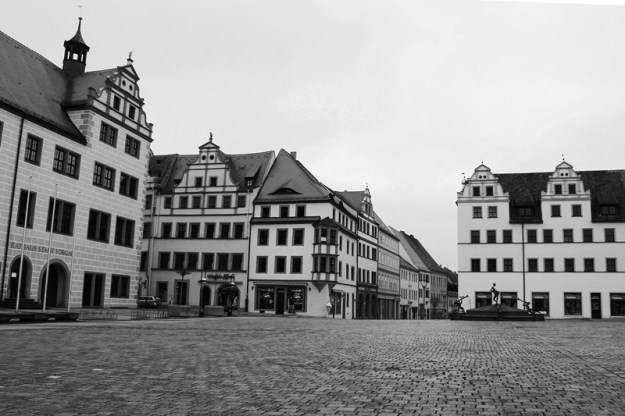
As always I started the year resolving to write a little more here on Under a Grey Sky, and for the first couple of months of the year it seemed to work out okay. And then came March. We began the month with a journey south as part of what has become an annual tradition around Katrin’s birthday to find a place to explore somewhere between Berlin, Leipzig and Dresden in order to bring her together with her closest friends and their families. This year we ended up in sleepy Torgau… the picture above is the main market square on a Saturday afternoon. Torgau is famous as being the place where the American and Soviet troops first met at the end of the Second World War, and infamous for its history as a place of detention both before the war, during the Soviet occupation, and throughout the history of the GDR. So part of Katrin’s lighthearted birthday stroll was spent exploring an exhibition entitled Traces of Injustice… this also appears to be part of a tradition as two years ago we were wandering around Colditz castle.

But a day trip to the banks of the Elbe river was not the main reason for Under a Grey Sky radio silence. In fact there were two. Firstly, this happened:
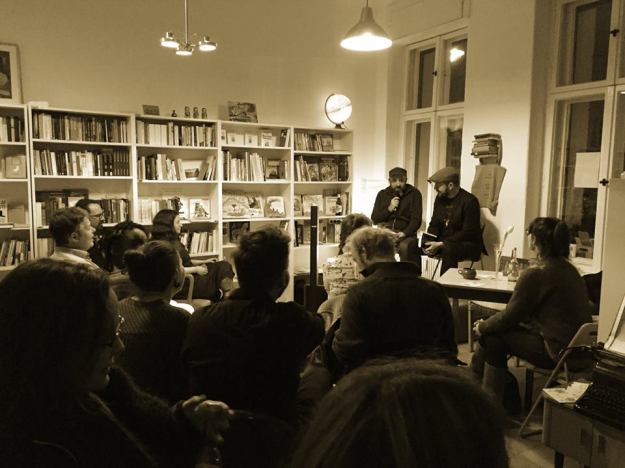
Elsewhere Launch

That is us launching the third edition of our magazine Elsewhere: A Journal of Place. We had chats on stage with contributors, drank some beer and gave some readings and the whole evening was a lovely celebration of another six months of hard work and (we think) great writing and illustration about places around the world. If you haven’t yet had the chance to get your hands on a copy, all three editions are available – take a look at our online shop if you are interested.

The second main reason for a lack of posts in this neck of the woods was that we spent the second half of the month away in Rhoscolyn, perhaps my favourite place in the world and that I will finally be writing about in the next issue of Elsewhere, published in September. We did some walking along the coast and in the mountains in glorious weather, some catching up with family, and some sitting in a caravan in the rain (all part of the experience). We collected plenty of inspiration for these pages and beyond, which I hope to get online soon. We returned not only with those stories but Katrin took hundreds of photographs and we brought home a new mug for our collection. So as I sit in Berlin and eat my breakfast, I can imagine I am in that bustling cafe in Llanberis, just down from the hills…
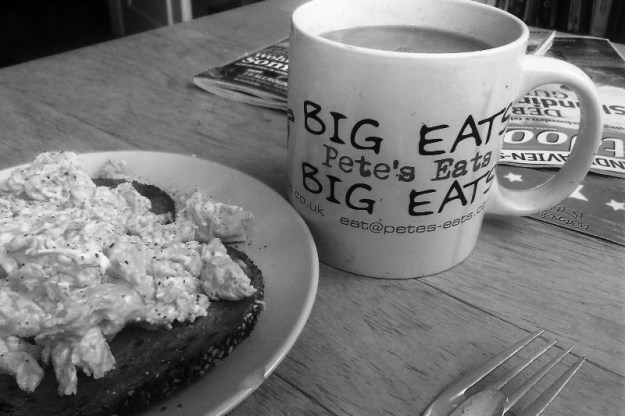
PetesEats

Words: Paul Scraton
Pictures: Katrin Schönig and Paul Scraton
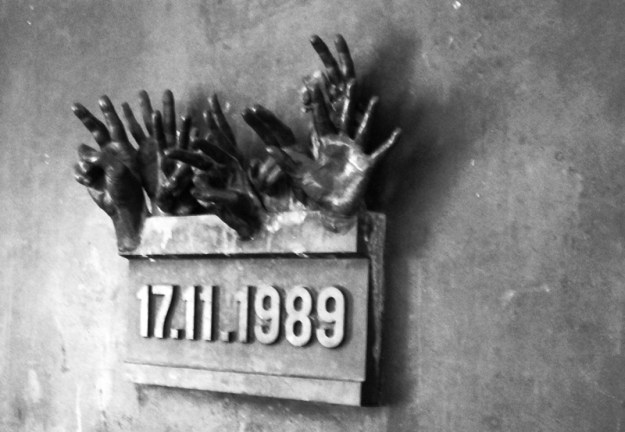
City of Memory, Prague

Memory1

On the 17 November 1989 a group of students set out on a candlelit procession through the streets of Prague, following the funeral route of Jan Opletal, a medical student killed by the Nazis in 1939. Fifty years later, with central and eastern Europe revolting against Communist rule, the students of 1989 were in no mood to follow the agreed route. Instead they made their way along the river bank to the National Theatre and turned right onto Národní třída, heading for Wenceslas Square. Met by riot police they held out flowers, put their candles on the road in front of them, and held out their bare hands to show their non-violent intentions. The response was brutal, and truncheon blows rained down on the students and the other men, women and children that had joined the peaceful demonstration. It was, in the words of Timothy Garton Ash, “the spark that set Czechoslovakia alight”.

The memorial to mark this momentous first step in the Velvet Revolution that would end Communist rule in just a couple of weeks, is pretty difficult to find. It is on Národní třída, hidden in a small passageway at the point on the street where the students met the riot police. It is close to the Cafe Louvre, where Kafka and Einstein once hung out, and the Reduta Jazz Club where President Havel took President Clinton during a visit that seemed to take in more basement watering holes that palace reception rooms. The simple memorial shows a set of hands. “We have bare hands,” the students told the police, and regardless of the violent response, the protests would remain peaceful. That, and the speed of change, is one of the remarkable achievements of the events of November and December 1989. Continue reading

Finding Havel, Prague

Havel

Today we walked down a side street, not far from Tescos, and at a fairly anonymous wooden door rang a doorbell. A woman answered. “Is this the place for the exhibition?” I asked and she smiled and held the door open, apologising for not speaking English. No matter, she spoke German, and so she led us through an empty room with bookshelves at one end and piles of folding chairs beneath the windows. “This is where we hold our events,” she said, before taking us into a small room underneath those typical Prague Old Town arches. The room housed an exhibition titled “Václav Havel in a Nutshell”, his life story told on touchscreens with quotes and photographs filling all the space on the walls.

Prague’s celebration of the playwright, dissident President is modest, and you would only find the exhibition if you know about it and have the confidence to ring the doorbell. At first you think it is a shame that this is not more accessible, in the “Top Ten of Prague” to lead off every guidebook, but in the end it does not matter. He was one of the best, and in 15 sqm it was all there. Truth and love must triumph over lies and hatred, he said on Wenceslas Square on the 10th December 1989. He was right then, and he would be right today. They charged us nothing to visit the exhibition, and so I bought a couple of postcards. A tiny contribution. And so Václav Havel will look down on me as I work at my desk… one of the good guys.

Anyone who takes himself too seriously always runs the risk of looking ridiculous; anyone who can consistently laugh at himself does not.

Words: Paul Scraton
Picture: Katrin Schönig

Fragments from Rügen, Germany

TitlePicBlog

Binz

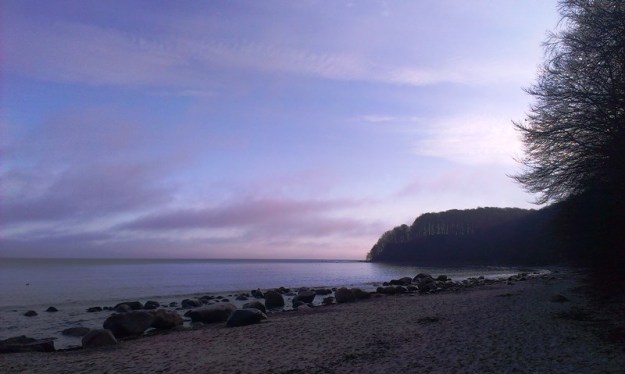
The weekend crowds, even in winter, patrol the boutiques of Binz’s main shopping street, aiming for the pier and its walkway out above the waters of Prora Wiek bay. Follow the beach away from the pier and, once past the last house, the cliffs begin to rise and the gentle sands turn to uneven pebbles and rock. The crowds thin. It is not easy walking, around the headland beneath the cliffs, and so it is left to the fishermen and the beachcombers, picking their way across the stones and the rock-pools in search of amber. Or perhaps “chicken gods”. These stones with holes were once seen as good luck charms, warding off evil spirits. Now they are used for necklaces or candle-holders. At the promontory we pause and luck across the bay, just about able to make out the chalk cliffs of the Stubbenkammer in the distance, topped with the beech trees of Jasmund. Casper David Friedrich found stirring landscapes upon which to build a romantic mythology. Theodor Fontane simply found it melancholy. Perhaps both are true, especially under January’s grey skies.  Continue reading

Through the Granitz Forest, Rügen

Granitz1

From the resort of Binz, on the coast of Rügen island, the path into the Granitz forest starts at the point where the promenade runs out, the neat paving stones giving way to a sandy track of dirt that skirts the beach until it plunges inland and up towards the high cliff-top trail. Germany’s Baltic coast can in general be pretty flat – a landscape of big skies, dykes and dunes, where the only things reaching up towards the clouds are electricity pylons or windfarms. But Granitz is a bit different, formed as it was during the ice age; an undulating moraine landscape that marks the furthest extent of a glaciers journey, like rubble pushed across a wasteland by a mechanical digger.

Continue reading

Fragments from Rostock, Germany

Rostock1

Stoltera

We arrived as the storm picked up, the narrow lane to our destination already beginning to freeze. In the darkness the trees whipped back and forth and we hurried across the slippery car park to lock ourselves away… it’s just a breeze our receptionist said. Welcome to the Baltic. The next morning it had blown itself out, and we walked the icy cliff-top path and then along the crunchy, frozen sands beneath. The water was glassy and still. We spied boats offshore and birds in the shallows. A long figure stalks the clifftop, picking his way along an overgrown path with large, unbalanced steps. Stay away from the edge! Only we could see that beneath his feet was a curving lip of sandy rock, punctured by holes that had been last-summer’s sandmartin nests, and beneath that… nothing.

Rostock2 Continue reading

Snow by the Panke, Berlin

Panke1

Overnight the familiar world changes. The city under snow is a different place. Edges are softened. Sound is muffled. Lotte and I walk out from our apartment onto the street we see every single day and it feels like a place in a dream, one which you recognise, where you know where you are but that doesn’t seem quite right. Not that Lotte cares, as she sees the clean, untouched expanse of snow covering the terrace of the hotel next door.

Can I?

Continue reading

Above the invisible city – Black Mountain, Belfast

BM1

The day after Christmas we drove through the streets of West Belfast until they began to rise to meet the lower slopes of Black Mountain. Not that we could see it. As we reached the last house on the left, where Feargal lives, the fog not only blocked our view of anything above us but also the city we had left behind. So the visibility was poor and the ground was surely to be sodden, after the rain of the previous couple of nights, but we gathered together with Feargal and his friends the mood was good.

Just past the house a river runs beneath the road and there is a sign dedicated to Feargal’s dad Terry, whose poetry has appeared on these pages and who did more than anyone to get access to the Belfast Hills. The story is on Under a Grey Sky here, and sadly Terry died not long after. I never got to meet him, but my dad and Deena did and by all accounts he was a remarkable man. So we were walking in his memory, and that of Feargal’s brother – also called Terry – who was killed in 1998 and who had also loved these hills and the outdoors in general.

Continue reading

A year to elsewhere and back

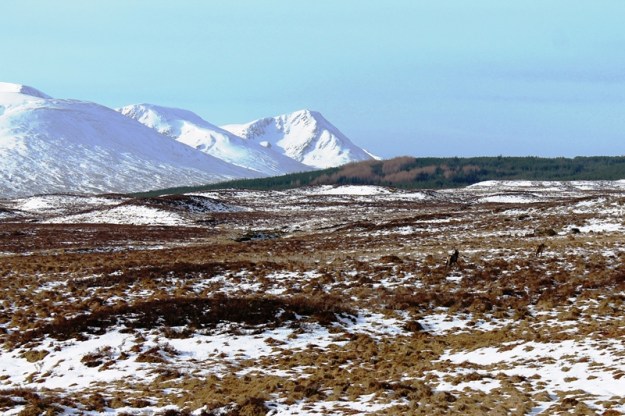
Rannoch

It was in these quiet days between Christmas and New Year in 2011 that I started Under a Grey Sky, so as well as a look back on what has been going on over the past twelve months it is also something of a birthday. Although I haven’t been able to keep up the intensity of posting here over the last year or so, I remain very proud of the writing that I have published here in 2015 and remain incredibly pleased that so many people continue to read about my (and our) adventures beyond the front door.

At this point a year ago I had a couple of plans for the 2015. I had just finished work at The Circus after five years looking after their company communications and a decision to return to the world of freelance work. The first major plan was the launch of Elsewhere: A Journal of Place with my friend Julia. We published Elsewhere No.01 in June, followed by Elsewhere No.02 in September. Along the way we built a small team here in Berlin who helped us get the journal out there and put on a couple of events, as well as working with some excellent writers, photographers, musicians and illustrators from around the world. I am incredibly proud of Elsewhere and can’t wait to show everyone No’s 3 and 4 which will be published in 2016.
Continue reading

Chasing memories and the sound of church bells, Berlin

IMAG0842

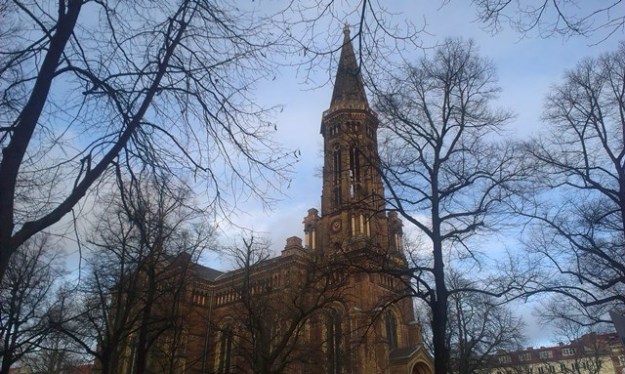
Last Saturday as part of our Printed Matters indie publishing day in Berlin that we hosted through Elsewhere, I led a neighbourhood walk in the area around the venue. The walk took us to two squares – Arkonaplatz and Zionskirchplatz – my home neighbourhood for about a decade before we moved a few kilometres north about five years ago. So as I was telling stories of industrialisation and the divided city, I was also walking through some very personal memories. A few days later I decided to go back on my own and chase some of them down.

Arkonaplatz. One of the first pieces I ever had published was a short piece in the Guardian Weekly. I wrote about the Sunday flea market at the end of the road and the bargain hunters chasing GDR-kitsch. I wondered whether we had a potential goldmine in our basement on Wolliner Straße, just around the corner, or whether Katrin’s family had such treasures in theirs. I wrote that piece in the summer of 2006, not long after we had moved to Wolliner Straße and just after Lotte was born. Now she is approaching her tenth birthday, we have been gone from the apartment on Wolliner Straße longer than we ever lived there. We have lost some of our family too. I write this at Katrin’s grandmother’s desk. Wine glasses and bowls stand in the cabinet. Too many memories from when we knew each other, and for Katrin, even longer. Too precious for any flea market.

On the square I stop and watch a couple of guys play table tennis on the concrete tables, despite the single-digit temperatures and the cold late-November wind racing through the cobbled streets. These streets were built as part of Berlin’s great expansion in the second half of the 19th century, when the city was transformed from garrison town to Weltstadt. Northern Mitte, Prenzlauer Berg and Wedding were industrial neighbourhoods, working class and poor. Heinrich Zille, the cartoonist famous for his illustrations of working class life in Berlin, once painted the Christmas Market at Arkonaplatz, the twinkling lights losing the battle against the grime and the smog. Now Arkonaplatz has some of the highest real estate prices in the city. Continue reading