Monthly Archives: August 2017

The imagined lake: Storsjön, Sweden

To the south of the city of Borås in Sweden, there is a lake. It used to be three lakes, back before the 20th century brought with it the ever-increasing demands of a thirsty textile industry. The lake was imagined into existence. Someone stood and looked and saw and the possibility. They looked over a landscape of woodland and fields, three lakes surrounded by farms and crofts, and they imagined the tunnels and the dam, the water rising by ten metres. Imagination became reality. The three lakes slowly but surely met each other in the middle. Lake Storsjön was born.

Not that it is easy to tell this is an artificial lake, 107 year’s old, when you stand at the sandy beach close to the parking places and the clubhouse of the local cross-country skiing and running club that has trails leading out from here through the forests and around the lakeshore. At first you think you have found what it is you were looking for. A place hidden away from the modern world. Still wild. Forgotten. Timeless.
Continue reading

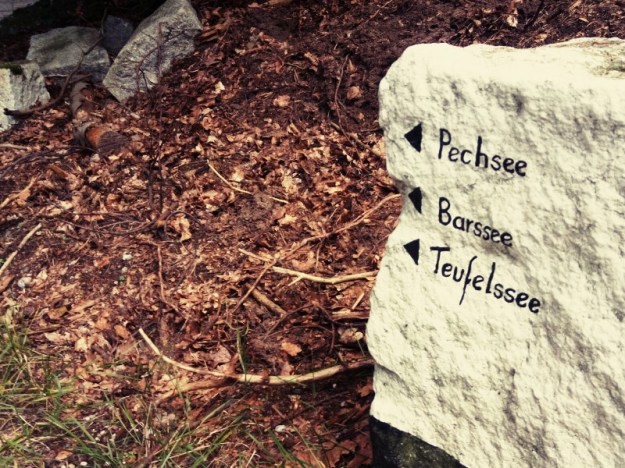
In the forest – from Pichelsberg to the Devil’s Lake

1

In West Berlin times this was the British Sector, and traces remain of the occupation that began in 1945 in a city devastated by war. The Olympic Stadium – built for the 1936 Games and location of Jesse Owens’ triumphs under Hitler’s disapproving gaze – was the headquarters of the British military occupation forces. The Commonwealth War Cemetery is here, as well as the campus of the British School. From the banks of the Havel, emerging from the shaded paths of the Grunewald Forest, you can see across the water to the terraced gardens of the white villa, once the residence of the British Commandant. Until 1994 the British military held an annual celebration of the Queen’s Birthday on the Maifeld. The boots march no more, but the traces of their presence in this corner of the city remain.

2

From the other bank, outside the high walls of the Commandant’s villa, it is hard to imagine that you are looking towards Germany’s biggest city, even as you stand within the city limits. The low hills of the Grunewald hide the streets and the cars, the tall office blocks and the even taller Television Tower. Only two human-made structures are visible here: the frayed domes of the former American Listening Station on the Teufelsberg and the red-brick Gothic Grunewald Tower. Both, above the West Berlin tree line, offer views across the cityscape that are unavailable down here on the lakeshore.

Continue reading