Monthly Archives: March 2015

Elsewhere: A Journal of Place – No. 00

Regular readers of Under a Grey Sky will know that I have spent the past six months or so working with my good friend Julia and an increasing band of walkers, writers, photographers and illustrators on a new quarterly journal of place. Above you can see the digital-only, half-size ‘zero’ edition that we created as part of our crowdfunding campaign to give people a sense of what the journal will be like when the first print edition is released in June 2015. Please have a look and a read, and if you think that this is a project you think you would like to support then I would be extremely grateful if you could visit the crowdfunding campaign via the link below, pre-order issue 1, take out a subscription, or one of the many other options complete with exclusive goodies that we have put together. It is an exciting project, and I am really confident we can create a wonderful print journal that will showcase the work of some fantastic writers, musicians, artists, illustrators, photographers and more… but we need some help to get us to the start line, so anything you can do to get us there would be really appreciated.

Elsewhere: A Journal of Place – Crowdfunding Campaign on Indiegogo
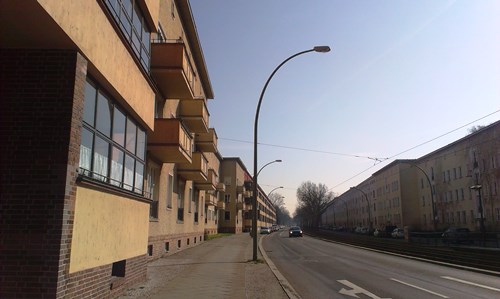
Strange light in northern Berlin

Eclipse

The newsreaders on the breakfast radio swung between breathless excitement and dark warnings of incinerated retinas. Television crews headed to our daughter’s school where, an email assured us, all the kids would be supplied with the proper eyewear. Our Hausmeister patrolled the central reservation – normally reserved for doggy toilet runs and the rumbling trams – waiting for the moment. I went for a run.

Continue reading

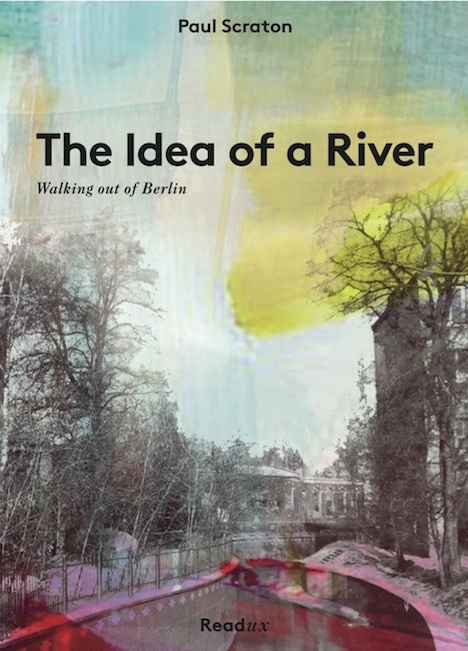
New Book… The Idea of a River: Walking out of Berlin

Pankeweg

The fisherman sits on a squat stool, rod resting on a stand between his legs, his hat pulled over his head. He looks at peace, eyes cast forward across the calm waters of the canal, his thermos flask of coffee on one side, a cool box filled with supplies on the other. I can see him an hour or so earlier, stepping out from his nearby apartment, walking along the river to his regular patch on the canal bank. He’s been coming here for years, since a time when no-one came to this corner of the city, when the neighbourhood was enclosed by the Wall and he could feel the eyes of the East German border guards on his back…

My new book is an essay based on a walk along the Panke river, upstream from where it tips into the Spandau Ship Canal in the heart of Berlin (and not far from my apartment) to its source in the town of Bernau, just beyond the city limits. Along the way the walk takes in city neighbourhoods and the path of the Berlin Wall, stories of would-be Kings and other wannabe royals, suburbs and edgelands, nature reserves and farmer’s fields, and the line of commuter towns stretched out along the S-Bahn that shadows the river for much of the way.

The book was released this month as part of a series of four mini-books published by Readux. Three times a year Readux publish such a series, of short stories and essays, often in translation. My book is part of the fifth such series, titled Urban Voids: Paris and Berlin, and we launched it last week at an event in Berlin-Kreuzberg with three writers and three translators, including readings and conversation (and a few drinks afterwards).

For my part I was joined on stage by my fellow walker-writer Marcel Krueger, and in order to prepare for the event we met a few days earlier to walk half of the thirty kilometre length of the river from Karow in the north of Berlin to Bernau. Walking it again I was struck once more by how much you can discover about a place through its more forgotten and ignored corners, and even though I have spent a lot of time on the banks of the Panke before before and during this particular project there were still more things to stumble across with each new walk along the path.

Readux Book CoverThe Idea of a River: Walking out of Berlin
Readux Books
2015
ISBN: 978-3-944801-31-5
Print and EBook editions available
Website

Snow Coming…

A guest post from Silver How, by Chris Hughes:

Chris1

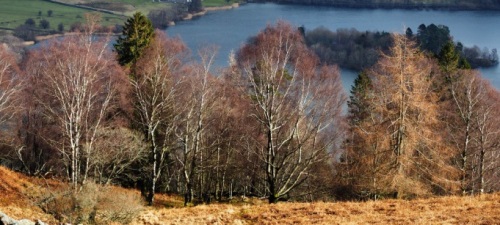
You could see the snow coming
across the ridges to the north.
Long lines streaking the sky,
falling onto the orange bracken
and colouring the fell-sides grey.
But when it hit us
it struck with hard-edged suddenness
stinging faces and rattling on our clothing
pushing us quickly onwards
to the top of the hill.
Quickly over to the other side
to find the shelter of the rocks
and watch the snowstorm pass over.
And calm return.
And warmth.

Chris2

The sun once more beamed out
of the clear blue sky.
But the hills had changed
now clothed in a thin mantle
of fine white lace,
over the shoulders of deep green
and rust-red growing up from the
gun-metal grey waters of the lakes.

Chris3

The bare trees glow stark and silver
in the strong searchlight beam
of the fierce winter sun.

Chris4

As we carried on down the streaming hillside,
soaked by the overnight rain
and the melting snow
we could see the spring struggle
to overcome the winter.
Buds and catkins,
and singing birds
led the way and we were pleased with our
short adventure over the
well-named hill of
Silver How.

Words & Pictures: Chris Hughes

The Invisible Border, Priwall

PriwallFerryweb

The rain started to fall as I waited for the car ferry to take me from Travemünde across the mouth of the river that gives the town its name to the village of Priwall, on the opposite bank. Priwall sits at the end of a peninsula that belongs to the city of Lübeck. The hinterland to which the peninsula is attached belongs to the state of Mecklenburg-Vorpommern. None of this really matters, except for the need to use the ferry if you want to stay within the limits of the Lübeck transport system. But from the end of the Second World War until early 1990 it did. Priwall was cut off by the inner-German border, surrounded by water and wire, and gazed down upon by watchtowers. The ferry I am waiting for was the only connection to West Germany, of which Priwall was a part. For the best part of half a century, the peninsula was – to all intents and purposes – an island. Continue reading