

“What happens now?”
It is a question I have heard a lot in the past couple of days, ever since the United Kingdom and the rest of Europe woke to the news that the seemingly impossible had happened and the voters had – just – decided for LEAVE, for Brexit and for the end of a 43-year relationship with the rest of Europe. The question means different things, depending on who is asking it. What happens now for the UK, in England and Wales, in Scotland and Northern Ireland? What happens now in Germany, or France, or the Netherlands, where the far-right and Eurosceptic politicians spent Friday celebrating as the rest of the continent looked on in horror and disbelief. And what happens now to me, still an EU-citizen living in Berlin thanks to my British passport, and to my daughter and others of her generation for whom the world, all of a sudden, seems a little smaller?
“Are you going to get German citizenship?”
This is another question I have heard over the past couple of days, to which the only answer possible when no one seems to have any clue what is going on or what is going to happen next is: Maybe. And maybe, having lived in Germany for fifteen years, I should have got my German citizenship already. After all, having committed to living in this country, I should have made the next logical step. But until now it was not, for me at least, a logical step. I did not want to get German citizenship because I did not – I do not – feel German. My own sense of identity is as mixed up as many peoples, I imagine. Part northern English. Part British. And yes, part European. And it was always that third part, the European part, which allowed me to feel there was no contradiction in living in one part of this Union of ours while maintaining citizenship in another.




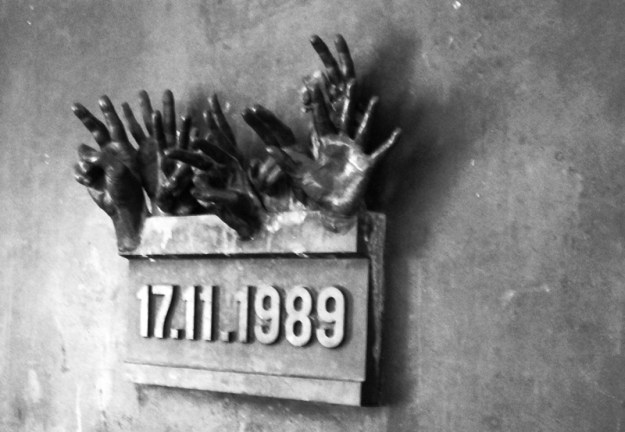


 Under a Grey Sky