Searching for the Trumpeter Finch

By George McKinney:

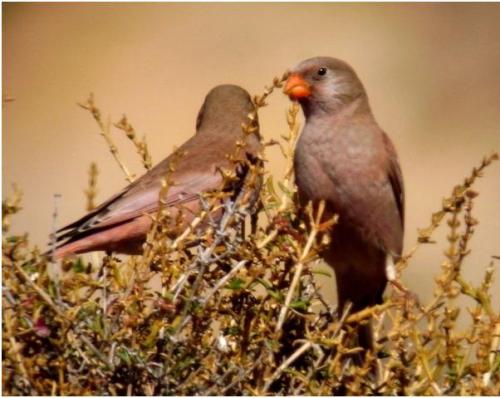
The south east corner of Spain is the only place in Europe to find this sparrow-sized bird so we started our search near the village of San Miguel del Cabo de Gata.  Shingle beaches stretch several miles west from the pueblo towards the old fishing village of El Retamar, in the direction of the Almeria Airport and the newer tourist centre of El Toyo.  A short distance in that direction we happily spent time scanning the Ramblia Morales and enjoyed seeing White-headed ducks, flamingos, egrets, crag martins and, although it is ‘impossible’ according to the bird-books, we spotted the white rump and square tail of a Little Swift which visited the ramblia just as we did, then flew off east along the coast.

In that direction beyond the pueblo lies a 400-meter wide sand-bar which separates the Mediterranean sea from the still-operational Salinas of Almadraba de Montelva. This large area of wetland habitat is designated as a Special Protection Area for birds [SPA (1989)] and as a Wetland of International Importance [Ramsar (1989] so we spent happy hours overlooking these Salinas in good hides and watching a fine variety of ducks and waders in the shallow water, and warblers and larks in the scrub along the edges of the pools. Continue reading
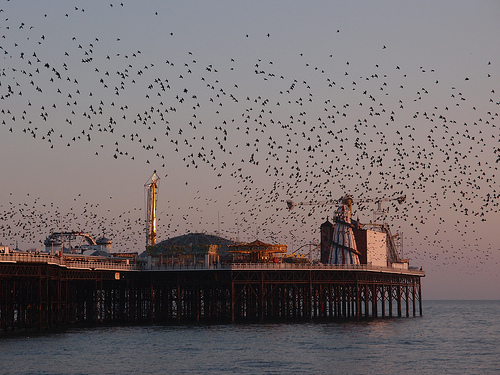
Starlings on the pier, Brighton

By Matt Lancashire:

Brighton has a split personality – it can’t shake off the fact it’s a Victorian seaside town of arcades on the pier and sticks of rock, but it’s also a vibrant, gay-friendly and modern town which hasn’t just rested on its laurels wondering why no-one comes to visit any more. Commonly known as London-by-the-sea, it’s only an hour away from its big brother by train and similarly filled with boutique shops and fashionable media-types. It exists as a half-way house for Londoners to dip our toes into the rest of the country and clear our lungs, without ever feeling that we’re out of our depth or too far from home. Continue reading

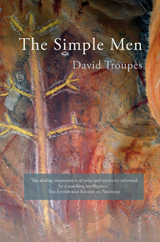
The Simple Men

New release from our friends at Two Ravens Press:

The Simple Men is the second full collection of poetry from David Troupes, an American poet living in West Yorkshire. He applies an assured, eccentric craftsmanship to innovative forms and ambitious insights. The poems of The Simple Men range over hills and down rivers, through truck stop diners and wedding parties, renewing at every turn our relationship with land, love and the self.

An extract from The Simple Men

The Allagash

We were a long time getting there,
an eight-hour succession of highways
past hayfields and pinewoods, potato country,
blink-and-miss-them towns rich
only in poverty, a great
weathergray barn in the middle of its century-
slow ooze down the hillside,
the old God-lump of Katahdin
saluting as we passed, until what we call America
became what we call Canada,
though we weren’t heading that far, but instead
doubled back south, driven now
by the outfitter, the old-timer,
down seventy miles of dirt logging road
deep into the Great North Woods where
like a bird on its eggs
Maine waited—somewhere in the healing mess
of what we did, in the pollen haze
as evening cooled—waited somewhere
under the cloud-rinds as we launched
ourselves into the golden river
and the pace of the unhurried Allagash became
the pace of everything—waited
as daylight lingered in the treetops and we found
not fifteen minutes into it
a female moose and her calf wading the warm
stone-shallow waters, calmly nosing for their meal—
the time they took to raise their heads
and weigh us up and walk into the dark weave
of the forest—my God,
                                    the time they took—

The Simple Men at Two Ravens Press

My Favourite Walk – Annika Ruohonen

To celebrate the first two months of Under a Grey Sky, we asked contributors to send in a post on the subject of their favourite walk:

The best thing about walks is that they prevent me from doing anything. I pride myself on not ever having had a dull moment in my life. Well, the downside to that is that I find it difficult not to do anything. When I’m out on a walk I can’t write emails, arrange photos or write blog posts. Walking gives me the privilege of letting my thoughts flow freely and that, I think, is necessary if you want to be creative. I have sometimes found the solution for a problem at work while having a walk in the woods, quite suddenly without even trying to find it, or not knowing that I was looking for it. I don’t know if there is any scientific proof for it, but I feel that there is so much truth in the saying that having a walk clears you mind. Continue reading

Embassies of Prenzlauer Berg

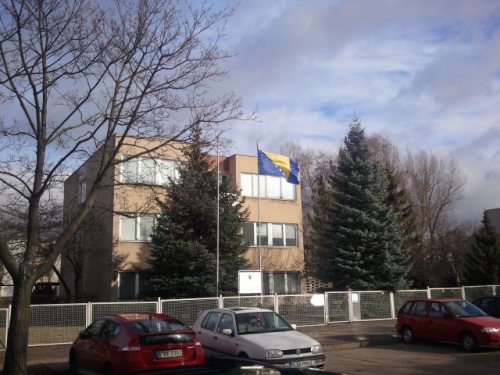
Walking through Berlin you often stumble across reminders of the long division of the city. There are of course the famous examples, such as the stretches of Berlin Wall at the East Side Gallery or on Bernauer Straße, the Checkpoint Charlie museum or the line of cobblestones that cross city streets along the path of the wall to remind you how this incredible, brutal structure split Berlin in two. There are other symbols as well that are perhaps less obvious. The tram that runs past my house is one of only a couple of stretches of working tram-track that run through the western districts of the city. Before the division the whole of Berlin was served by the tram network, but in the west they were replaced by buses. Now, in parts of the city, they are returning but in general you can apply the rule; if you can see a tram, you are in the old east. Then there are the differences in architecture, the newspaper reading habits in different neighbourhoods, and even voting patterns… Berlin is coming together, but it could take more years than the wall actually stood before all the traces of the division have been removed from the city. Continue reading

Footprints in the Spanish snow

Sheila Scraton on a high walk in southern Spain:

Usually a winter holiday in Spain conjures up pictures of sun, sand and warm days as the welcome heat seeps into your bones after the long winter in northern Europe. We were visiting our cortijo (Spanish farmhouse) in the Alpujarras in Southern Spain for a couple of weeks, hoping for some warmth but realistic about the fact that the house is situated at about 1500 metres which is above the height of Ben Nevis (1350m), the highest mountain in the British Isles. The cortijo is above the village of Bérchules, a lovely mountain village perched above a spectacular river valley, the source of the Guadalfeo which flows from high in the Sierra Nevada to the Mediterranean sea.

As always the air is cool and clear in February but as soon as the sun appears from the south and shines straight at the cortijo, the heat can be felt and, even at low air temperatures, sun cream is needed!  Each morning we managed to enjoy breakfast outside on the patio although one morning we awoke to quite a surprise.  Overnight several inches of snow had quietly fallen and, as we opened the shutters, a black and white scene had replaced our normal February view of pink and white almond blossom across on the Contraviesa hills. As the sun arose opposite, the black and white was quickly replaced with a wonderful orange glow as the sunlight glittered on the snow flakes and the sky moved to a deep blue. Continue reading

Patience (After Sebald)

I have not been able to find this film here in Germany, but it looks wonderful:

.

From the Guardian review:

Happily, though, director Grant Gee has made something still and beautiful – an art documentary in the very best sense – that seemed to me to evoke perfectly the melancholia of Sebald’s book while hinting at the horror which lies at the heart of its labyrinth.

Weather and the sense of a place

By Sharon Blackie:

We are told by the older residents of our local crofting townships that this autumn and winter have been the worst in living memory here in the Outer Hebrides. Wetter and windier. It’s true that we seem to have been battling gales since October, and the already boggy ground has been sodden for months. In November, on our personal blog, I wrote a post, The Gods of Days, in which I talked about wind and suggested that there was little point in living in a place where the dominant weather was wind and rain, and then sitting indoors and complaining about it when it was windy and raining. Of course, a lot of wind and rain has happened to us since November … and a couple of normally hardy friends are now jumping up and down and demanding that I recant and admit that wind and rain is a terrible thing and that I wish it were mild and sunny like everyone else does.

At one level there’s no question about it – I’m tired of battling the wind and sloshing about in the mud when it’s time to feed the animals and walk the dogs twice a day, because this has to be done whatever the weather. I’d be ecstatic if a few mild and sunny days happened along, and I’m eagerly anticipating spring like everyone else … but the truth about weather, about our relationship with weather, is very much more complicated than that. Continue reading

Cycling the Trans Pennine Trail

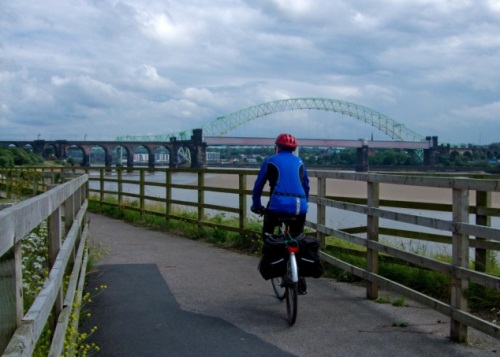
Last year, Chris Hughes set out from his home near Southport to ride the Trans Pennine Trail (TPT), a route that links the North and Irish seas via the Pennines, along rivers and canals and through some of Northern England’s most historic towns and cities:

The Trans Pennine Trail starts (if you are travelling east) or ends (travelling west) on the new sea wall at Southport just three miles from my house. The first few miles of the Trail have been regular cycle rides for “Three Old Gits” cycle group for some time and slowly the idea that we could actually ride the full length of the Trail began to sneak into my mind. Steve was up for the challenge – probably while sitting comfortably in a pub with a refreshing pint and a plate of Lancashire hot-pot – and slowly the plans were laid.

After a couple of false starts and mix-ups we were at last ready to set off, the weather forecast kind and the wind at our backs. Accommodation was booked and the panniers packed. Adding to our own keenness to undertake the challenge of the ride was the motivation of a significant amount of sponsorship from our kind-hearted friends and relatives for The Pahar Trust Nepal, which would benefit from our completion of the Trail. Continue reading

Public spaces and the right to roam our city streets

The latest Letter from Europe from our friends at Hidden Europe is concerned with the liberation of public spaces, especially in our cities, from the domination of the automobile:

“Many of Europe’s town squares and iconic city centre spaces have happily been rescued from the car. From Paris to Perugia, lovely central squares were for too long used as car parks. Now they have been reclaimed for pedestrians. The taming of traffic has massively improved Trafalgar Square in London and the Brandenburg Gate area in Berlin.”

The best parts of most cities are the spot where you feel like the pedestrian is winning over the car and bus, even if many “pedestrian zones” are nothing but open air shopping centres. It is true, for example, that you can drive your car alongside the Corniche in Beirut but the promenade along the sea-front is so wide and filled with walkers, joggers, food vendors, fishermen and cyclists that if you want a decent view out across the rocks and the water you’d better get out from behind the wheel and walk. Continue reading