
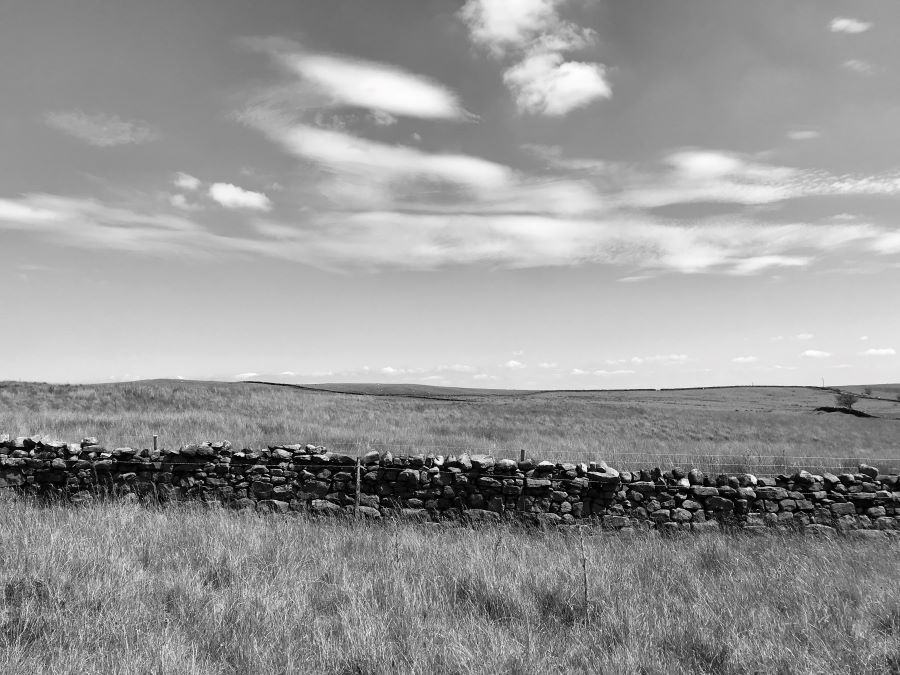
Hundreds of young people – mostly young women – queue patiently on the square between the arena and the Spree, the river glistening like the glitter on the faces around me and that clings to the homemade merchandise lovingly created for this moment. There is a kind of uniform, based around white tank-tops scrawled with song lyrics, fishnet tights and big don’t-mess-with-me boots. Tinny versions of bad idea right? sound across the square as last minute tik tok videos are filmed to mark the occasion.
‘Don’t push!,’ the security guard shouts as he moves the crowd closer to the doors. ‘Walk! Move slowly!’
Despite the excitement for the concert, for that moment when Olivia Rodrigo will bound onto the stage full of enthusiasm for life, no-longer-teenage angst and sarcastic lyrics about idiot ex boyfriends, everyone does what the security guard says. No one wants to miss the show.
The atmosphere is wholly positive. I exchange knowing looks with other dads, but we are all seemingly pleased to be here. The show crashes into action at 8pm and for the next two hours the vast majority of the crowd sing and feel every word. Caught in the middle of it all, I cannot help but smile.
I am a long way away from the time of life Olivia Rodrigo is exploring, explaining and sharing with her fans, but there is something about it all that takes me back. The hopes and fears. The anticipation. The dread. There is not a single part of me that would go back, but I am happy for the young people all around me that this woman on stage is one of their guides.
‘If you are here with your best friend, give them a hug.’
‘If you are here with your mom or your dad… give them a hug.’
Lotte and I are still hugging when the next song starts. The girls behind us, a chaotic mix of Disney Club and Riot Grrrl, belt out every word. Their voices are going but they do not care. Soon enough it is all over, but the songs carry on, down the street and blasted from car stereos, shouted at the tops of their voices. Ten thousand young women spread out into the night, walking taller on their heavy black boots. There’s fun to be had. Love to be won and lost. Mistakes to be made.
Fuck it, it’s fine.
*
Two weeks out from the European Football Championships the state broadcaster ARD publishes the results of a survey that shows 21% of people in Germany would like to see more white players in the national team. It is part of a documentary that explores issues of racism in Germany, but as a headline the intentions of why the questions were asked are lost amid the hand-wringing of the press and the understandable annoyance and anger of the German team’s manager and players. It is a statistic that begs so many questions. Not least: if you asked the same in England, France or Italy, what would the answer be?

On Franz Kafka’s birthday, reading his diaries that have been published in English in a new translation.
In periods of transition, as the past week has been for me and at least this moment still is, I’m often seized by a sad but calm astonishment at my emotionlessness. I am separated from all things by a hollow space, to the boundary of which I don’t even push myself.
This speaks to how I sometimes feel both in the UK and in Germany, as if I started a period of transition more than twenty years ago and never came out the other side.
*
Our house in Wiesenburg is at the top of a small rise – ‘on the mountain’, one of our neighbours once said – and the only running water nearby are a couple of streams that spend most of the year as dry ditches. But our conversation over the back fence is of the floods in southern Germany; horror stories from family members close to Lake Constance that give more detail to the images flashing up on the evening news.
Whole streets are turned to rivers. Houses have chunks taken out of them by the power of the water. Cars are lifted from their parking spaces and carried away.
Jahrhunderthochwasser.
Flood of the century. And yet, they are happening with an ever increasing frequency.
Meanwhile, the polls suggest the biggest losers of the upcoming elections will be Europe’s green parties, and the most gains for those who insist the world is not burning, the flood waters are not rising, and that the climate crisis is the invention of shadowy, global elites.
‘People will only take it seriously when it impacts them directly,’ we used to say. Now I am not even sure about that. We can see and feel it all around us. Melted glaciers. Ravaged forests. Jahrhunderthochwasser that comes every couple of years. And still we don’t learn.
*
Lotte is eighteen. It seems improbable, impossible even. A midnight taxi ride through empty Berlin streets to a Pankow hospital. Katrin admitted but I was sent home. Nothing will happen until the morning, they said. So I stayed up all night and watched episodes of Teachers and listened to Pulp and waited for the sun to rise and the new adventure to begin.
Now it feels like we are at the starting line again. Only, Katrin and I are increasingly going to be onlookers rather than active participants. It’s exciting and scary and a bit discombobulating. Lotte seems to be taking it in her stride. I think we did alright.

Election day. We vote in the function room of the Luisenbad library, once the entrance hall of a grand dancehall almost completely lost to the bombs of the Second World War. Back in 2016, not long after the Brexit referendum in the UK and just ahead of Trump’s election to American President, Marcel Krueger and I read from Joseph Roth’s The Man in the Barbershop in the library courtyard as part of an event on the subject of ‘Democracy without Populism’.
Marcel read the original German and I read the English translation of an essay Roth wrote in 1921 about a boorish man who enters a barbershop in Berlin and starts to fill the room with his thoughts and ideas. More than that, he wants agreement on where his thoughts take him.
“The farther north you go,” he says, early on in his monologue, “the more nationalist people are. In Hamburg they’re really excited about Flag Day. Well, you’ll see. It’s on its way. Can’t be stopped. On, on!”
Roth’s essay was a warning about the rising tide of nationalism in Germany. Twelve years later, he would leave Berlin with Hitler’s appointment to Chancellor, having long understood where the times were heading.
You will have realized by now that we are drifting towards great catastrophes, he wrote in a letter to his friend Stefan Zweig on his departure. Apart from the private — our literary and financial existence is destroyed — it all leads to a new war. I won’t bet a penny on our lives. They have succeeded in establishing a reign of barbarity. Do not fool yourself. Hell reigns.
From the barbershop to the Chancellory to bombs on the ballroom and the gas chambers of the east. As we leave the polling station the sun is shining.
*
We head south, to Köpenick and the stadium on the edge of the forest. 1.FC Union Berlin’s women’s team are playing their promotion play-off and 18,000 fans have filled the stadium on all sides. The team do their bit, winning comfortably to all-but ensure their status in the Bundesliga 2 next season. We leave the stadium in high spirits, and cannot bring ourselves to check the exit polls just yet. Let the good mood linger a while longer.
*
The AfD polls strongly across the country and especially in the eastern states. The far-right makes gains across the continent. In Germany at least, this is a vote from the young as well the old, with 16% of under-25s voting AfD, an 11% gain on the election five years ago. A sense of insecurity, economic worries and lack of hope for the future, are some of the factors given for the vote that appears to be mirrored in other countries across the continent.
In Sylt, a group of young party goers film themselves singing ‘Foreigners Out!’ while one of them gives a Hitler salute in the background. In Politico Nicholas Vinocur and Victor Goury-Laffont use the election results and the media furore about Sylt as a starting point to explore why some of Europe’s young people (the majority still vote for left-leaning parties) are turning towards the far right.
The answer is a hodgepodge of factors ranging from Europe’s cost-of-living crisis to the isolation many youths suffered during the COVID lockdown years to a delayed backlash following the bloc’s 2015 migration crisis when nearly two million migrants flowed into the bloc. But there are also more intangible factors, linked to the fact that many young people experience politics solely via social media platforms like X and TikTok where far-right content glorifying the “Great Replacement” theory and linking immigration to violence runs unchecked.
In France, a snap election is called. In Germany, the coalition stumbles on. In the UK, no longer taking part in the European elections, Reform polls in the high teens ahead of the general election next month.
Is the man in the barbershop confident once again?
*
At the Topography of Terror in the centre of Berlin, the exhibition is filled with tourists as well as groups of young people from Germany and beyond, brought to this site of memory as part of school trips to Berlin, to hear the story of how the Nazis used violence and terror to take and maintain power, and what the consequences were.
Inside, a temporary exhibition titled ‘Weimar under Attack’ explores the violent beginnings of the Republic, around about the same time Roth was listening in to the conversations of the city for his essays and newspaper articles..
Violence, the exhibition states, is commonly accompanied by unrestrained language. From the beginning of the Weimar Republic, the political rhetoric is frequently abusive, defamatory, vitriolic (…) Political opponents are declared “traitors”, “criminals” and “enemies” – exclusionary terms that suggest they must be combated with all means available, ultimately also physical violence.
It is of course too simple to draw parallels between then and now. History never repeats itself in exactly the same way. But it is worth listening for the echoes.
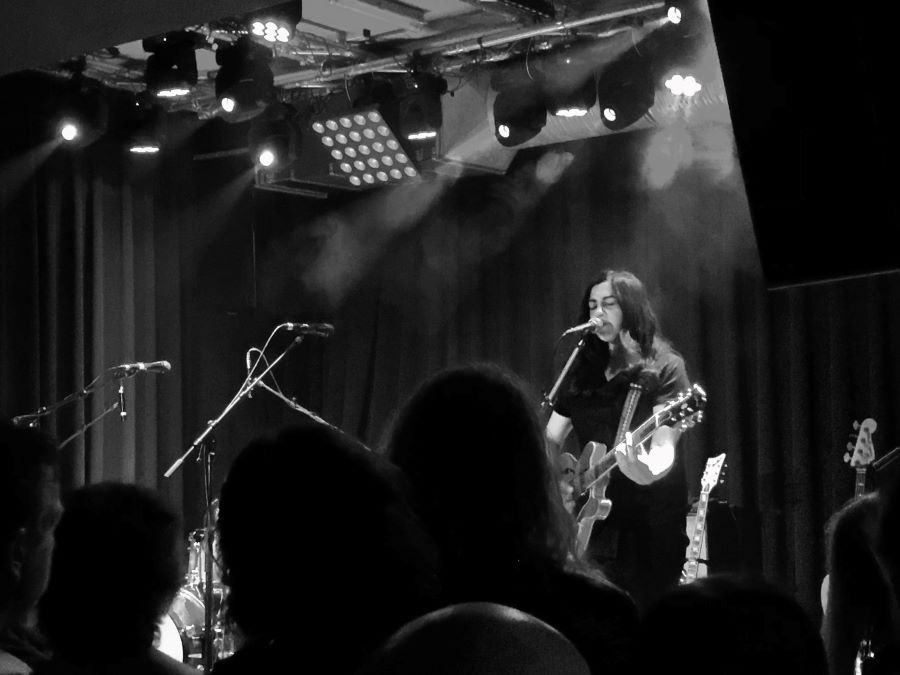
A walk through the city with a friend. Last night, Nadine played at the Privatclub. Today we wander through sunny streets and try to make sense of how the world has changed since we last saw each other, before the pandemic. Before the explosion in Beirut. Before Ukraine. Before Gaza. It is hard to find the words.
*
A fleeting visit to Belfast once more. We look at the weather radar to try and find a gap between the showers. Our walk takes us along the river and then up to the Giants Ring. There are subtle changes in the month or so since we were last up here. Everything is a little greener. More flowers are in bloom. The city is still hidden in the hollow between where we stand and the Belfast hills beyond.
Back at the house, having got back before the rain came, I flick through Heinrich Böll’s Irish Journal in the kitchen.
The rain here is absolute, magnificent, and frightening. To call this rain bad weather is as inappropriate as to call scorching sunshine fine weather. You can call this rain bad weather, but it is now. It is simply weather, and weather means rough weather.
*
On a Friday evening in Guiseley, on the other side of the Irish Sea, we sit on picnic benches beside the cricket pitch and watch the kids play as the European Championships are shown on the big screen in the bar behind. We watch sport to escape. To entertain and distract. To think about something else, for ninety minutes or the period of an innings.
Back home in Germany there are hundreds of thousands of fans drinking and dancing, mixing on the streets, in the squares and in the stadiums, and for the vast majority of the time it is peaceful, joyful and a lot of fun. The Scottish team are woeful but the fans are honoured and welcomed guests. The Dutch team are not much better but their supporters paint the town orange. The German fans revel in a team that has not (yet) let them down.

Is it just bread and circuses? Or can it bring us something else, something positive in a time when everything seems hopeless and lost?
Rules in the fan parks and public viewing zones banning any flags (read Palestinian or Israeli) that don’t belong to a participating nation remind us that the wider world can never be ignored for long. And it leads to the question of how we can possibly celebrate the skill of Musiala or a goal by Georgia, the talents of a sixteen year-old Spanish kid or the drama of a last-minute equaliser, when so much of the world is burning.
*
Reading Ivan Klima, Czech novelist and survivor of Theresienstadt. His novel Love and Garbage was banned under communism in Czechoslovakia in 1986, but became a bestseller once the ban was lifted after the collapse of the regime and the coming of democracy.
The amount of freedom is not increasing in our age, even though it may sometimes seem to be. All that increases is the needless movement of things, words, garbage and violence. And because nothing can vanish from the face of our planet, the fruits of our activity do not liberate us but bury us.
*
We walk out from Menston and up onto the hills and to the moor. These are places filled with memories. Ten years ago we walked here on the day before the Tour de France started in Yorkshire, and we saw Team Sky roll their way along the narrow lanes on a final warm-up before the Grand Depart. Today, the group of cyclists we meet at the cafe where we stop for tea and bacon sandwiches are riding battery-powered gravel bikes. As we walk on, we spot curlews and lapwings, red kites above the reservoir and hear the sound of oystercatchers a long way from the seashore. The path back down into the village takes in an old shooting range, a millpond hidden by a patch of woodland and the clash of architectural styles that tells the story of a place over time, the needs and priorities of any given age, and the things that change and the things that stay the same.
*
Lotte’s school career is over. She gets her Abitur diploma at a ceremony by the lake. For seventeen years she has been going to the same street in the centre of Berlin, first for her childminders, then for nursery, then primary school and then secondary school. Her Grade 1 primary school teacher is here to see her pick up her diploma, as is her form teacher from secondary school and so many others who helped her along the way.
We see our fellow parents, some of whom we met while sitting on tiny kindergarten chairs at a first parents’ evening back in 2009. We remember those who were there then and who are no longer with us. And we marvel at the young people that sit in front of us in their gowns, even though it only feels like yesterday that we were having to make sure they had enough nappies and wet-weather clothes in their little cubby holes outside the playroom.
In many cases, we have not seen each other for a couple of years, as a global pandemic and our children’s increasing independence means no meet-ups at the school gates or for an end-of-year picnic. I’m not sure how we parents are all handling it, but the young people seem ready for the next steps and the adventures to come. It is going to be a change for all of us.
*
The morning after the party. We stayed in the hotel by the lake, and so I run / hike up the trails from the lakeside and into the Müggelberge – Berlin’s mini mountain range. This is the city’s highest natural point, and the sign points to Berlin’s highest mountain. But history in this place will always have its say, and there are “mountains” made of the rubble of war and the refuse of a city that reached out to where I am standing now that are now higher than the Großer Müggelberg and its fleeting views of the lake and the city beyond.
At the top a cyclist takes a selfie with the summit cross while a woodpecker hammers at one of the trees that surround us. And then I follow the trail down, a steep winding path that takes me back to the lakeshore to hear those stories of the night before, after the parents exited stage left, heads full of memories, and let the kids get on with the first dance of the rest of their lives.

Words & Pictures: Paul Scraton
 Under a Grey Sky
Wonderful, Paul. So full of memory, emotion, joy, despair and very thoughtful comment. So many experiences, pleasures, concerns and as you say transitions across borders and life stages. Thank you xx