Monthly Archives: September 2012

Jesse Owens and the Olympic Village

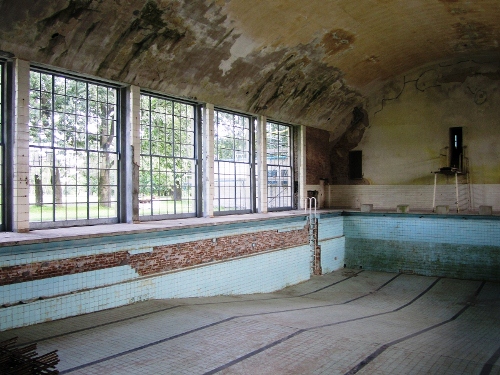
The following article is written by Paul Scraton with pictures from Julia Stone (including the one above) for the wonderful Slow Travel Berlin website. Here’s a short extract:

What do you do with a building when it symbolises some of the darkest days of your country’s history? It’s a common question in Berlin and elsewhere in Germany, and one which was certainly asked of the various venues built for the 1936 Olympics.

Of course, Germany was awarded the Olympics before Hitler and his National Socialist cronies took power, and indeed many of the designs were already in place, but the Olympic Stadium and its surroundings still symbolise a games where Hitler was determined to show to the world the power and the glory of his three-year-old Thousand Year Reich.

Read the rest on Slow Travel Berlin

Where the wall was the water, Berlin

Yesterday I headed south to walk a stretch of the Berlin Wall Trail, between Griebnitzsee station and Wannsee. Heading south first by U-Bahn and then by S-Bahn we rocked along through the city in full train carriages, as people made their way to school, university or work. I was amazed at how many people disembarked at Griebnitzsee, but at the bottom of the steps down from the platform they turned right towards the University of Potsdam buildings, and within a matter of seconds I was standing virtually alone down by the water’s edge.

This footpath was once patrolled by East German border guards, and where a hotel now stands a watchtower gazed out across the water towards the thick trees of West Berlin on the opposite bank. Like along so many stretches of the Berlin Wall Trail, a cluster of cherry trees – a gift from the people of Japan to the people of Berlin – cast some shade across the footpath.

“You should see them in blossom,” a gardener said, who had followed me down the steps. “Beautiful. It makes a mess, but it is beautiful.”

Continue reading

With their backs to each other – Nora and Gyttorp, Sweden

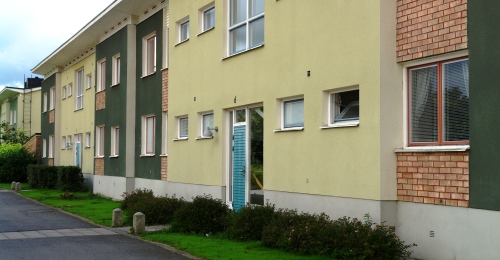
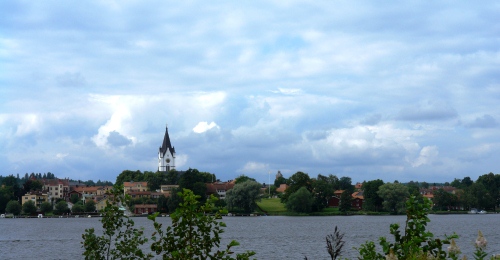
The towns of Nora and Gyttorp are separated by a short stretch of road through the woods, and each look out onto a different lake; stand on the shore in Nora and you are staring West across the Norasjön, from Gyttorp you gaze to the east across the wind-ripples of the Vikern. You can easily visit the two in a single morning, walking amongst the picturesque wooden houses of Nora before exploring the functional terraced townhouses of Gyttorp. These two neighbouring towns couldn’t look more different, and it is this contrast that makes them together a fascinating look at how we imagine a town or community should be designed and organised.

Continue reading