

It was sixty years ago today that the first Shinkansen or bullet train rocketed down the tracks in Japan, and it seems fitting that we have managed to time our first journey on the famous train on the exact anniversary. Tokyo station is alive with people, a mass that moves like a series of streams that all enter into the same pond, but once we are on the train all is calm, even at 300kph. We are heading first to Nagoya, where we catch a Limited Express train up into the hills and the town of Nakatsugawa.
In the soft light of late afternoon, it makes a good first impression. The sun shines on the summit of Mount Ena. School kids walk home in their uniforms via the 7-Eleven, where the Kei cars are lined up in neat rows and the local drunk picks up his highball cans with unsteady hands as darkness falls and the surrounding mountains are left as dark shadows against the blackened sky.
*
‘It’s twenty minutes,’ the elderly man says, pointing his walking poles towards a path that leads into the bamboo forest. ‘To the top. Twenty minutes.’
We thank him but before we can set off up the Shijuhachi-magari or the 48-curve path that will lead us to the top of the hill and the ruins of the Naegi Castle, his wife steps forward.
‘Where are you from?’
We tell them we are from Germany. They both nod and then look at each other. The man’s face is concentrated as he tries to find the words for the next question.
‘Germany… okay. Germany. But… East or West?’
*
We have walked out from Nakatsugawa to cross the Kiso river where, in a few years, a bullet train through the mountains will link Tokyo to Nagoya in an almost unfathomable forty minutes. Today it is just the construction workers and the friendly elderly couple, who have decided against the 48 curves and left us to it. We climb up through the mix of cypress, chestnut and bamboo, a winding trail that the feudal lords once climbed as an alternative to the more traditional approach to the castle, perhaps when their arrival needed to be a little more secretive and under the radar.
At the top the forest falls back to give us a view back across Nakatsugawa to Mount Ena and north to the hills where we will be walking tomorrow. We are here to hike part of the Nakasendō, the old route of the Edo between Kyoto and Tokyo that the various daimyō or feudal lords were expected to travel as they alternated between their home bases and the capital city each year.
There were 69 stations or post towns on the route and although most, such as Nakatsugawa itself, have been swallowed by more modern towns and cities, with only a handful of historic structures still in place, there are a few that have been better preserved and have become something of a tourist attraction over the past hundred or so years after the Kiso Valley and its post towns were made famous by the writer Shimazaki Toson and his novel Before the Dawn.
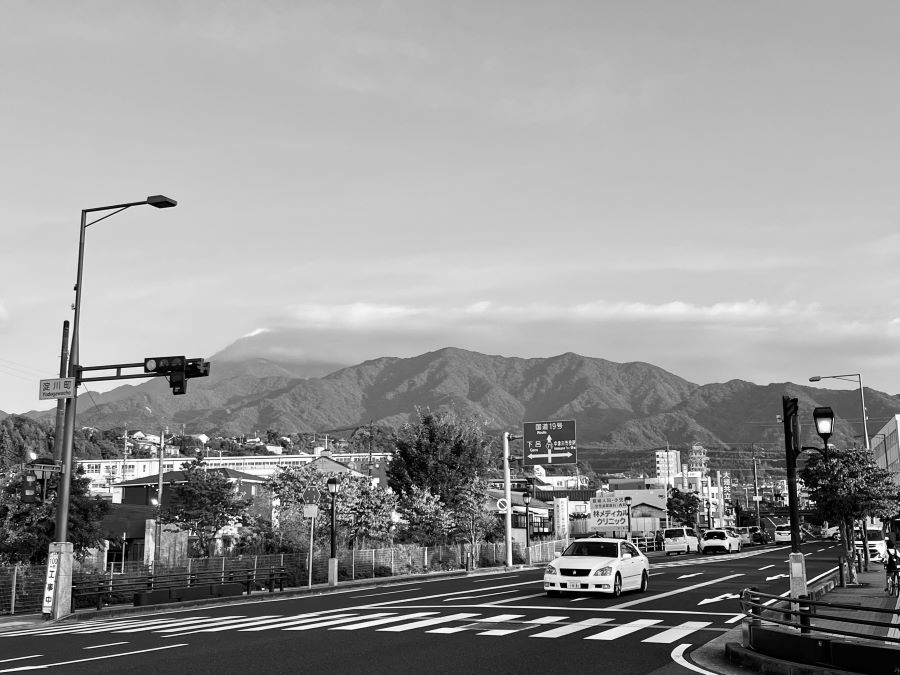
Back in Nakatsugawa we visit a sake brewery right on the bend in the road that is an identifying feature of post towns along the Nakasendō, the street layout designed to slow down and confuse advancing armies. The sake was brewed with the waters that emerge from Mount Ena and was named for the holy mountain after the brewery got the blessing of the head priest of the Ena shrine in the form of a poem.
May Sake brewed
with the waters of Mount Ena
Bring joy to all those who drink it
It works for us.
*
We are being guided along the trail by Nick, an Englishman who has lived in Japan for more than a decade. As we walk from Ochiai, following the old road through sleepy villages and forests where the road still has its original stone paving, he tells us about the forests of the Kiso Valley and the sacred trees, including the Japanese cypress. It feels as if we have been waiting for this moment, collecting thoughts and questions throughout our first days in the country, waiting for Nick to answer them. So we hear about the history of the Nakasendō and the villages we are to visit, but also Japanese politics and society, the trees and the mountains, the folklore of the valley and Nick’s own personal story.
Along the way we ring bells to warn any bears that might be nearby what we are coming, and we stop for tea in a traditional Tateba. Once there would have been teahouses like this all along the trail, but this is one of the few surviving, staffed by mostly elderly volunteers who delight in finding out where the hikers who pass by have come from. Even on the other side of the world, nothing can compel a Yorkshireman to make a strike next to the United Kingdom, when he can take the chalk and simply add the word Yorkshire in a space beneath.
*
As we cross the Magome Pass the rain starts to fall, and we make our way down through the forest to reach Tsumago. The village remains preserved because of strict ownership rules, that basically make it impossible for anyone from outside the village to purchase property. But with villages along the Nakasendō suffering the same demographic problems as the rest of rural Japan, it remains to be seen how long this policy can be maintained. Already, the first houses are falling into disrepair, even though there must certainly be those from outside the village who would be interested in taking them on.

A rainy day in the forest. Akasawa is where forest-bathing therapy began in the 1980s, but today the rain has kept most people away. Instead we explore the woods with Tanaka-san, a volunteer ranger with a dry sense of humour and twinkle in his eye.
‘Have you ever seen a bear?’ we ask him, via Nick who is on hand to translate.
‘Not this year…’
*
The trip continues. It becomes a blur. In Otsu, on the shores of Lake Biwa, we discover an ‘Aloha’ festival complete with dancing girls and Hawaiian costumes, before we come across Oktoberfest, complete with bratwurst and beer and magic shows to a Schlager soundtrack. Our hotel is a mix of manga, anime and superhero collectables. We take the train to Kyoto and climb up through five thousand Torii gates before exploring the historic city and the castle where the Shogunate began and where it fell. In the castle, the floorboards creak. Nightingale Halls, supposedly to warn inhabitants of any intruders…
This is most likely a myth.
There is little romance in the information boards. Kyoto is filled with these stories of old Japan and visions, in its old houses, shrines and temples, of the deep history of the country. Which makes the station and its main hall like something out of a dystopian science fiction film all the more striking and surprising. The view from the top of the elevator is enough to make you queasy.
How do you process all this? On the island, perhaps. In the steep valley by the rushing river.
*
We take the train to Matsuyama. Shikoku. The smallest of the main islands. Everyone we have told about our plans to visit are delighted that we are going there. So much so that it has begun to feel like the goal of the journey, the main destination of the trip.
The train crosses the inland sea in the mist and drizzle. I scribble notes of what can be spotted through the window. A crane, in the rice field on the edge of town. A waterlogged car park beside the factory. A line-up of cars at the level crossing. Drainage channels and telephone wires divide the landscape into neat blocks as low clouds clink to the hillsides and bamboo groves among the trees look like collections of cloaked figures moving menacingly towards us.
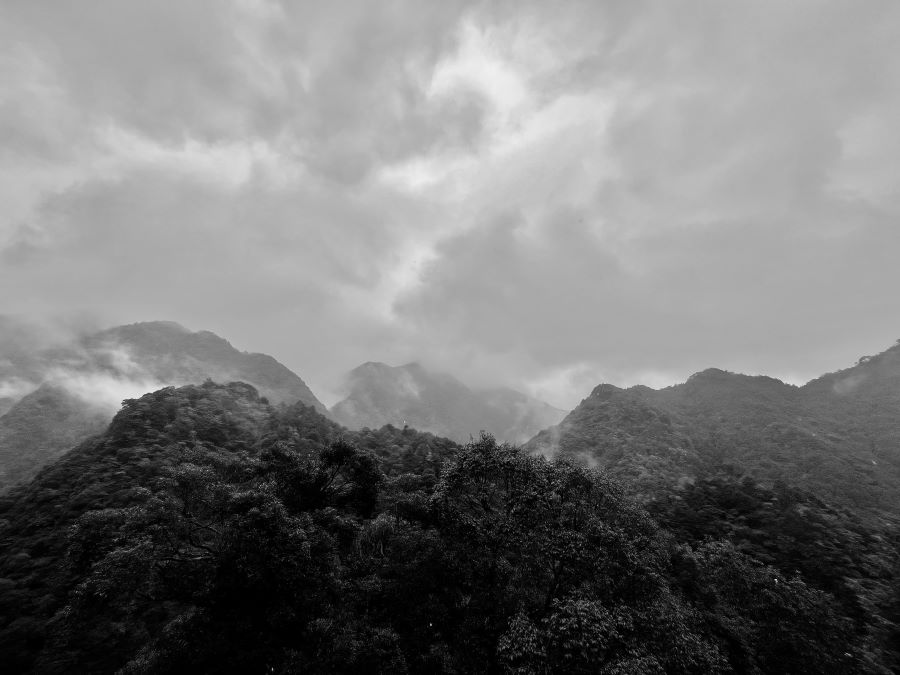
Reading The Silent Cry by Kenzaburō Ōe, who grew up amidst the forests of Shikoku.
Born and bred in the depths of this forest, I still couldn’t escape the same stifling sensation whenever I passed through it on the way to our valley. At the core of that sensation lay emotions inherited from those long-perished ancestors who, driven on endlessly by the Chosokade, had plunged deeper into the forest until, coming upon a spindle-shaped hollow that had resisted its encroachment, they settled there.
Ōe describes Chosokade as, a creature of terrifying size that exists everywhere in time and space. There should be no whistling after dark in the forest of Shikoku as it can draw such beings towards you.
*
We drive through the rain into the island interior, following increasingly narrow roads until we reach the Iya Valley and its vine bridges, steep waterfalls, and a hotel by the roadside some 200 metres above the valley floor, where its hot springs emerge from the mountain and meet the river. The hotel has been built out from the steep hillside and is linked to the hot springs below by its very own funicular railway. We sit in hot water as the river runs by beneath us and the rain continues to fall. From the forest we can hear the sound of birds and monkeys and whatever else lives in the thick undergrowth.
*
The house sits above rice fields and the Shimanto river. The valley is wide enough for a couple of fields width between the river and the hills to the north. The house is wooden, with a mix of Japanese and western rooms, and plenty of resident creepy crawlies. We spend our days exploring the valley and down the coast. The Shimanto river is wide in places, the landscape gentler than Iya but no less spectacular. Bridges cross the river without any barriers or railways, so that they can be submerged by the annual high waters without being washed away. Loudspeakers along the roadside broadcast daily bulletins but can also warn of flash floods. Or earthquakes. Or, down by the coast, of tsunami.
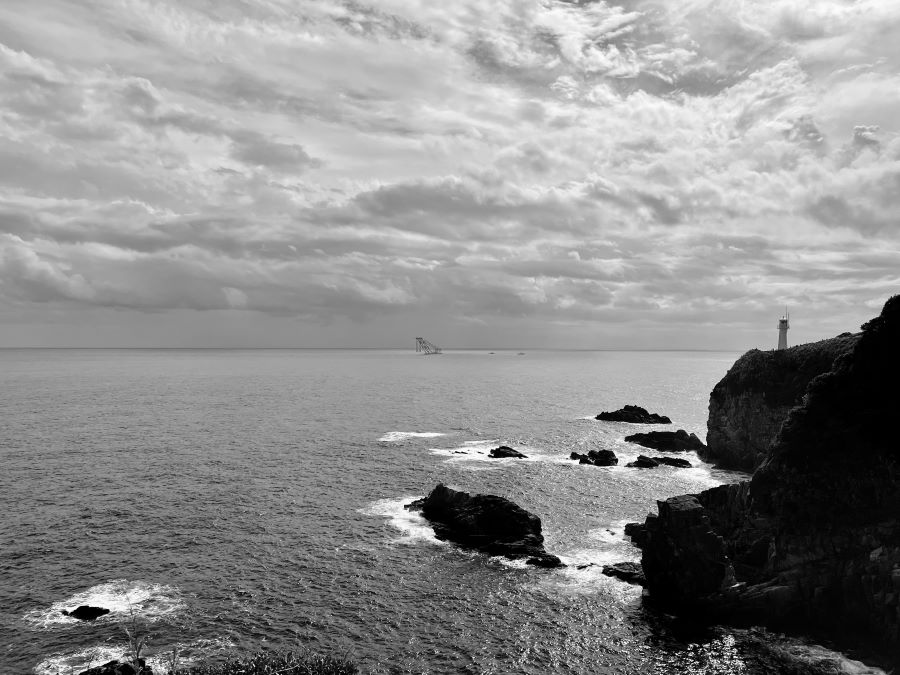
On the coast, in the Ashizuri-Uwakai National Park, we follow a short stretch of the Shikoku 88 Temple Pilgrimage, a 1200km hike between the temples and other sacred sites on the island where the Buddhist Priest Kūkai (Kōbō Daishi) is believed to have spent time during the 9th Century.
As we move through the park we see many pilgrims in their distinctive conical hats, some with bamboo walking sticks. Others have bought their poles from Leki. Or Decathlon. Most of the pilgrims seem to be Japanese, but there are some foreigners on the trail, and at the Kongōfukuji Temple we observe a Japanese pilgrim and his Swedish counterpart start a friendship over their experiences and their weary feet.
The coastline is magical, the white horses dancing on the Pacific as we look out from Ashizuri Cape and into the offing. We drive back to the house and towards the sunset, passing through small rural communities where, as in Tokyo amidst the bright lights of the biggest of big cities, the emotion that comes first to mind is melancholy. At this very moment, this seems to be a country filled with nostalgia for a once-imagined future. Even the things that seem advanced from a European perspective, are like what we imagined the 21st century to look like in the late-1980s or early-1990s.
It is a future that has been slowed or even stalled. Overtaken. In the countryside the towns are neat and functional, but the number of abandoned or empty buildings are unavoidable. Weeds grow through the cracks of underused pavements and bicycle paths. The newspapers speak of ageing populations and managed decline.
The wooden house creaks in the night and in the morning, the loudspeakers wake us with a cheerful tune and a message of when the mobile library will be passing through different parts of the valley.
*
Hiroshima. If we felt like Shikoku was the ultimate destination of the trip, it was Hiroshima that was always on my mind when we first spoke of coming here. The ferry from Matsuyama approaches the city through the islands of the inland sea and you can see how the city developed into an almost natural amphitheatre, shaped by the river and the surrounding hills. For those who love the mountains and love the coast, there can be few better settings for a city.
And from the deck of the ferry, you can look up 600 metres above the apartment buildings and office blocks, where the sun shines blue, and know that it was there that the first atomic bomb was detonated. It is hard to hold the beauty of the scene and the horror of the story in the same thought, and you are not sure what to expect when the ferry docks and you finally step ashore.
*
A city to fall in love with? It might just be. We walk through the Peace Memorial Park towards the Atomic Dome, pausing to spend time inside the memorial hall itself. It offers a moving tribute to the victims and a reminder that the damage done by the very nature of the weapons dropped on Hiroshima and Nagasaki meant that lives continued to be impacted in the most horrific ways for years and decades to follow.
We hold these stories, the mental and physical devastation of the bomb, close to us as we climb the nearby tower where we are greeted with a sunset view of the surrounding hills and a bar full of mostly young, cheerful and happy people, sharing drinks and the glorious scene unfolding before us. We sip our beers and wine among them, and the go to eat Okinomiyaki in a restaurant filled with members of a local young football team before walking streets full of joyful Sunday evening revellers.
Hiroshima offers so many lessons from its history, but it also offers something in its present that is hard to explain but pulls you close. It feels like a privilege to be here.
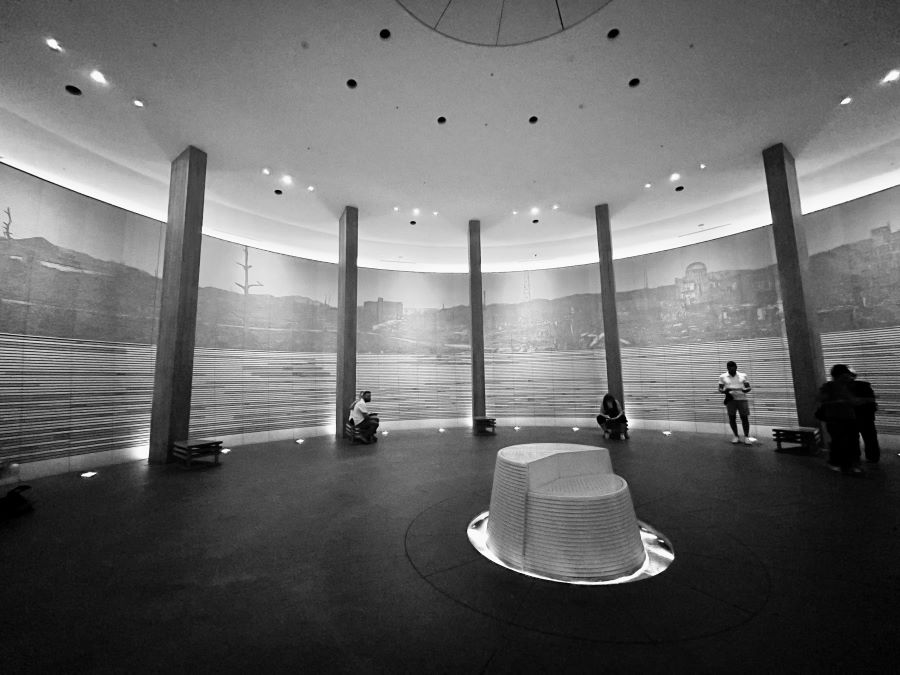
If the human race is fortunate enough never to experience an attack by nuclear weapons again, still the wisdom of the Hiroshima people who survived the worst days of human experience must be cherished.
– Kenzaburō Ōe, Hiroshima Notes.
*
Our last days in Japan pass in a whirlwind. A train ride and a night in Nagoya, watching young men dancing on the street as lights illuminate a spaceship disguised as a bus station and shopping mall. These magical apparitions that have followed us through the country help make the landscapes of Studio Ghibli make all the more sense, and it is fun to join the crowds at the Ghibli Park and in the Warehouse. Despite the number of people, or perhaps because of them, the sense of escape feels all the more real.
Our final night is in Hakone, taking the mountain train up from the coast until we reach our hot spring hotel. We have our own bath on the balcony, and can sit and watch the mist curl around the forested hills as darkness begins to fall and the town illuminates below us. Any farewell from a place that has so captured your heart can only feel bittersweet, but nevertheless, this feels like the perfect goodbye.
*
Reading Kusamakura by Natsume Sōseki:
But only when I am wrapped, naked, by these soft spring clouds of evening steam, as now, do I feel I could well be someone from a past age…
If the weather is right, you can see Mount Fuji from Tokyo. You can see it from Hakone. You can see it from the Shinkansen as it makes its way from Tokyo to Nagoya. Or in the other direction. Quite often, you can see if from the plane either as you arrive or as you leave. We haven’t managed to see Mount Fuji in all our time in Japan. Not in real life, anyway. Reading the great Matsuo Bashō on the way to Haneda, it is reassuring to know that we are not alone.
In a way
It was fun
Not to see Mount Fuji
In foggy rain.
*
At Alexanderplatz we sit outside the station, drink coffee and eat baked goods as visitors queue for the TV Tower and two drunk men get in an argument with a security guard. The weather has turned while we’ve been away, and Berlin has entered its best month. There is no question that my favourite time of the year in the city are the autumn months leading into the opening of the Christmas Markets. It is now that you realise just how many trees our city has, as they explode into a riot of colour and the pavements are scattered with the fallen leaves.

The month has one more highlight left to give, almost forgotten until it is right upon us. I travel to Yorkshire, to Halifax and the Piece Hall where the Book Corner is hosting the launch of my new novel A Dream of White Horses. It is a book about family, about friendship and about searching for home in a fractured and fragmented world. I talk in the bookshop to Kevin from Bluemoose, my wonderful publishers, and we discuss writing, belonging and the themes of the book.
From the acknowledgements:
The title of this book comes from a famous rock climb at Gogarth at the north end of Holy Island/Ynys Gybi, itself just off the coast of Anglesey/Ynys Môn in North Wales. The first ascent of ‘A Dream of White Horses’ was by Ed Drummond and Dave Pearce in 1968, and although it has always been a climb way beyond my modest abilities, there is something about the name that has stayed with me since I first heard it during our summer camping trips to Rhoscolyn at the south end of the same island in the 1980s. More than anything, it seemed to explain perfectly how I felt about this special place when I was away from it and my longing to return. It still does to this day.
*
We visit friends in Karlshorst for a fire in their garden. They are about to fly south, to Namibia, as part of a journey around the world. The fire crackles as we drink beer and glühwein and talk about adventures past and those that are to come. The places that are important to us are not always those where we are born or even where we have lived. It is hard to describe how a place captures you. How you feel like you leave something of yourself there in order to be sure that you will return.
I think back to the final morning in Hiroshima. I ran out from the hotel, following the path around the island that helps project the harbour from the inland sea. The tide was up, the waves breaking across the path as I went. Fishermen waited for the early morning catch. A few other runners, nodding as they went in acknowledgement. I looked out, away from the city towards the islands of the inland sea. Shikoku beyond. The wind had picked up and the first waves were breaking on what had been up to now still and calm waters.
What do you dream of, when you dream of white horses? To what places do your thoughts take you? How will you get there? And who will be there with you?

Words & Pictures: Paul Scraton
 Under a Grey Sky